




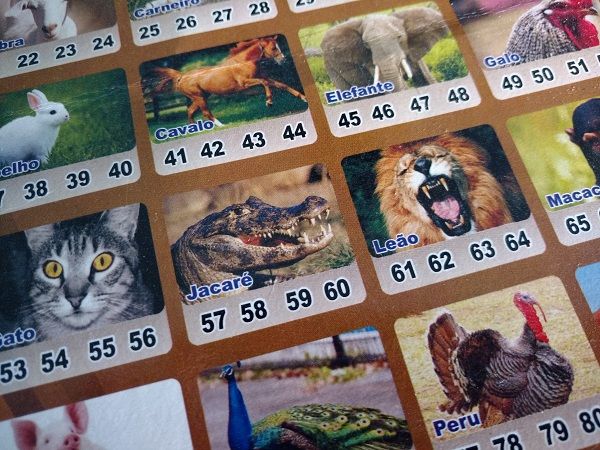
In the bingo blog bingogratis.com.br, the journalist Guilherme Neis says that
in Brazil the illegal "jogo do bicho” receives 20 million bets every day, which
means that the country does not levy taxes with these games and that quality
jobs are also not generated.
The "jogo do bicho” was created shortly after the proclamation of the Republic
in 1893 as a way of financing the Rio de Janeiro Zoo, which belonged to the
Baron of Drummond. After the end of the monarchy, the zoo lost subsidies and
had the risk of closing. The”jogo do bicho” was suggested by a Mexican, a
resident of the city, as a source of fundraising. The alternative was
successful. The game experienced great growth but, like the casinos, it was
banned in the 1940s.
The lack of regulation of the”jogo
do bicho” allowed that the clandestine game was extended throughout the
country. It is estimated that currently 10 million bets are made daily, and
that 300 thousand people work informally with it in Brazil.
There is a lot of discussion about Brazilian Government’s motivations for not
having legalized it yet, given its similarity with betting games of the Federal
Lottery. Journalist Paulo Sant'anna, who supports its legalization, argues that
"jogo do bicho” is far more stimulating than any lottery game, because at some
point the player wins some prize. Already the probability of winning in popular
local Mega Sena, is one in 60 million.
However, it is necessary that if legalized the game is heavily
supervised, and that people with problems (gambling addicts) are forbidden to
continue betting. Exactly because of the fact they have more chances to win,
"jogo do bicho” can became highly addictive.
On the other hand, the legalization would regularize the situation of 300,000
workers, and would still create more jobs. It would also give greater security
to players when betting, as in clandestine play results can be easily changed.
Currently, the "jogo do bicho” is
part of the gaming legalization package that is in discussion, along with bingos
and casinos. There are two projects for this purpose, PL 442/91 in the Chamber,
and PLS 186/2014 in the Senate.