




GMB
- As an active member of several development and tourism commissions, how do
you see the possibility of Brazil opening the doors to the gaming industry,
regulating bingo and casino activities?
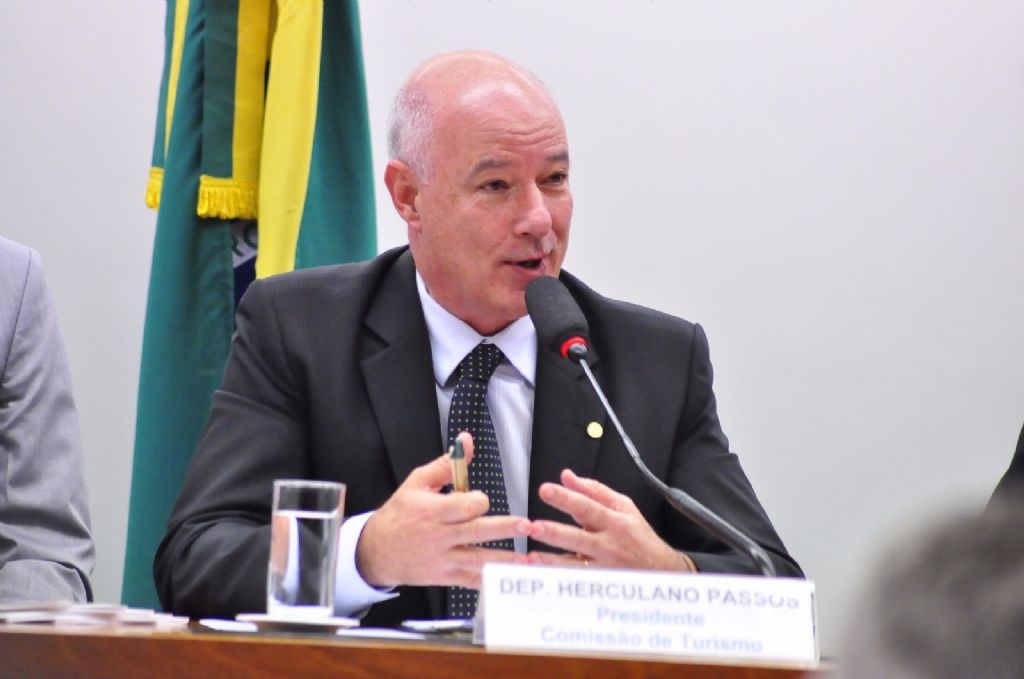
Herculano Passos - I am a member of the Special
Commission on the Regulatory Framework for Gaming in Brazil and the Committee
on Tourism, in which we discuss a lot about this. After listening to the
various parties interested or opposed to legalization, I, in particular,
concluded that it will be beneficial to Brazilian tourism and to the country's
economy. In Brazil, illegal betting moves annually about US$ 6.5 billion, but
illegal gambling does not generate revenue for public coffers. That is, Brazil
fails to raise money that could be invested in health, safety, education,
infrastructure, etc. Moreover, those who work with illegal gambling, such as
bingo clubs, for example, do not have guaranteed social and labor rights.
Regarding tourism, Brazil receives about 6 million foreign tourists annually,
while Las Vegas, which has its main economic factor in around gaming, receives
more than 40 million visitors; and Macau, more than 30 million. If we have
casinos in Brazil, in the model of these two places, we will become a very
interesting tourist destination. More people visiting us means more money
injected into our economy. The gaming industry has another positive point. It
has great capacity to generate direct jobs. It is estimated that legalization
will create about 85 new functions / professions.
GMB - Both the House of Representatives
and the Senate are currently discussing projects for the opening of bingos and
casinos in Brazil. How do you see this movement, considering that today only a
few countries (especially of more conservative religions) do not allow the
activity?
Gaming is already legal in Brazil (see lotteries and turf, for example), so
to ban some types of gaming is hypocrisy. Casinos investors are very interested
but still reticent because both the Senate and House Bill are more flexible
with bingos than casinos. For example, projects limit the number of casinos per
state, but do not restrict the number of bingos. What investor will put
millions of dollars into a casino if you have a bingo at every corner? Whether
or not they are competing activities. Both projects are now ready to be voted
on in plenary. As I mentioned earlier, I argue that they still need some
modifications, but this can be done in plenary anyway. What is important is
that they be appreciated and moved forward, so that legalization becomes
reality as soon as possible.
GMB - It is known that numerous poles of
tourist attraction in Brazil, particularly hydromineral resorts, have suffered
from the lack of investments to attract more visitors. Do you believe that the
opening of bingos in these localities can attract more visitors?
I believe that casinos have more tourist
attraction power than bingos. Both the House and Senate projects predict that
casinos should operate in integrated leisure complexes. That is, it will not be
simple gaming houses, like bingos. They will be casinos working in complexes
with resorts, concert halls, bars, restaurants, nightclubs, shops, convention
centers etc. They will be great structures to attract the most diverse types of
audiences, from players to participants of business events. In the past, some
spa resorts had casinos and I believe some might have it again, depending on
how the distribution will be by state.
GMB - In some macro-regions, could
opening a casino give a significant boost to the regional economy?
Throughout the country this impulse will be possible. But, from what I've
noticed, the interest of investors is in more populated areas with better
access (local or nearby airports, for example). They are not willing to invest
in remote, low-infrastructure areas.
GMB - Even in countries such as China, with such a closed economy, Macau has
one of the world's top tourism destinations due to the casinos. Do you believe
that Brazil, with so many natural attractions, can have the gaming industry as
an extra attraction of the tourism industry?
I'm sure so! The tourist can come to play in a casino in Cuiabá, for
example, and will take the opportunity to visit the Pantanal. The tourism
industry itself will be responsible for creating such packages.
GMB - Is Brazil prepared to seriously
regulate the gaming industry, despite what the religious segments say oppose to
the activity?
Inspection and control are still sensitive parts of these proposals,
because the country will have to create a regulatory agency or entrust other
agencies to that function. But when legalization is approved, the country will
be prepared for it.
Source: Exclusive GMB