




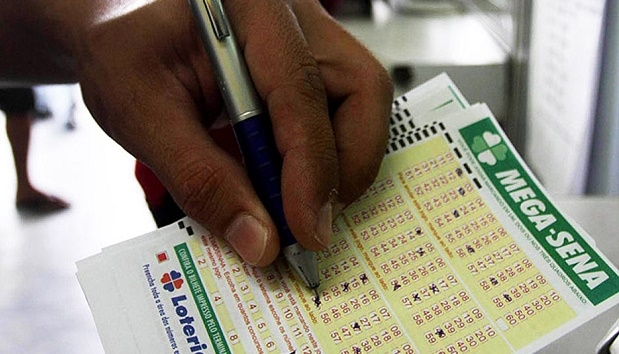
In 2016, the state-owned bank raised US$ 4 billion in bets. After an intense
economic crisis, which caused a deficit of US$ 40 billion in public accounts in
2017, an easy way out seems to be the betting sector.
Caixa has held a monopoly over the exploitation of lotteries since 1962. Of the
total collected, US$ 1,93 billion was allocated to social programs in areas
such as sports, education, culture, security and social security. The rest is
used in prizes and in the maintenance of the system itself. The distribution of
resources is regularized by decrees 30/2008 and 129/2015 of the Ministry of
Finance.
With a US$ 635 million mark in the past year, the Post Office is studying ways
to modernize and increase revenue collection. Its president, Guilherme Campos,
says that this is possible because the company is present throughout Brazil.
The Ministry of Tourism will transform the Brazilian Tourism Institute
(Embratur) into the Brazilian Agency for Tourism Promotion (Abratur). To fund
the initiative, it expects to use federal lottery money. The board, which has
been seeking the modernization of Embratur's management model, will announce
the first phase of the package of measures to strengthen the sector today (Tuesday
11).
"The government and companies are looking for sources of resources, and
with the recession, expenses do not fall in the same proportion as the revenue,
that's the difference. I think the lottery is a possibility, but I need to
analyze larger sources of income," says the president of the Regional
Council of Economy of Pernambuco, Fernando Aquino.
The economic consultant Raul Velloso defends the use of this money for social
purposes. "If the decision to have a lottery is made, I think that we
should really use the money for the social area. Social security is an
important expense for this area. The revenue potential is low and the welfare
problem is big." Last year, Social Security, which includes pensions,
health care and social assistance, received US$ 665 million.
One of the problems is that profits from lotteries are falling due to the
economic scenario. In 2016, it fell 13% compared to 2015. "It fell because
the population has no income, is indebted and giving priority to buying other
things, such as food and medicine. I do not see as a way for Brazil to release
other types of lottery without a social purpose, "says Fabio Gallo,
professor of finance at the Getúlio Vargas Foundation (FGV) in São Paulo.
Caixa also seeks to increase collection through the modernization of the
betting system. The state-owned bank is studying the launch of the Internet
Lottery and Mobile Lottery project later this year. Social transfers provided
by law remain unchanged.
Another alternative studied to increase government revenue is the reguation of
gambling with bingosand casinos. According to Instituto Jogo Legal (Legal Game
Institute), this market already moves US$ 6.35 billion per year in the country.
With legalization, the number can jump to around US$ 19 billion per year.
Currently, there are two projects that consider about changes in the
legislation on gambling: Senate Bill No. 186/14 and Bill 442/91 of the Chamber
of Deputies.
On the other hand, the professor of Finance of the Getúlio Vargas Foundation in
Sao Paulo, Fabio Gallo, argues that the discussion must pass through the social
side. "There are countries that do not have the best economy because they
have a gaminge market, for example Panama," he says. "To explore
gaming in a restricted region that has a vocation for it, is different. For
example, creating a Las Vegas in the country can bring income to the region,
"he adds.
Source: GMB
/ Jornal do Commercio