




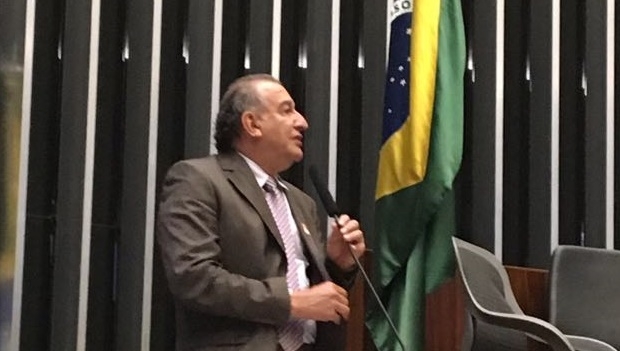
GMB - How does Abrabincs see the
political scenario for the evolution of gaming regulation proposals?
Olavo Sales da Silveira - The discussion on the regulation of gaming in
Brazil is delayed by at least 30 years, which is the time in which European,
South American and other parts of the world have made their choices. While we
were discussing gambling at different venues - casinos, bingos, slot machines -
new players came on the scene, such as online gambling and sports betting. This
has brought more complexity to the political debate.
GMB - Could you explain this concept a
little better?
This is most clearly stated in the two legislative initiatives currently
being considered: Bill 442/91 in the Chamber of Deputies and Bill 186/2014 in
the Federal Senate.
GMB – And which are the basic
differences between them?
The first one was the fruit of a wide debate and in its conclusions contemplates
a game idea as a private activity and a varied range of modalities to be
explored: casinos, bingos, jogo do bicho, online gaming, sports betting, and
state lotteries.
The Senate Bill, which received strong influence from government sectors, establishes
a model of gaming as a public service to be explored through delegation, and
restricts the modalities delegable to private initiative. It also reserves a
good part of the new games regulated for exploitation by Caixa Econômica
Federal. Of course, the various interest groups move in order to guarantee a
significant space for their games, as these definitions can increase or
decrease the space to be opened, sometimes resulting in conflicts of interest,
since a bigger space for one segment can lead to a reduced one for another.
GMB - So which is the best way to conduct
the debate?
A shortage that we register in this process is the presence of the
government with a definite script for the subject and as final mediator on the
interests in conflict. This absence is explained by the inhibitions to deal
with the gaming theme that the members of the executive, yesterday and today,
have always revealed, and also because the government is interested not only in
taxes and jobs, but also in slices of exploitation activity. We believe that
the most productive position would be for the government to act with accredited
interlocutors with the Congress, clearly discussing their pretensions and
concerns, so that the legislature could produce a consistent proposal that contemplates
the intention to regulate gaming, defining the forms of exploitation,
modalities, rites and guarantees, including the distribution of spaces, both
from the government and federal states.
GMB - And what about the taxes issue?
It’s something to discuss, too
A concern in this regulation is the form of taxation, which will be
fundamental in any business plan of private activity. There is a lack of
experience of our tax authorities in taxation regimes for casino games -table
games and slots - although in bingos there was an experience during the period
of the Zico and Pelé laws.
But there was never a proper regulation for the activity, which resulted in
numerous tax conflicts, since the model adopted is the one of lottery games,
which is the modality explored by the Caixa Econômica Federal. Such a model is
entirely unsuitable for the games that it are intended to regulate, since it
does not consider the gaming options we are taking about that need to be dealt
with in order to define a proposal that meets the government's collection
demands and, at the same time, is feasible for exploitation by economic agents.
GMB - But would a broad law fit the
gaming industry?
We are of the opinion that the project to be approved should be lean, to
deal basically with the authorization and game models to be allowed and then
the discussions could be deepened in the regulatory phase, when technical
groups of the Government would work better in adjusting the various situations
to be built. In this way, the search for successful models will be facilitated,
as in the different countries where the activity is well regulated and
economically well structured.
GMB - Finally, can this premise delay the
approval of a gaming law in Brazil?
Yes, it may
initially require a longer time to have a government proposal. But as what we
defend is that the broader definitions happen in the regulatory phase of the
law, the construction of a project that defines modalities would not require a
significant delay in the current framework. And, in a second moment, which
could come as a Provisional Measure, this time would be largely recovered in
the voting phase in the two Houses of Congress, making it clear that the longer
work would take place in the regulatory phase.
Source: Exclusive GMB
Author: Gildo Mazza