




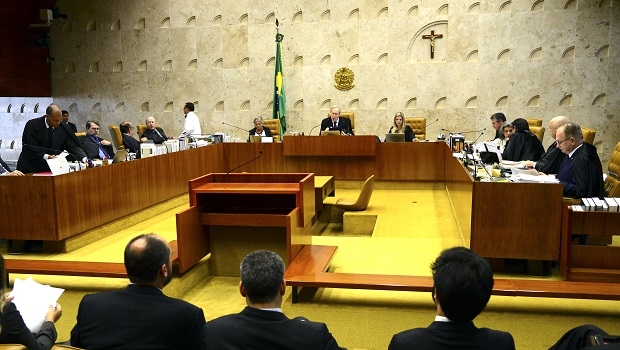
The case came to the SFC from
"The Criminal Court Classes of the Court of Justice of the State of Rio Grande do Sul have understood the atypical conduct, which shows that in that federal unit, the practice of gambling is no longer considered a criminal contravention," said Minister Luiz Fux in the vote that acknowledged general repercussion on the subject.
For the Public Ministry of Rio Grande do Sul, gambling is still a crime. It was the organ that took the case to the SFC, for disagreeing with the position of the Justice of the State, more specifically of a judgment of the Court of Appeals of the Special Criminal Courts.
This branch of the local judiciary considered the conduct of gambling to be atypical, not seeing the practice as a criminal contravention, on the grounds that the foundations underlying the prohibition are not in line with current constitutional principles. In the Supreme Court, the case became Extraordinary Appeal 966,177.
Free initiative and wounded fundamental freedoms are the arguments of the Rio Grande do Sul courts to define as unconstitutional the prohibition of local
The legislation on the subject is of 1941, and its advanced age is denounced by the writing of the foreseen punishments. The fine was obsolete." Two years ago the text was updated by Law 13,155 /
According to Article 50 of the Criminal Offenses Act, establishing or exploiting a game of chance in a public place or accessible to the public, whether by payment of entry or not, is a criminal offense subject to a simple prison sentence of three months to a year, plus fine.
In other instances, however, the exploitation of games of chance is not seen with the condescension of the Rio Grande do Sul magistrates. In particular, the Superior Court of Justice, which recently condemned a company that promoted bingo games to pay collective moral damages. In another case, the STJ ruled that bingo for charitable purposes is a crime, but does not generate collective moral damage.
Path from other countries
If
"Gaming is an economic activity from a private initiative that will depend on the authorization of the State. For this, we will need a federal law, creating criteria for authorization, who can apply, in which places, how much is allowed to pay, how will the operation is organized, etc.," said Godoy in an interview with ConJur.
Favorable to legalization, the lawyer has studied the subject and has published articles on gambling. "There are already several games of chance authorized in Brazil. All developed countries have casinos to implement tourism, and to be a successful experience, it is necessary to
Source: GMB /