




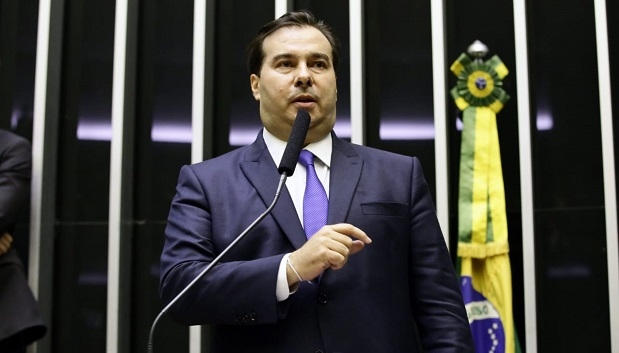
Rodrigo Maia was elected in the first round and is reappointed to the position of president of the House until 2012. He received 334 votes. As all 512 who took office voted, the absolute majority to be elected in the first round was 257 votes. In second place was the deputy Fábio Ramalho (MDB-MG) and, thirdly, the deputy Marcelo Freixo (PSOL-RJ).
In 2018, Maia defended to vote the proposal with mechanisms of "strong regulation" to liberate casinos in Rio de Janeiro and in São Paulo. In his assessment, there would be no investor interest if the release of gambling is restricted to remote areas of the country. The president of the Chamber affirmed that the regulation of casinos is important for Rio de Janeiro and for the whole country, since it could generate jobs and raise funds for regional governments.
"We’ll talk with the deputies. Some politicians ask for bingos, machines outside the casinos. But we want to introduce the Project for casinos," explained Maia, who generated a bad feeling in most members of the Pro-Gaming Parliamentary Front who hoped that bill 442/91 that considers the total legalization of all gaming activity would be voted without changes or amendments.
The re-election of Maia is added to the public support that has already been expressed by the governor of Rio de Janeiro, Wilson Witzel, the mayor of the capital of Rio de Janeiro, Marcelo Crivella, the tourism minister, Marcelo Álvaro Antônio, and the governor of Minas Gerais, Romeu Zema Neto. The initiative to approve casinos in resorts in Brazil seems to be the closest step that will give the government of Jair Bolsonaro in reference to legalization of the activity to generate economic resources for the country.
According to Maia, studies show that the implementation of casinos integrated with hotels can result in the creation of 250 to 300 thousand jobs in the country, in addition to resulting in a collection of up to R$ 25 billion (US$ 6.85bn) for the government. He estimates that up to 32 casinos can be built in Brazil if the project reaches consensus and is approved.
The current president of the Chamber was the preference of the economic team, since his re-election facilitated the conduct of the Pension reform in the House. Maia is seen as aligned with the government's interest in approving changes to the pension and pension rules in the country and has the ability to negotiate politics.
Rodrigo Maia's profile
Rodrigo Maia was born on June 12, 1970, in Santiago, Chile, but was registered at the Consulate General of Brazil in the country. From de bank sector, he started economics graduation, but did not conclude. He will now serve his sixth term as federal deputy. He is the son of the former mayor of Rio de Janeirro Cesar Maia River (DEM). In 2018, he declared assets amounting to R$ 730 thousand (US$ 200k).
New Chamber
The Chamber of Deputies began on Friday (1st) a new four-year term with the highest percentage of beginners and women (77, which corresponds to 15% of the total composition) in more than 30 years. The number of parties is also record: 30. Of the 513 deputies who took office, 244 are newcomers in the Chamber, equivalent to 47.6%.
PT and PSL elected the largest number of representatives. The PT bench will have 54 MPs in office and PSL's 52, but those numbers should also change with joints for subtitle switching. With varying ideologies, there are disagreements among parliamentarians even within the parties themself, depending on the subject.
Source: GMB