

 Facebook
 Twitter

ENGLISH
The pride of helping to create a regulatory model for Brazil
Karen Marcela Sierra Castrellon, Director of Government Relations and Business Development for Latin America and the Caribbean at Gaming Laboratories International (GLI), was one of the guests and mediators of the Public Hearing on the regulation of online gaming in the Sports Committee of the Chamber of Deputies that took place this week. In this special column for GMB, she explains about GLI’s contribution in the meeting: “I hope I succeeded on conveying that technology is the key to protecting the interests of the government and its citizens.”
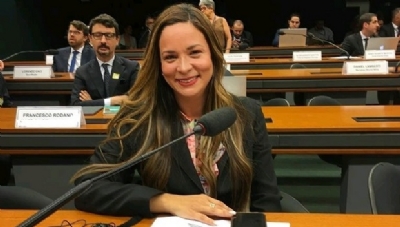



It was an honor to participate in the public hearing at the Sports Commission of the Chamber of Deputies in Brazil this week and I am thankful for the invitation to provide testimony from the Excelentíssimo Senhor Deputado Evandro Roman.
The panel was composed by representatives of the industry from Brazil and abroad, which included operators, lotteries, suppliers, gaming attorneys, consultants, sports clubs, all contributing with their experience and point of view but at the same time with impartiality, providing legal and technical information to support the legislation development efforts of the Commission, and ultimately the regulatory development efforts that is the competence of the Ministry of Economy via SECAP.
The process was very organized, and the rules were set since the beginning, which were to stick to the topic in discussion and to the 10 minutes maximum allot of time that each of the speakers had to contribute with their international experience in gaming regulated markets around the world.
Gaming legislation and regulatory models, taxation, sports integrity, technology, certification was some of the topics discussed.
Some Deputies participated commenting on their concern of growing illegal gaming harming their communities, and the risk of match fixing that sports clubs are experiencing now.
I have been fortunate to participate in public hearings three times now in Brazil, and is the first time I see that there is opportunity to focus uniquely in how gaming is regulated in many jurisdictions around the world and why it is considered one of the most regulated industries.
I was asked to focus on the following key premises: The role of the laboratories and the certification and homologation process in gaming regulation; how technical standards and certification guarantees consumer protection, money laundering prevention, and mitigates risk of illegal gaming; how it allows for accurate tax collection for the government and how does this process benefits operators as well.
Our role was not to take position about legalizing or not any specific type of gaming. As GLI, I was there to provide our independent experience by working with every more than 500 jurisdictions that regulated gaming and implemented the certification process, as well as examples of successful supervision models that take advantage of technology to achieve their regulatory objectives.
The biggest challenge was to fulfill all this information in 10 minutes and I hope I succeeded on conveying that technology is the key to protecting the interests of the government and its citizens, and that it is in the jurisdictional power to use the technical means and establish the necessary technical requirements for the gaming industry to comply, to be able to maintain, supervise and control the industry.
It is also important to recognize the important role that Witoldo Hendrich Jr, Roberto Brasil Fernandes, Edgar Lenzi played by moderating the different panels during the hearing.
Ultimately, I believe that the importance and value of this forum, was that it is proof that legislators are continuing to work on perfecting what has been already enacted and continue to analyze the legalization of new types of games. On the other hand, the very competent SECAP team of the Ministry of Economy will benefit of all the information discussed in the hearing, by building on their expertise on the matters they are about to regulate.
Karen Marcela Sierra Castrellon
GLI’s Director of Government Relations and Business Development for Latin America and the Caribbean