

 Facebook
 Twitter

ENGLISH
With the support and mobilization of all, we will "fight" for regulation of gaming
The Parliamentary Front that aims to approve the Regulatory Framework of Gaming was launched yesterday morning, coinciding with the National Tourism Day. Here are some reasons why I advocate the release of casinos, bingos, jogo do bicho and video games in Brazil. The country will increase its power of collection, since the activity can generate up to R$ 60 billion (US$15bn), being R$ 30 billion (US$7.5bn) in taxes, in addition to about R$ 7 billion (US$ 1.8bn) with the grants.
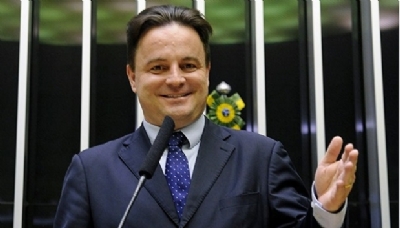



The work of this Front, which will be chaired by Dep. Bacelar, will be of extreme importance, as both in the Chamber of Deputies and in the Federal Senate, interesting proposals have been made to defend these games. This topic has been debated in the country since 1991, when then Deputy from Santa Catarina, Renato Vianna, introduced Bill 442.
In 2016, the proposal even got approved by the Special Commission, but it did not go ahead. It is important to emphasize the seriousness of the project, as well as the specified rules, one of which is that casinos can only exist in hotels, such as resorts, with multiple areas of hotels, leisure and cultural spaces.
Recently, the Sands Group reported in the press that it stopped investing 3.2 billion dollars in Brazil because we do not have a law to support the activity. Therefore, the amount was applied in Singapore. This is just one of the reflexes of the non-incentive and regulation of gaming in our country. We no longer attract investors, we lose competitiveness and money, lots of money.
Following this line of guidelines that await approval in the National Congress, I highlight Bill 186/2014, authored by Senator Ciro Nogueira, which deals with the exploration of games of chance, defines what games of chance are, how they are exploited , authorizations, allocation of proceeds collected, determines administrative infractions and crimes as a result of violation of the rules concerning their exploitation.
Brazil is recovering slowly from an economic crisis, and I agree that it is necessary to create new ways capable of generating new jobs, encouraging entrepreneurship, tourism and increasing the collection of Federal, State and Municipal Governments.
In addition, we know that once gambling is regulated in Brazil, we will be curbing criminal practices such as money laundering or misuse for other illicit activities. "Maintaining" illegality is to close eyes of an excellent opportunity to make jobs possible and increase the collection of municipalities and follow the example of Punta del Este and especially Las Vegas, which made from a desert a mega power and economic reference.
Besides these projects, it is regrettable that there is still a monopoly of lotteries in Brazil, as since 1967 the Brazilian states are prohibited from creating their own lotteries, being accepted only games exploited by the state-owned Caixa Econômica Federal, such as the Mega-Sena, Lotofácil and Quina.
I am sure that with the support and the mobilization of all, we will strengthen this debate and "fight" for the regulation of the activity in Brazil, and consequently, generate more job opportunities. It is estimated that gaming can create 650 thousand direct jobs, 650 thousand indirect ones and formalize 450 thousand jobs only in the local popular jogo do bicho sector. Legalizing gaming in general, Brazil will increase its power of collection, since the sector can generate up to R$ 60 billion (US$15bn), being R$ 30 billion (US$7.5bn) in taxes, in addition to about R$ 7 billion (US$ 1.8bn)with the grants.
What is in force in our country is legislation that prevents the profitability of gambling activity for public coffers. While clandestine betting moves around R$ 20 billion (US$ 5bn) a year, Caixa's lotteries raise R$ 13.5 billion (US$ 3.4bn). Releasing is the way. And we’ll work for it.
Other topics covered in the interviews were the country's capacity to monitor the activity; the issue of gambling and the regional division of the market after legalization.
Deputado Rodrigo Coelho (PSB-SC)
Member of the Parliamentary Front for the Approval of the Regulatory Framework of Gaming in Brazil
Source: GMB