




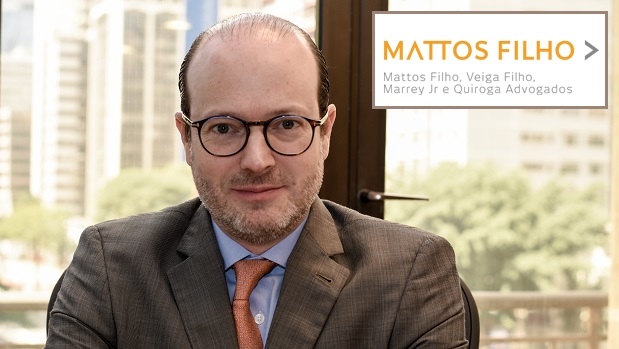
Kujawski focuses on transactions and regulatory issues. He advises companies on various types of corporate matters, including domestic and international operations. He is co-author and editor of the book “Legal Trends in Technology and Intellectual Property in Brazil” (2014). He is director of the Brazilian Association of Information and Communications Technology Law (ABDTIC).
GMB - With the debate about the release of gambling in the Chamber, do you believe that this is the time for the government to let the public choose whether they want to see sweepstakes, the distribution of prizes and gifts on TV channels? What is your position on the subject?
Fabio Kujawski - The subjects are different. The discussion currently in the National Congress is about the liberation of games of chance, that is, casinos, bingos, jogo do bicho. The other issue clarified only that broadcasters can be allowed to carry out this type of contest and draw and disseminate them throughout their programming.
I do not see any prejudice or impact in relation to the discussion in Congress about the liberation of gambling. In addition, the paternalistic function of the Brazilian State is no longer compatible with the evolution of the information society. The internet has somehow weakened the borders of countries and caused certain local regulations to completely lose their practical effect.
One of the justifications for the provisional measure is that it will allow TVs to have an increasingly direct contact, without intermediaries, with their users. How do you think this interim measure can benefit the population and national media?
TV broadcasting is still a very relevant communication vehicle in Brazil, despite the growth of the internet and other media. Therefore, what is expected is an eventual increase in the number of competitions and distribution of prizes in the country, with a possible greater coverage of these activities. Open TVs will be able to explore these new commercial promotions with greater legal certainty, allowing them to generate new revenues, which will be very welcome due to the increasing diversion of advertising funds for digital media.
How can the new technological media and streaming media take advantage of the new PM to promote itself and reach new audiences?
PM limits its scope to broadcasters, being silent about streaming companies.
With the advent of sports betting and the approval of the PM, do you see any possibility of partnerships between TVs and betting operators, in addition to advertising ads, to jointly carry out promotions to the public?
It is possible that broadcasters will start to offer more promotions and hold contests in the market in an ostensible way, which may, in theory, allow a greater number of partnerships. However, in the context of these partnerships, it is important to face the anachronistic art. 2nd. of Law No. 5,768 / 71, which regulates the free distribution of prizes through sweepstakes and contests, according to which “besides the authorized company, no other natural or legal person may participate in the financial result of the advertising promotion mentioned in the previous article, even if by way of receipt of royalties, rent of brands, names or similar.”
Therefore, the question is: to what extent could these partnerships be rendered unfeasible by the apparent impossibility of sharing the economic gains from these promotions? Law No. 13,874 / 2019 (Economic Freedom Act) encourages this debate.
Why was it considered harmful before? What has changed in this period so that it is no longer considered that way?
Some types of sweepstakes carried out by some broadcasters in the past, together with some fixed-line phone companies, have been considered illegal by the Judiciary. Thus, according to the Judiciary, companies used the exception of art. 4 of Law No. 5,768, which allowed philanthropic entities to carry out an annual drawing for the cost of these entities, and ended up carrying out numerous drawings without authorization and without the goals provided for in the legislation in force.
Still according to the Judiciary's view, such drawings were harmful to the consumer. It was the time, for example, for some services known as “0900”. When they were offered, the norm issued by the National Telecommunications Agency (Anatel) did not exist, which authorized the fixed-line user to pay only the telephone bill and dispute third party debts, such as the 0900 services. The high prices of these services that were charged per minute made it impossible for many Brazilians to pay the telephone bill, which ended up having their fixed telephone line suspended for non-payment of the account. At that time, fixed telephony was the hegemonic ways of communication, with cell telephony taking its first steps.
Today the situation has changed. There are rules that empower the consumer with numerous prerogatives, among them that which authorizes the segregated contestation of a telephone bill. In addition, there is a huge amount of sweepstakes carried out over the internet, so it makes no sense to restrict their placement on open TV. This regulatory asymmetry is useless in relation to what it was intended to protect.
This measure is good if companies that promote sweepstakes are accompanied by strict controls to avoid scams, mistakes and lawsuits. Is there any idea how this will be monitored? Which body will be responsible?
There are already a number of laws that apply in the event of fraud, crimes against and popular economic, crimes against the consumer, and so on. It will remain in the hands of Public Prosecutors, PROCONS, police and consumer protection authorities to enforce restrictions on possible illegal practices resulting from these sweepstakes and contests.
The measure must pass through Congress. Do you believe this could be a problem or will it pass quickly? Should it also pass Anatel's assessment?
It must be approved within the 120-day period provided for by the Constitution. There is no need for the PM to be validated by Anatel.
Source: GMB