




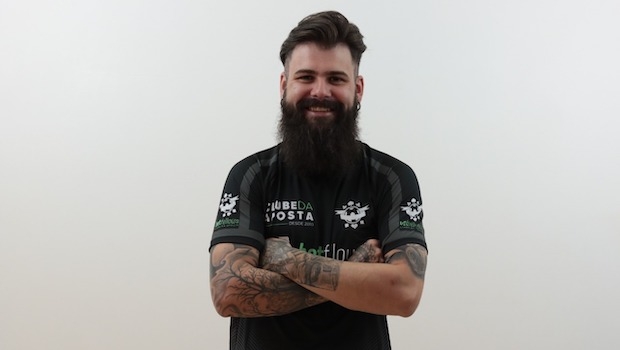
GMB - You are a gaming trader since 2013. Becoming a professional before the popularization of betting in Brazil gives you any advantage in the market? What did it take to reach to a trader level?
Roberto Tavares - At the time when I started to dedicate myself to sports trading, there was little information about good practices and forms of professional work. The market that today shows signs of being more fair and mature, at that time was susceptible to errors that caused opportunities to those who had some level of knowledge, although low compared to the present day.
Having started at that time allowed me to evolve along with the market, and the more experience accumulated, the easier it is to adapt to new scenarios. I have already worked on thousands of games, and the theoretical and practical knowledge acquired in these 7 years gives me an advantage over those who are still looking for trading methods. To get to the position I am in today I had to first understand that what I do is nothing different from any other job. It was necessary to assimilate what my role was, and how to execute my strategies in a practical way, without subjectivity. Also, forget about getting rich easily and learn to deal with the nuances of a variable pay work.
There is a boom in Brazil of schools to professionalize sports bettors. As it is still a new branch in the country, how can students analyze to choose the right school for them? What characteristics do these institutions need to have in order to show they have a differential?
The first - and perhaps the most important - factor is whether or not there is a promise of profitability. I am categorical on this point: there is no way to guarantee income. Any person or company that promises profits is not to be trusted. Another very important factor is to seek information about the professional, or the company that provides content. Unfortunately, many of those who promote training are not even bettors or traders, just do good marketing and sell the idea of making money with bettings, or investing in football and other sports matches. Those who are not to be trusted are usually short-lived, and as much as they may make a noise at first, they do not usually survive for more than a year or two. As an example, Clube da Aposta - a company that I am a member of and which offers a series of free and paid training courses - has been working for 10 years.
I recommend that you do a good research before you start. Everything is available on the internet. One of our Portuguese students in advanced trading training recently said a phrase that serves perfectly to end this question: “Every day a smart guy and an innocent go out on the street. Whenever they meet, business is done. Don't be innocent, don't try to be smart.”
How do you see the current scenario after sports betting regulation? Is there a growing popularity of these schools?
It all depends, in my view, on the rules that will be stipulated, both for bettors and traders and for bookmakers. As long as there is no definition, the market will certainly continue to rise. After regulation, there may be a new boom, or we may take a few steps back. The freer the market, the greater the offers and the better the development of serious platforms like Clube da Aposta. Already in a restricted and highly regulated scenario, there should be few offers, which penalizes the professional investor and minimizes the possibility of generating income from the bets. In the latter case, only the producer who promises “easy earnings from home sofa” will be favored, and thus the number of “schools” may increase, but the quality must drop dramatically.
Have you analyzed the draft released by SECAP for consultation? What would you add or change everyone to win, both the State and operators and bettors?
I am one of the founding members of ABAESP (Brazilian Association of Sports Betting) and the document was analyzed together with some of the biggest and best bettors and traders in the country. The most controversial points are the limitation of the number of operators in the national territory in a bidding model, the matching of fixed-quota bets to lotteries and also the suggested form of taxation. In relation to this, the proposal is that it should be applied on the turnover (sum of the entire financial amount negotiated) instead of the GGR (gross profit from operations), which is completely wrong and makes the scenario inappropriate and unfeasible for operators, which promotes illegal gambling. In the same way, equating sports betting with lotteries is unreasonable as they are completely different activities and need to be dealt with in a specific way. The points cited have already proved inefficient and have failed in all attempts in other countries.
Given the reality experienced by many countries in relation to betting regulation, what would be the model country in which Brazil could mirror itself when it comes to creating fair regulation for all? Why?
We are inexperienced, and nothing better than consulting the most developed countries and applying what already works there. When it comes to legislation, the example closest to perfection is that adopted by England. The state earns high, operators have a free market to develop, in addition to generating jobs and income, and bettors have a number of options with fair offers, in addition to protecting the player who eventually has problems with betting. It is necessary to have a favorable and safe environment for all parties involved, and the English are masters of this. However, Brazil seems to prefer to consult inexperienced countries, which in a short time have passed laws that are a failure and encourage illegal gambling, as is the case - unfortunately - in Portugal.
Given your knowledge of this topic, how do you believe that sports betting can benefit Brazil?
For the government, the benefit is obvious, as in a regulated market there will be taxation and tax collection. If there is more revenue, the country will have more resources to develop and the entire population can benefit. For us, traders and bettors, working in a regulated market - fairly - is synonymous with security and stability. For operators, on the other hand, a free market, with clear and objective rules obeying the best global practices, offers a favorable environment for investment. In the best of scenarios - the one more like to UK - everyone wins. At worst, like Portugal, everyone is harmed, including the government itself.
What is your position in relation to bookmaker advertising? Will it be a big investment in Brazilian sport?
Surely the whole country can benefit from a regulated and open market. Clubs, suppliers, fans, bettors, press outlets and various other sectors can start generating more revenue, which helps the nation as a whole. The most controversial point of legalization and advertising is the protection of the player and cases of ludopathy. Legalization, contrary to what many preach, protects the gambler and sheds light on the problem that already exists, but that the state hides in a dark corner of a room. By adopting good practices, it is possible to detect problematic people and direct them to appropriate treatments. Therefore, there are only benefits when it comes to bookmaker advertising.
During this global pandemic, how do you see the situation of the professional gambler and bookmakers? Was it possible for bettors to reinvent themselves just as operators did to continue offering bets to their users?
We went through a situation similar to that of most Brazilians. Professional bettors tend to specialize in leagues and championships, and most used their free time to study and evaluate their own performance. Some forms of work are compatible with most of the leagues, others are unique and need to be applied in equally specific situations. In my case, there was not even an investment until the return of Bundesliga 1 and 2. For the betting houses, it was a catastrophic financial period, but nothing different from the world scenario, nor comparable to the suffering of those affected by COVID-19. Companies reinvent themselves; traders and gamblers adapt to the current ituation. It is necessary for everyone to have an understanding of the magnitude of what we are experiencing and to be able to look ahead.
Finally, what do you think the sports betting scenario will look like after the pandemic? Do you believe that, for example, eSports are here to stay?
The post-pandemic scenario worries me a little, as some people will try to enter this world believing that it is the salvation of all problems. In fact, it is possible to become a professional and make a living from gambling, but it is not as simple as many preach. Both trading and betting require study, dedication, commitment, experience and knowledge, as well as any other activity. I hope these people find a reliable and honest source of information. Regarding eSports, the pandemic gave life to something that was already becoming evident recently. Although still embryonic in the betting world, eSports carry a legion of fans and enthusiasts, people who are connected to technology and with easy access to digital media, who will certainly have no difficulty on betting on events they like. The trend, in my opinion, is that within a few years virtual sports will move as much money as physical ones.
Source: Exclusivo GMB