




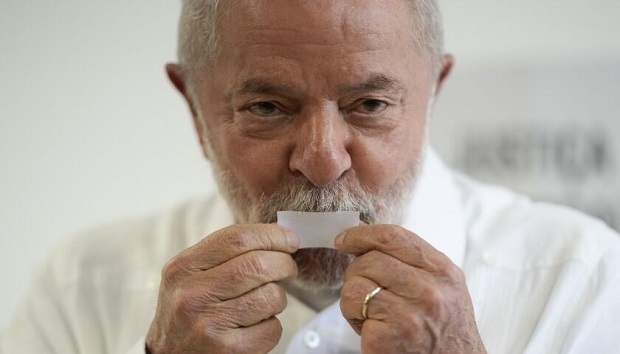
Luiz Inácio Lula da Silva is clearly not a pro-gaming man. Despite timid intentions to legalize the activity at the beginning of his first term, he closed bingos in 2004 and from there maintained a contrary position during all his years in power where the industry did not advance, and his speech of resistance to gaming was hardened.
In the area of lotteries, it was during his administration that Caixa Econômica Federal (CEF) consolidated itself as a federal state entity monopolizing the activity, leaving out the private initiative and the possibility of states owning their own lotteries and concessions.
The situation changed last year, when the Supreme Court decided to end this monopoly and give states the chance to have their own lottery products with the same rights as Caixa. From there, it will be another scenario that Lula will face, with no chance to recentralize the activity and with the obligation to respect a measure of the Supreme Court.
Gaming legalization
Of course it will not be easy to take the issue to a vote in the Senate just 20 days before the start of the World Cup and close to the end-of-year vacation and parliamentary recess. After the results of the first round, the new composition of the National Congress, mainly for the success of the PL party in winning 99 seats in the House and 8 in the Senate, was very worrying for gaming companies should the vote pass next year.
Centrão, a group of supporters of the current president Bolsonaro, now has 235 federal representatives. In the Senate, where Bill 442/91 is currently located, which legalizes all forms of gambling, such as bingo, casinos and sports betting, a third of the disputed seats were won by PL members. The PL is a conservative party that supports Bolsonaro's agenda.
Damares Alves, of the Republicans, and Alan Rick (Union Brazil), among others, joined the conservative ranks of the Senate. Magnus Malta, who has always opposed the activity, is also back. Of all the seats in the Senate, 14 were won by supporters of the president. In turn, David Alcolumbre, a re-elected senator with significant influence among his peers, can be an incentive for the industry, supporting the initiative.
A few days before the elections on Sunday, local magazine Veja said in a flashy way that Congress must approve - and Jair Bolsonaro sanction - later this year the legal framework of gaming. The magazine said the bill follows in parliament and is contested by different benches, but gained strength by being an important revenue channel for the government, which will start January hard indebted by this year's election spending.
But the situation may change since it will not be the Bolsonaro government that will manage the economy and budget from 2023 and this rush to pass the law can be curbed. The current president's plan contemplated vetoing the possible approval of the bill by parliament to keep his word before the evangelical bench that has always supported him, so that Congress itself would overturn this veto and support the legalization of the activity in Brazil.
If Parliament approves Bill 442/91, it will be strange for the new President Lula to quickly take a veto measure and to go against approval as one of his first government measures. Despite not liking the issue and not agreeing to the legalization of gaming in Brazil, the new president would respect the decisions of Congress as he promised in his first speech after being elected.
The parliamentarians who acted in the discussion of this proposal and defend the regulation of gaming estimate at R$ 150 billion (US$ 28.5b) the potential to collect all activities that will be taxed with the approval of the legal framework.
Undoubtedly, the reelected federal deputies who made up the Working Group of the Regulatory Framework of Gaming (WG) will have a lot of work ahead to convince the new bench in the Senate, to vote for the segment, demonstrating to them all the understanding they had about the sector. Vermelho, Felipe Carreras, Bacelar and Eduardo Bismark, all of them with an admirable performance ahead of the WG in the past, continue to show their support for the activity.
If the Brazilian Senate approves Bill 442/91, President Bolsonaro declared that he will veto the bill. However, with the current composition of Congress, it would be easier for them to repeal their veto. If Congress passes the bill, it will have to be approved by both chambers before the end of the year. If postponed to the next session, the new composition of the Senate may make it difficult to approve the bill, with Lula in power.
On the other hand, the government of Bolsonaro now and even Lula's, from January, will have to seek a definitive solution to the new law of the nursing wage floor that is suspended until the beginning of November, deadline established for budgetary possibilities to be presented to apply the law with the adjustment.
The suspension was ordered on September 4 by Minister Roberto Barroso, the Supreme Court, before the financial impasse indicated by health institutions on the lack of funds for costing. Precisely, the regulation of gaming and betting in the national territory was another idea presented to help fund the salary floor of nursing and its approval could facilitate the resolution of the theme.
Sports betting
Before leaving power, President Bolsonaro must confirm his decision to take to the Ministry of Justice the regulation of sports betting, which until now was under the responsibility of the Ministry of Economy. At the end of the procedural deadline based on the law, the change of portfolio is seen as another obstacle to regulation later that year.
The companies responsible for sports betting sites expected the regulation to be approved even in the current government, since next year its approval will be hampered by a more conservative National Congress and, in the case of Lula's victory, by a government that would benefit more the interests of the State, such as Caixa Lotteries, rather than private initiative.
The massive presence of bookmakers, the dependence of clubs and associations on strong sponsorship incomes and the loss of income in taxes will force the new government to speed up measures. This is an issue that did not exist on Lula's agenda in his previous governments and his real position in the sector is not known, as he never spoke on the subject.
A study by Zion Market Research shows that this market is expected to grow 10% a year, reaching about US$155.5 billion by 2024. In Brazil, it is estimated that sports betting sites should move between R$ 7 billion and R$ 10 billion (US$ 1.35b x to US$ 1.9b) per year as soon as regulation happens.
Background
The Lula government has maintained an ambiguous position regarding the legalization of gaming since the new president's first term. In 2003, Lula's aides even prepared an interim measure to release bingos in the country. But even before the text was ready, came the Waldomiro Diniz scandal, and the government changed direction. The provisional measure, which would be to release, ended up prohibiting the activity.
Former aide to the Civil House, Diniz was caught asking for bribes to the contraventor Carlos Augusto Ramos, the Carlinhos Cachoeira. The scenes were filmed in 2002, when Diniz was president of Loterj. But when the images were released in February 2004, the government issued an interim measure to ban gaming.
The case gave rise to the CPI of Bingos, to investigate the use of gaming houses for the commission of money laundering crimes. But the focus of the investigation has widened so much that over the course of two years it has earned the nickname the ‘CPI of the End of the World’.
In 2007, already in his second term, Lula said he personally was against bingos, but the final word on the subject would be congress. "I'm in favor of not having bingos. I've already done an PM to end bingos, because I was convinced at that moment of the information I received from the Federal Police itself that bingo was used as money laundering," said the former president.
But then he waved at the release of the activity: "They say there is a difference, that one thing is bingo, where women go, old ladies play; and another thing is the machines, it seems that there is distortion. Anyway, I think Congress can regulate, prohibit or not prohibiting," he said.
The Federal Police and the Federal Prosecutor's Office have carried out several operations to close bingo houses and seize machines. Delegates and prosecutors said that, in addition to being illegal, gambling served to launder money from corruption and drug trafficking.
In an interview after the inauguration, on January 2, 2011, The Minister of Justice, José Eduardo Cardozo, said he was against the project of legalization of bingos: "This project, as it is, really greatly favors money laundering and therefore indirectly organized crime."
Source: GMB