




Data from the Mktesportivo website showed that the sports betting market in Brazil reached R$ 7 billion in 2020 (US$ 1.3b), even with the pandemic. Between 2018 (the year in which the law authorizing the operation of bookmakers in the country was sanctioned) and 2020, the sector grew from R$ 2 billion (US$ 376m) to R$ 7 billion (US$ 1.3b).
A study by Zion Market Research showed that this segment should grow 10% a year from 2021, reaching around US$ 155.5 billion in 2024. In Brazil, the estimate was that it would move between R$ 7 (US$ 1.3b) and R$ 10 billion (US$ 1.9b) per year.
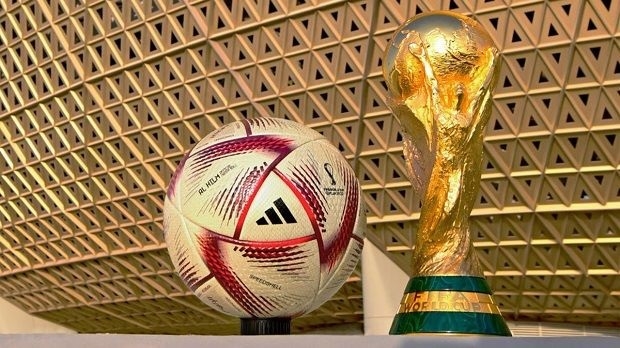
With the World Cup, however, this market gained even more momentum. This is because the football tournament is followed by many more people than a state or national championship, such as the Brasileirão or even the European leagues.
"There's no way to escape the World Cup, people are being exposed daily. So, during the tournament, bookmakers acquire many customers that they couldn't access before," says Arthur Silva, responsible for Betway for the Brazilian market.
He claims that sports betting is like an "opinion" and that "in big events, everyone has an opinion about that". For this reason, many people who, outside the World Cup, are not very interested in football, enter betting during this period.
Publicist Priscylla Barros is part of this group. She says that "in normal times", she is not a big fan of football, but during the World Cup she likes to follow the games. For this reason, she bet R$ 150 (US$ 28) on a multi-match combo, even though she wasn't sure of many results from that package.
"The more games you played, the more the winnings increased, so if I only bet on Brazil, which was what I wanted, I would win little. But if I selected several games, I would win R$7,000 (US$ 1,315). I didn't know that if I missed just one, I would lose everything," he explains.
This, however, was not the last bet of the advertiser, who got excited about other games, but lost again because she did not understand the type of bet she had made. "It's very tempting, and on Twitter we only see successful cases," she says, and added that she found this type of game to be dangerous.
The "zebras" of this Cup, however, scared even the most experienced bettors and also the newcomers who follow football. And, if this (the zebra) is bad for customers, for bookmakers it is something positive.
"Usually, the Cup helps to build the bookmaker's brand, but it doesn't make much money for them. This year was different, the margin for the bookmakers is good because there were a lot of unpredictable results," says Silva, from Betway.
Despite the surprising results, there were those who made money on other less traditional bets, such as those on the number of free kicks or corners in that match. This is how civil engineer Bruno Toledo achieved good results in this Cup. He says that he is not in the habit of betting, but he saw his friends betting during the tournament and decided to participate too, "to socialize", he says. But despite following and liking football, he does not believe he will continue betting.
Silva, from Betway, says that this is common. He explains that during the Cup many people start to place their bets but, at the end of the tournament, they don't keep the habit. Still, the World Cup brings new customers. "After the Cup is over, the number of bettors drops. Most who come for the Cup, leave later. But even so, the number of customers in the houses ends up greater than it was before. Many who like football and other sports, end up finding something on the 'menu' that they are interested in betting on," he says.
Uncertain regulation in Brazil
The law that makes sports betting possible in Brazil was sanctioned by the then president, Michel Temer, in 2018. In practice, it decriminalized the so-called "fixed odds bets", a modality that includes bids in which the bettor knows how much he will win if you get that result right. The legislation, however, did not institute any government control or oversight of the activity in the country.
The deadline for the government to regularize this market expired on December 12 of this year. The law enacted in 2018 provided for the creation of an agency to establish the guidelines for this market in the country, but this did not happen. However, as the companies providing this service in the country are based abroad, they were able to continue operating.
Still, the environment is one of uncertainty. "There is a legal void, because the term does not exactly have a consequence. That is, the law does not fall, but it does not oblige anyone to make changes either. Companies continue in this model based abroad," explains Silva. "But if tomorrow a regulation comes out and the company does not obtain a license, it needs to stop serving Brazilians," says the executive.
Finally, Silva points out that the issue of regulation is interesting because Brazil is a huge field of opportunities. According to him, Brazilians are more likely to gamble than the English, who live in a country where betting has been regulated for a long time. "The Brazilian goes much more in the lottery, for example," he says.
Source: Valor Investe