




At the end of former President Michel Temer's government, Brazil legalized sports betting and Law 13756 determined that the activity would be regulated within two years, extendable for another two years. In the previous administration, nothing was done and it was up to the Lula government to continue with the process of regulating the sector.
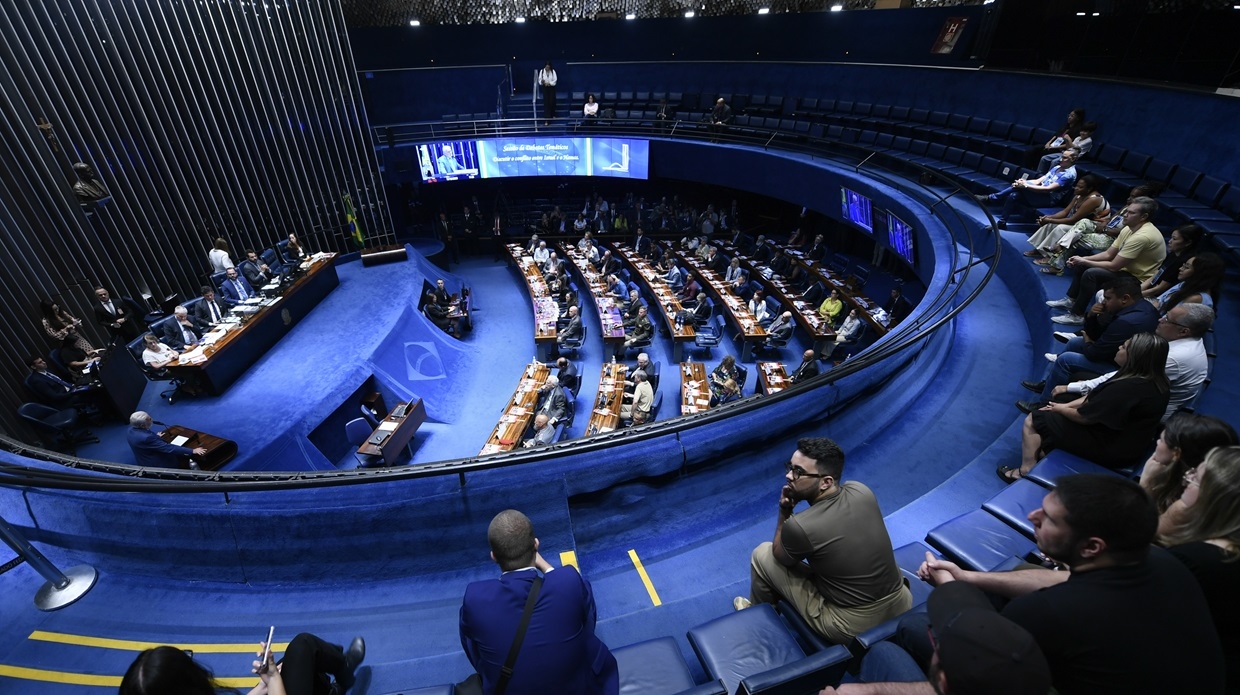
Finally, today, Tuesday 12th, the Senate should vote – and based on projections – and approve the regulation of the activity, with a very realistic report and in line with the main international practices and taxes appropriate to what is expected for the growth of the sector in Brazil.
?The report by senator Angelo Coronel (PSD-BA) imposes rules that the sector already imposes on itself and defines the taxation of the activity at 12% on the GGR, granting R$30 million (US$ 6.1m) for a period of five years for up to three brands. It also defines the incidence of 15% Income Tax for the bettor over the course of a year for net prizes exceeding R$ 2,112 (US$ 430).
Even with the back and forth, there are still opposing opinions from misinformed senators who try to block the approval of the matter because it also includes online gambling, which in rapporteur Angelo Coronel's view is a demonstration that opponents are in favor of clandestinity.
“It even seems like we are inventing some type of game. We are not inventing anything, we want to legalize what is there, because in the 2018 law, still under the Temer government, this law on online gaming was approved, of sports betting. We are now regulating them to come out of hiding and thus generate resources for the Union’s coffers,” declared Coronel.
Regarding the opposing senators, he has an opinion: “They are more in favor of clandestinity than of regulating this market, let's say, products that generate taxes for Brazil. What would be the interests of not leading to regulation? Because it seems to me that even the sector itself, to some extent, is in favor of this regulation, which ends up bringing more formalization.”
The government awaits the regulation of the activity with the same anxiety as the sector, counting on at least R$3 billion (US$ 610m) in revenue, although it has included R$1.6 billion (US$ 325m) in the 2024 Budget Law.
Coronel, in-depth knowledge of the activity, points out that there will be “around R$10 billion (US$ 2.05bn) that will enter the public coffers and contribute to the government’s goal of closing the fiscal deficit in 2024.” For this reason, he has guided and asked senators to follow their vote in favor of the report “for the good of Brazil.”
The project defines the fixed-odd betting lottery as a betting system that includes virtual online gaming events and real sports-themed events, such as football and volleyball games, for example.
The report also determines that the company to be set up in Brazil has 20% Brazilian capital.
The text regulates the communication and advertising actions of betting systems, the fight against misleading advertising, the integrity of betting and penalties in case of breach of the rules.
Bets can be placed physically or virtually, and the authorization act will specify whether the operating agent can act in one or both modes. Authorization from public authorities for fantasy sport, an electronic sport in which disputes take place in a virtual environment, based on the performance of real people, is waived.
Legal entities must comply with requirements such as: headquarters and administration in the national territory; proven knowledge of games and betting; compliance with cybersecurity requirements and internal control procedures; and money laundering prevention mechanisms.
According to the text approved by the Chamber of Deputies, 2% of the amount collected will go to social security. Other recipients of the resources will be the areas of sport (6.63%) and tourism (5%). In sport, the amounts will be divided between the Ministry of Sport (4%), athletes (1.13%) and specific sports confederations, with percentages varying between 0.05% and 0.4%. Half a percent of the amount will be directed to state sports departments, which will have to distribute half to municipal sports departments, proportionally to the city's population.
In tourism, 4% will be allocated to the Ministry of Tourism and 1% will go to Embratur. Law 13,756, of 2018, which created this type of lottery, provided that companies would keep 95% of gross revenue (after prizes and income tax), while the project allows 82%.
Still according to the proposal, education will receive 1.82% of what is collected. Within this amount, 0.82 percentage points will be allocated to early childhood schools or primary and secondary schools that have achieved targets for national assessment results. The remainder (1%) will go to public secondary technical schools.
As the project originated in the Chamber, once approved it will be for validation by federal deputies and then for presidential sanction.
Source: GMB