




In fantasy games, players form imaginary teams, made up of characters that simulate the statistical performance of real athletes in a professional sport, such as football, volleyball or basketball. In many cases, the game also involves prizes and money bets, an issue that caused controversy in the discussions in the Senate, but which has now been ruled out by the rapporteur.
This point, according to her, will remain to be debated in the project that deals with fixed-odd sports betting, in Bill 3.626/2023. The rapporteur's substitute also excludes slot machines and other online games from the definition of electronic games.
According to Leila, the changes are the result of the participatory process that included suggestions from civil society entities. The electronic games sector complained about the lack of debate on the proposal during its processing in the House. The project came to a vote in the Plenary, but after a session of thematic debates and the coordination of some senators, a consensus was reached to "take a step back" and forward the text for analysis by the EC.
“The role of the legislator is this: to be provoked by actors in the sector. [...] Parliament made the wise decision to bring in the Education Committee and today we held this debate and delivered a long-awaited milestone. We put the train on the tracks,” said the senator during the hearing called to instruct Bill 2,796.
Upon the announcement of the presentation of the text, the guests classified the changes as an advance. The project went from its original eight articles to the 24 replacement articles, organized into four chapters, and included issues such as the creation of a specific code in the National Register of Economic Activities (CNAE) for companies developing electronic games, facilitating their identification and economic categorization. It also provides the definition of electronic game development companies and specifies the professionals who fit into the area.
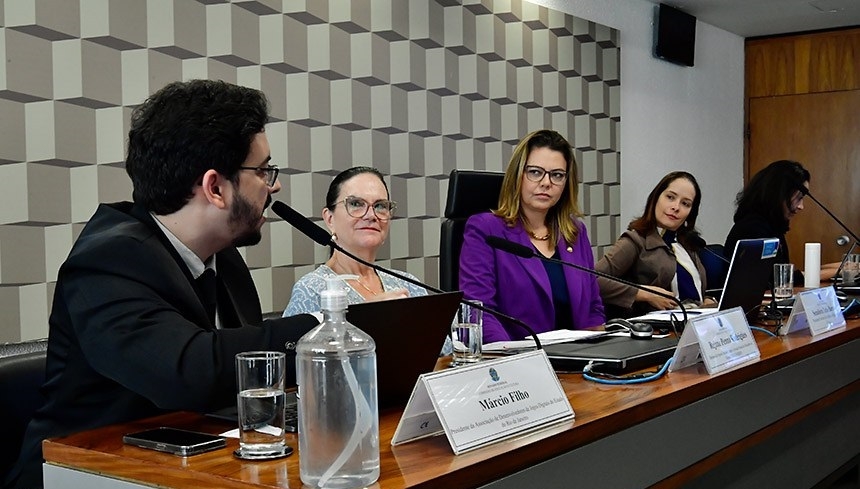
“I recognize a huge advance. Here is the sector. I can see the future of the country, the future of the gaming sector here. At this moment we see the child being born,” greeted Márcio Filho, president of the Association of Digital Game Developers of the State of Rio de Janeiro.
According to sector representatives, gaming companies today face challenges such as the difficulty in importing machines and tools, barriers to attracting investment and training and hiring professionals, among other bottlenecks. Raquel Gontijo, representative of Abragames (Brazilian Association of Game Developers), an entity that brings together 95% of the electronic entertainment sector, highlighted the progress of the proposal in the Senate.
“Until now there had not been this space for dialogue. [...] It is a necessary regulatory framework for the growth of our industry. We need to advance in understanding the importance of the sector for the development of the Brazilian economy,” she said.
Originating from the Chamber, the project includes electronic games under the same taxation rules as computer equipment. As a result, investments in game development or production are now considered as an application in research, development and innovation (PDI). The Information Technology Law (Law 8,248, of 1991) grants financial credit on PDI expenses to deduct federal taxes.
Source: Senate Agency