




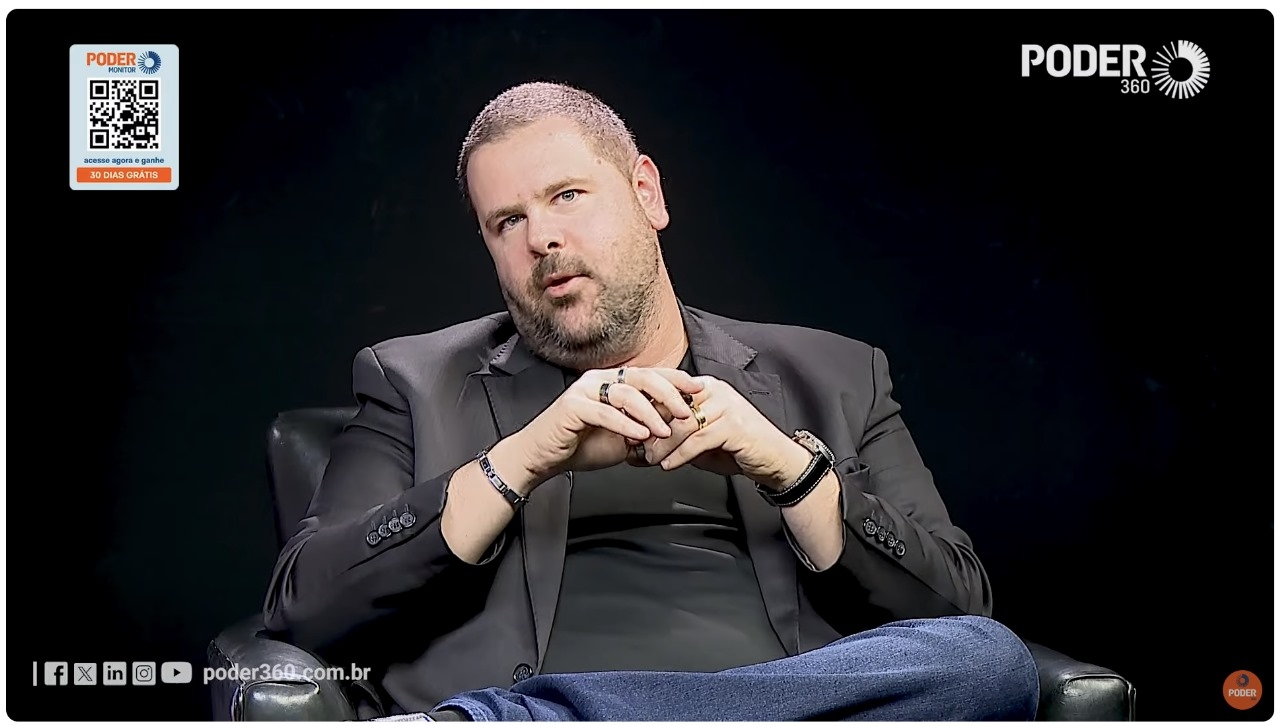
Poder360 – Which betting companies operate with Pay4Fun? What are the criteria for the platform to accept betting companies?
Leonardo Baptista – Until October 10th, we were working with over 200 different companies and more than 500 sites. However, there was a reduction due to the government ordinances issued recently. On October 10th, a cut was made. Since then, we’ve been working with just over 100 companies and approximately 200 sites. We’re waiting to see which of these will actually pay for the license and remain in the regulated market starting next year.
How many employees does Pay4Fun have? Has the number grown compared to 2023?
A lot. We’ve been growing steadily, almost doubling our team, with a strong focus on the technology and compliance departments. Today, we have a little over 150 employees in the company.
How much does Pay4Fun handle monthly and annually in sports betting? How many users?
Currently, we have, on average, a little over 3 million users using the platform as a payment method. The volume is approximately R$300 million to R$400 million per month.
How does this compare to 2023?
It’s growing significantly. We see that the curve for betting in Brazil is on the rise. The market has been expanding considerably, so the numbers are doubling. I believe that in 2025, this number will increase even more due to regulation.
What is the profile of people who participate in sports betting in Brazil? What is the average ticket value?
It’s quite varied. In sports betting, the audience is more male than female. It’s a younger audience, around 25 to 30 years old. But there are other gaming verticals. For example, casino games attract a more female and older demographic. The average ticket value is approximately R$150.
How does the operation of a certifying company that validates the return rates of games work?
There are certifying companies in the market, such as GLI [Gaming Laboratories International] and BMM. What do they do? They authenticate two things: the platform and the game. For games, for example, they analyze the source code, the game's mathematics, validate the code, and simulate 100 million rounds based on that code to ensure that the return to player (RTP) of the game complies with regulations. Brazil’s 2025 regulation guarantees that games must have a minimum RTP of 85%. That’s what certifiers do.
How does this compare to other types of betting, such as Mega Sena?
It’s an unfair comparison. Lotteries, being a different type of game, work differently: you bet a little to win a lot in a single attempt. For example, the probability of winning the Mega Sena is one in 50 million. But lottery games’ return rates are around 40% or 50% at most.
The use of credit cards in betting was prohibited, but can bettors find ways to bypass this?
No, there are no [ways]. What we foresee in the regulated market, especially now with regulation and legalization in the sector, is that financial institutions will play a very important role. Payment and financial institutions will be key for this market to function properly. The regulation will come with very clear and specific rules. Credit cards, for example, are prohibited precisely to promote responsible gambling. No one wants players to fall into debt, and betting companies dislike these kinds of issues as they cause problems for them. We know that 99.9% of the market operates via Pix. With strong control from SPA, alongside the Central Bank and payment institutions, there’s no possibility for credit card use.
Recently, a Central Bank study highlighted concerns about Bolsa Família. Is it also possible to bypass betting regulations using the Bolsa Família card?
For example, debit cards were initially allowed but are now under review. I don’t believe in this payment method being widely available to the public. I think it will eventually be restricted. This is currently under review, especially after the recent issues in the past few weeks. There’s a discussion about regulated payment methods and betting sites potentially cross-referencing databases to verify if a bettor is a recipient of government benefits, to prevent them from gambling. That’s one path. However, it’s an extremely complex issue because if prohibition goes forward, they will have to reconsider several other sectors that currently allow such practices—for example, betting on Mega Sena at Caixa using Bolsa Família funds.
How do you assess the regulatory changes in the sports betting sector?
It’s extremely challenging to address a topic like this and simply roll out everything all at once. This regulation is incredibly beneficial for everyone because sweeping it under the rug would be much worse. The games are here. Betting is here. Gambling has existed in Brazil for a long time. It’s worth remembering that, in the 1940s, we had open casinos. There was also the bingo era. Prohibiting or ignoring the need for regulation is the worst thing you can do. It fosters illegal gambling, provides very low returns for players, and leads to improper marketing practices. Regulation is here to set things straight.
What has been positive and negative in the measures from the Ministry of Finance?
Personally, I think the work done by SPA has been fantastic. Regis [Dudena] has been doing an excellent job. There are minor details, but I always use this phrase: “Done is better than perfect.” They made small mistakes, such as requiring players to register their bank accounts. This is unnecessary because, today, CPF and Pix already provide all financial transaction data. There are some overly meticulous requirements in the law, but I’m confident that within the first three to six months of operation, these will be reviewed.
How many Pay4Fun companies have already paid the R$30 million license fee to operate in the country?
The big conversation this week [among companies] is about who has been notified by the government for approval. The exact numbers aren’t clear yet. We still don’t know how many operators will receive this notification and make the payment. From what we’ve observed, among all those who have paid, Pay4Fun represents between 50% and 60% of the operators.
How can Pay4Fun help ensure that sports betting doesn’t become addictive? How can it remain a practice that doesn’t harm people’s health?
We understand that this requires collaborative efforts between payment methods and operators. Operators will have to adhere to very clear rules regarding responsible gaming and self-exclusion. All sites operating in Brazil from January 1st will need to have very clear rules on self-exclusion. This responsibility falls on the operator, and we, as a payment method, will also check the same database to see if a user has requested exclusion.
Are you in favor of banning betting advertisements?
I believe responsible advertising is always welcome, but yes, I completely support what Senacon (National Consumer Secretariat) did a few weeks ago and the prohibition of massive advertising campaigns as they were being conducted. It was indiscriminate. Advertisements were making claims of guaranteed prizes, guaranteed income, or extra earnings, with fake influencers on social media driving Porsches and saying, “I earned this with the Fortune Tiger game.” Poor Fortune Tiger game—it’s not to blame for any of this. In reality, clear rules are needed.
It’s important to clarify that sports betting is a form of gambling, not an investment strategy.
It’s entertainment. […] It gives you that rush of adrenaline; it’s enjoyable, fun, and exciting. And you even have the chance to win something—but it’s just a chance.
How can consumers avoid falling for scams involving supposed betting sites hidden in the market?
Starting January 1st, the first thing bettors need to check and understand is the URL, the domain of the websites. The authorized domain in Brazil will be ‘.bet.br’. Today, bettors are used to accessing ‘.com’ domains. Authorized betting sites with ‘.com’ domains will automatically migrate to ‘.bet.br’. The first rule is not to bet on any ‘.com’ site starting January 1st.
What tasks do betting companies need to complete by January 1st?
There’s still a lot of work ahead. Yesterday [November 24th], a new ordinance from the secretariat was issued, addressing data migration. Both operators and we at Pay4Fun are going through an incredibly hectic period with all the work we need to complete by January 1st.
How do you see the sector evolving in 5 or 10 years?
If you had asked me this 10 years ago, we always had the hope that “next year would be the year.” And we stayed in that cycle for many years. I believe that, with everything being done now, Brazil will become the number one country in the world for betting. Without a doubt, it will surpass the United States and the United Kingdom. Brazilians enjoy gambling and entertainment.
I believe that by 2025 or 2026, we’ll have physical casinos open here in Brazil. I see the government testing the waters with fixed-odds betting and online gambling, and from there, moving to physical casinos. So, I believe that within five years, we’ll have fully regulated physical casinos and a Las Vegas right here in Brazil.
Would Pay4Fun enter the casino market?
It’s already ready. We already have a solution that allows, for example, loading credits onto a slot machine, video bingo, or betting terminal to play, and withdrawing winnings via Pix directly through Pay4Fun and the terminal itself.
In your opinion, would this measure gain acceptance in Congress?
This is one of the discussions currently heating up in Congress and the Senate. We understand that there’s significant support, but also a lot of opposition, with certain factions against it. It will be an interesting debate. I believe the government’s initial step into online gaming in 2025 will demonstrate to everyone—public opinion, the government, and the media—the serious industry behind it: job creation, government taxes, and revenue.
If we’re talking about 100 companies paying R$30 million each for their licenses, that’s R$3 billion in public funds overnight, not to mention the 100 companies entering the country and generating jobs in compliance, marketing, customer service, and finance. The market is incredible.
Source: Poder360