




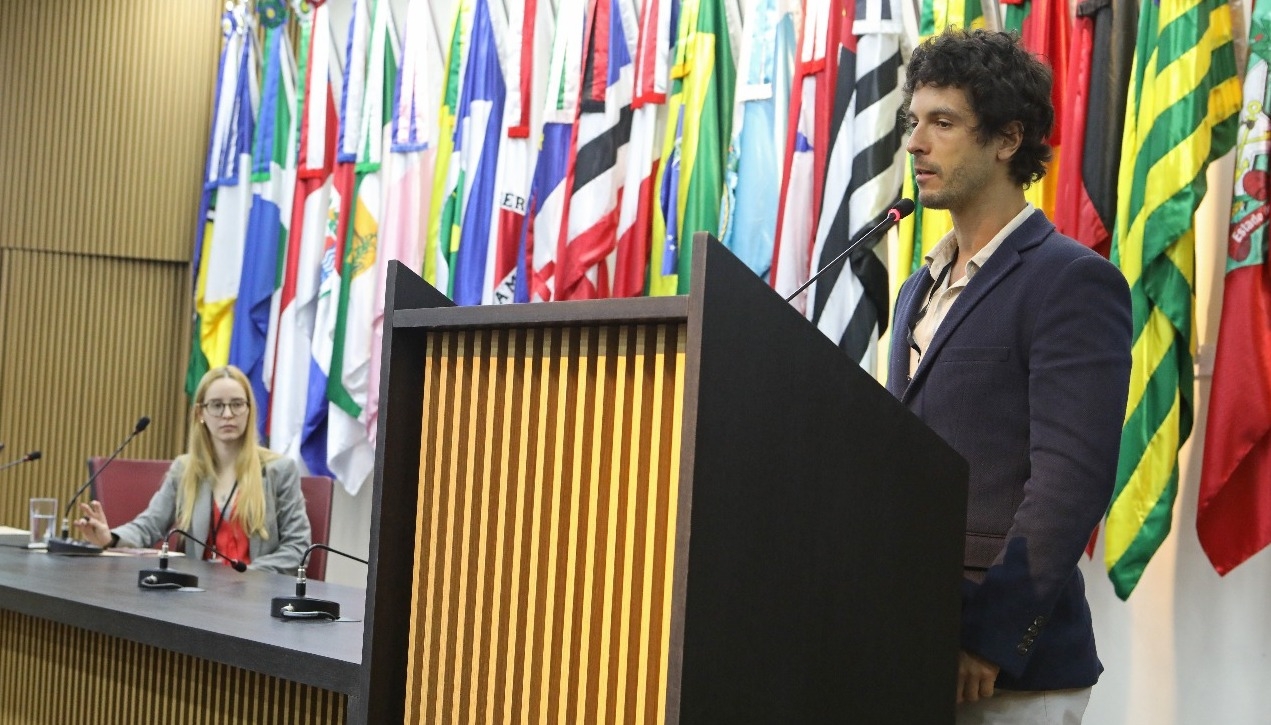
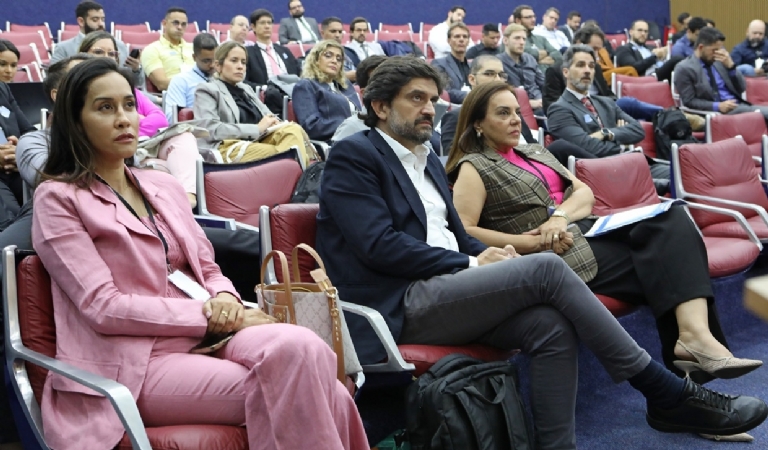
For Giovanni Rocco Neto, National Secretary for Sports Betting and Sports Economic Development, the presence of 54 delegates (27 from the Civil Police and 27 from the Federal Police) underscores the importance of training. According to him, the meeting “is very important so that officers on the front lines can fight this crime. This crime can only be effectively combated with information and coordination between all police forces, whether federal or civil.”
This view was shared by participants. Delegate Maria Alice Barros Martins Amorim from Mato Grosso, highlighted that “attending this meeting, learning investigative strategies and conduct for handling cases so harmful to society, is extremely important,” noting that front-line professionals “lack greater access to information and the dynamics of investigating such a specific matter.”
According to experts, match-fixing is not limited to a single sport but appears more frequently in lower-tier competitions. This occurs because betting operators, when paying the so-called “fixed odds” for correct results, do not differentiate divisions, leagues, or championships. Therefore, manipulating a regional or lower-division competition can be as profitable as manipulating a top-tier game.
Additionally, lower athlete salaries and weaker structures in less-funded teams increase vulnerability to corruption attempts.
Monitoring mechanisms
In the afternoon, discussions focused on market perspective and international cooperation. Felippe Marchetti, Sportradar’s Integrity Director for Latin America, presented monitoring mechanisms and detection methods for match-fixing in competitions, based on the company’s work across different countries.
Established in May this year, the direct partnership between Sportradar and the Ministry of Sport (MEsp), through a Technical Cooperation Agreement (ACT), provides for information exchange, training, and joint actions to strengthen sports integrity in Brazil.
For Felippe Marchetti, the meeting held at the Ministry of Sports “is a truly important milestone in the development of quality public policies to protect this cultural asset we possess.”
“In politics, we develop initiatives to solve social problems, guarantee rights, balance interests, and seek social justice. What was done at the MEsp is this: true politics. Bringing together ministries like Justice, Sports, and Finance, bringing together civil and federal police officers from all 27 states, shows that Brazil is truly committed to doing things differently,” he emphasized.
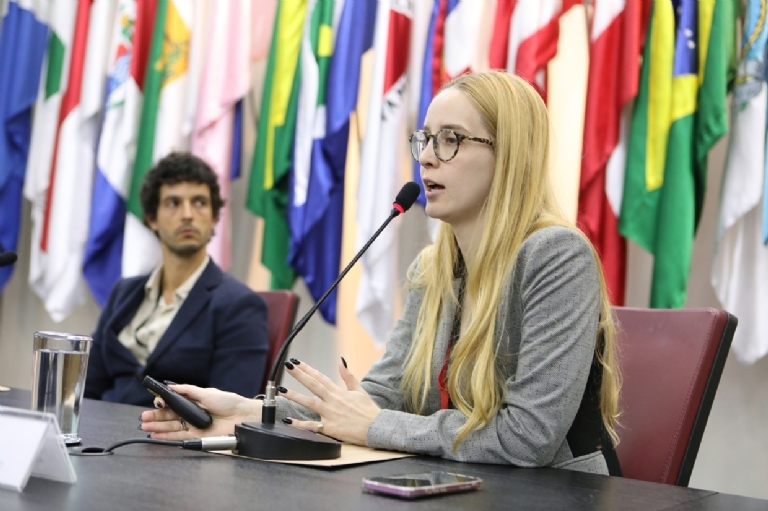
Tarsila Klein Schorr, Anti-Corruption Assistant at UNODC (United Nations Office on Drugs and Crime), also participated. She emphasized that corruption in sports is no longer an isolated problem but has become systematic and transnational, requiring global strategies. According to UNODC mapping, in 2025 only 49 countries criminalize sports manipulation, with just six in the Americas, including Brazil.
The importance of sharing experiences was highlighted as a central aspect of the meeting. By bringing together operations conducted in different regions and aligning national and international perspectives, the event seeks to ensure that investigative techniques, data-crossing models, and enforcement strategies are disseminated nationwide.
The focus is on training delegates and public security agents, allowing for faster, standardized, and more effective responses to sports manipulation.
With this second day, the meeting reinforces its strategic purpose: more than discussing guidelines, it prepares front-line professionals to identify, investigate, and repress sports fraud across all disciplines and competitive levels.
Source: GMB