




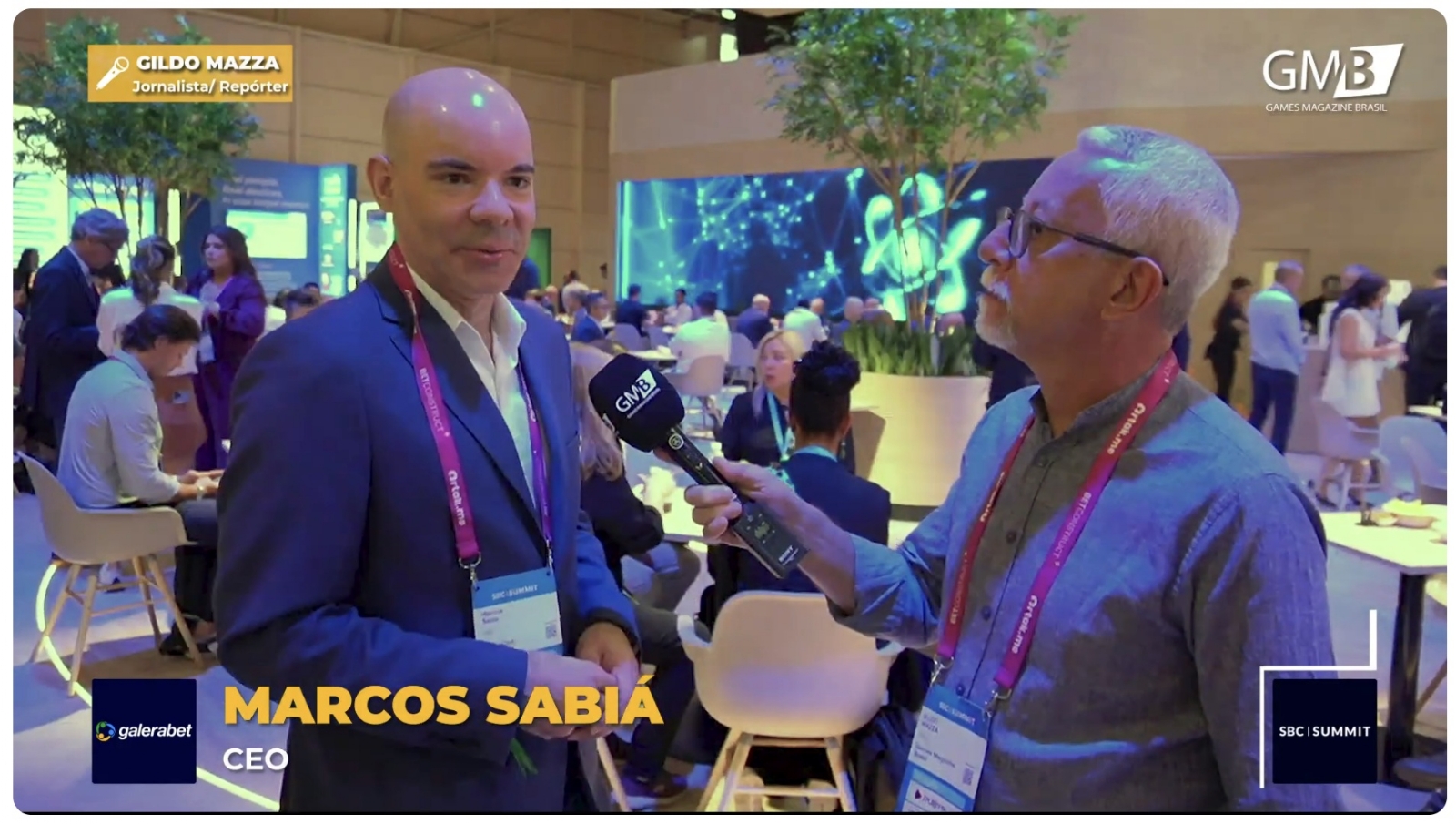
GMB – What were your main goals in attending SBC Lisbon in Portugal?
Marcos Sabiá – Trade fairs and exhibitions around the world are always opportunities to bring fresh air into our discussions, especially because we operate in such an intense market as Brazil, which has only recently been regulated. It’s always important to understand what’s happening globally and to realize that in mature markets, many of the phenomena we’re currently experiencing in these first months of the regulated Brazilian market were also common elsewhere.
And, without a doubt, being able to engage with the ecosystem and major global players operating worldwide—many of whom are also part of Brazil’s gaming environment—is extremely valuable.
In addition to attending to follow the ecosystem, you also took part in panels and served on the SBC Awards jury. How do you view the strong Brazilian presence at the event, with so many professionals seeking insights as you did?
It’s interesting because, compared to last year’s exhibition—when the Brazilian market was still pre-regulation—we can now see what’s truly a phenomenon of consolidation. There are fewer Brazilian players, but they are much more robust and qualified. Today, we can clearly see major global players participating in and closely observing the Brazilian market. All of the world’s top operators are now present in Brazil.
We’re seeing major Brazilian companies engaged in intense M&A activity, and this consolidation is very visible at the fair. Brazil is still the “flavor of the moment” and remains a major focus for these global operators. Consolidation is clearly underway, led by large groups already operating in the country.
How do you assess these first eight months of a regulated market, as one of the key players in Brazil?
We had a very complex and challenging start to regulation, particularly in bringing the entire player base into the new onboarding and KYC environment. Companies devoted a great deal of energy to this process. At Galera Bet, we focused heavily on it, and some studies even recognized us as having the fastest onboarding in the market.
Indeed, there was a lot of effort involved, and I must acknowledge the Secretariat of Prizes and Betting (SPA), which has been very receptive to the market’s concerns and has worked collaboratively to uphold the principles of regulation.
The key takeaway from these first eight months is that we now have a regulated market that addresses all the concerns civil society had about gaming—particularly the protection of vulnerable individuals, minors, and those susceptible to gambling addiction. It also combats money laundering, abuse, and potential match-fixing. This regulated industry has met all these challenges and now needs support from both civil society and the authorities so that the market can continue to flourish, generating jobs, tax revenue, and contributing to a dynamic, healthy entertainment economy for Brazil in a lasting way.
That’s our goal, and I believe we’ve made significant progress in these first eight months. However, there’s still much to be done. It’s a path of building trust with society, demonstrating the difference between the legal and the illegal market. Authorities must still identify which “valves” need to be shut off so the illegal market can be effectively choked out. In a few years, I hope we can look back and see that we’ve left behind a legacy of growth and economic development for the country.

One of the most effective ways to combat the illegal market is through financial restrictions, correct?
I believe there are several small steps, but the most effective action is indeed to choke off the flow of funds. That’s why Brazil must leverage the intelligence already present in the banking system—which I often say is the main benchmark for betting companies and has made great technological advances. Today, major financial institutions rank among the largest players in the market and have the capacity to help block these illegal money flows.
Everything is digital now, primarily through Pix transactions, so it’s precisely through this flow that we can cut off the sources of illegal gambling. The SPA has done relentless work shutting down domains—17,000 or 18,000 websites so far—but that’s like “drying ice,” as we say in Brazil.
In fact, the best way to fight and ultimately eliminate the illegal market is to monitor and identify the strategies or mechanisms these illegal companies use to move billions of reais through the financial system. By doing so, we can redirect both these players and their funds into the legal market, bringing the expected benefits of regulation—not just taxation, but also consumer protection and a safe environment for entertainment.
We’re at the Playtech stand, one of Galera Bet’s shareholders. How do they view the operation at this stage?
Playtech, a globally recognized and influential partner, is a strategic ally of Galera Bet. As I mentioned, all major global players are active in Brazil, and Playtech is no exception, present across all its verticals and multiple business fronts.
It’s great to be part of a group that believes so strongly in Brazil and has been developing its projects in a healthy, organic way—building a lasting story in the country. Our partnership is three years old, but it continues to expand into other brands and business verticals, demonstrating Playtech’s long-term commitment to developing Brazil’s gaming and entertainment industry.
Source: Exclusive GMB