




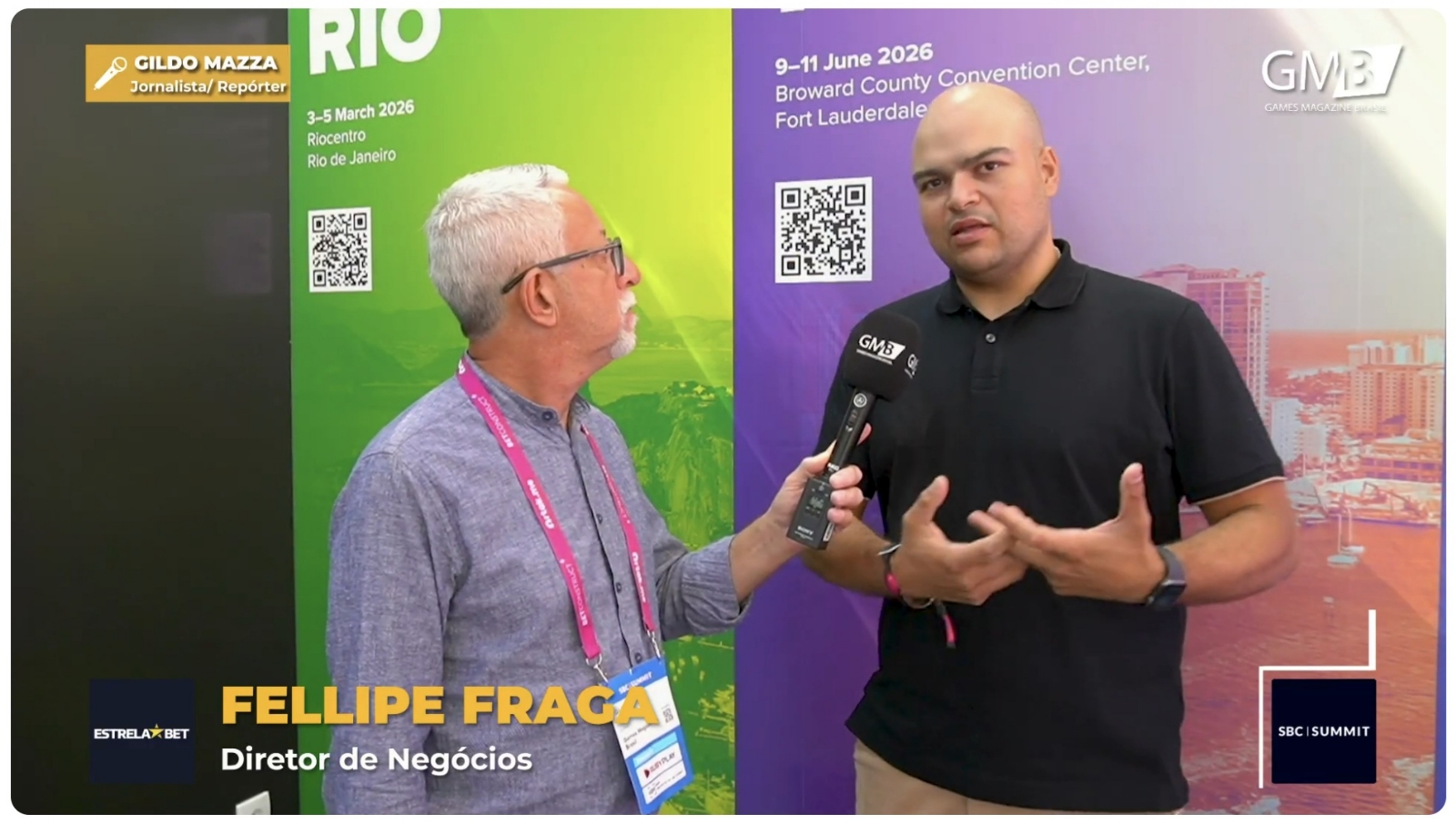
GMB – What did you find interesting at SBC Lisbon, and what brought you to the event?
Fellipe Fraga – SBC Lisbon is amazing—this year even better organized than last year’s edition, which was already impressive. The SBC quality seal is always great, right? It’s a strong reference we see in all these international events, and I’m already looking forward to the upcoming ones in Brazil, both from SBC and BIS next year.
Being at SBC is an opportunity to meet major international companies and leading service providers in the second half of the year, and to explore new technologies and innovations that can add value to our business. It’s a time of great learning for me and for the company, as well as a chance to find new opportunities, build new partnerships, and strengthen existing relationships. I also had the pleasure of speaking on two panels.
In one of them, I represented Brazil in a discussion on the LatAm reality; in the other, I talked about KYC—the big topic for 2025—due to the robust requirements introduced by regulation, alongside the team from Único and my friend Hugo from Esportes da Sorte. We joined forces to discuss challenges, ideas, and what we expect for the future regarding customer verification.
It’s always great to be at SBC to meet people. Foreigners often ask about Brazil—what we’re doing and the challenges we’re facing. There’s an educational side to it: it’s our chance to share the Brazilian reality, hear feedback on what’s happening globally, and learn that some of the things being considered in Brazil have already failed in Europe, especially regarding taxation. So, we return home with those insights, saying, “Look, let’s focus on tackling the illegal market, because that’s the only way for the industry and the country to keep growing.”
In your view, is financially cutting off illegal operations really the main tool to combat them?
Absolutely. There are actually two or three key pillars, and that’s the first one. It’s crucial because most transactions in Brazil are still done through Pix—and they should remain so, since it’s fast and efficient. If you can trace the flow of money from illegal operations using Pix, you can financially choke the illegal market, which won’t be able to survive.
Furthermore, all the educational work that is already being done. So, a round of applause for the work that the Brazilian Institute of Responsible Gaming has been doing, with advertising on television and social media. The companies that are part of the Institute have joined forces, engaging influencers—and at Estrela, we use our own social channels to explain that platforms without the .bet.br domain (in the case of national licenses) are illegal.
There’s also the matter of Responsible Gaming, customer protection, and anti–money laundering safeguards. Combating illegal gaming is a long road, but it relies heavily on financial enforcement. This financial tightening of illegal operations will be the most effective tool to strengthen the regulated market.
With legal operators, the environment is safer because we go through a regulation process in Brazil—something necessary and, I’d say, demanded by us operators. And there’s a reason for that: it’s better for Brazil in terms of tax revenue. But taxes follow a certain curve—at some point, they start hurting operations and discourage companies from remaining in Brazil, which is not what we want. We want a competitive, healthy market in Brazil—with 80, 100, or 120 regulated operators—that can provide responsible entertainment and ensure proper tax collection for the government to allocate effectively to the people.
Our role is to deliver a quality, responsible product where people can have fun while we protect the integrity of sports, prevent our industry from being used for money laundering, and promote education and awareness. That’s what we strive for, always open to dialogue.
Did Brazil start off on the right track and continue strengthening the industry?
Yes, that’s the right path. From my perspective, the work of the Secretariat of Prizes and Betting (SPA) has been excellent. They’ve been open to dialogue, and we hope our representatives continue to understand the importance of this sector. The upcoming regulation of land-based casinos will be another huge step forward for Brazilian tourism, complementing our gaming and entertainment industry from a cultural standpoint.
It’s a challenging journey, but Brazil has the opportunity to keep improving, inspired by international experiences. Everything points toward continued progress—and as I said, our entire industry is open, engaged, and eager to contribute to the fight against the illegal market, which benefits no one.
What are EstrelaBet’s short-term plans for the Brazilian market?
Estrela continues to work hard to position itself as Brazil’s leading gametech—not just a technology platform, but a complete entertainment hub. We want users to have a fast, high-quality, and seamless experience from start to finish—from registration and KYC with top partners to gameplay and withdrawals. This end-to-end customer care is our main goal.
Our latest project is something different: we’ve just launched the ‘Corrida das Estrelas’ (Stars Run) in Belo Horizonte, where people can enjoy a healthy, fun race. It’s a dream we’ve had for a long time—to host a street run that encourages physical activity and well-being. Because that’s our focus: helping people be happier—whether they’re playing with us, running, or watching football.
Source: Exclusive GMB