




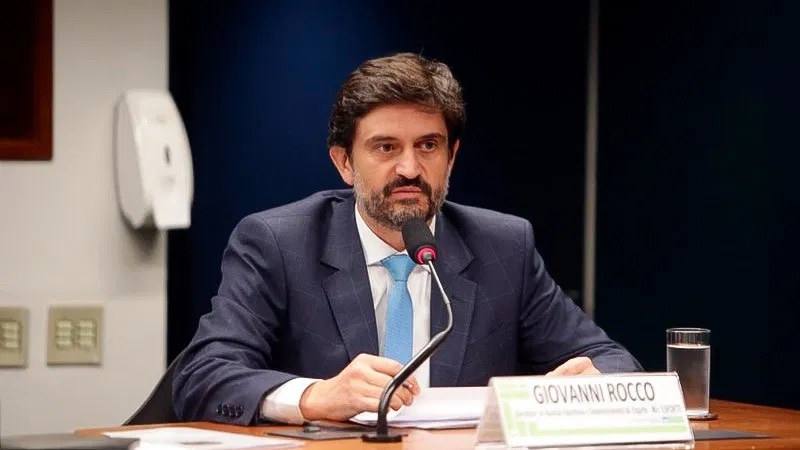
Among the actions, Giovanni Rocco Neto highlighted the daily analysis of data submitted by the so-called ‘Bets’. The filtering process, he explained, allows authorities to detect operational inconsistencies and investigate signs of match-fixing, money laundering, and gambling addiction.
“At the end of each day, all betting operators are required to report to the government everything they’ve processed, including the CPF (individual taxpayer ID) of each bettor,” he explained.
Based on this analysis, the Ministry of Sports can identify potential cases of gambling addiction. When such cases are detected, the player is referred to receive specialized support. “If we realize that someone is dealing with this problem, the State, together with the Ministry of Health, will be able to take care of them,” said the secretary.
Rocco also mentioned the government’s self-exclusion platform, which allows users to block their accounts across all betting sites by registering their CPF. The tool also lets family members report cases of problem gambling, making it easier to exclude individuals showing signs of gambling addiction.
“Everyone is going to lose”
The secretary also warned users about the importance of betting only on government-licensed platforms. According to him, state oversight makes the system safer and more transparent. “We won’t be able to control all the effects that come with gambling. This isn’t some kind of wonder of the world,” he cautioned.
Rocco explained that authorized betting sites in Brazil must have the domain “.bet.br” in their web address. “A legal site, with a federal government license and authorization, must end with ‘bet.br’. It will have the company’s name followed by that domain,” he emphasized.
Without proper regulation, the government cannot monitor whether companies comply with the payout model established by the “Bets Law” (Law 14.790/2023). The secretary stressed that gambling should be seen as entertainment, not as a source of income. “People have to understand that this is an activity where they are going to lose money,” he said.
Rocco reminded that the legislation itself requires 85% of the money collected by betting operators to be returned to players — meaning there’s already a minimum 15% loss built into the system.
“It’s entertainment for those who can afford it and who want to have fun with it. [A betting company] is not a means of supplementing income, nor an investment. All these illegal betting operations and the criminal activity of influencers promoting them must be confronted.”
Taken offline
More than 18,000 illegal websites have already been blocked by the National Telecommunications Agency (Anatel). However, Giovanni Rocco pointed out that the agency “does not have the direct power to block a domain. It must send an official request to internet providers so they can carry out the block. Brazil has more than 20,000 internet providers.”
Rocco stated that in rural or remote regions, blocking becomes even more difficult. Therefore, he said, the Legislative Branch must grant unrestricted authority to Anatel to shut down illegal betting sites.
“In major networks, this process works. But when you go into Brazil’s remote areas, where you have small local internet providers, it takes a long time for the block to actually take effect. So, this legislative authorization for Anatel to directly block access is essential.”
Source: Congresso em Foco