




In the morning, Tarsila Klein Schorr, specialist from the United Nations Office on Drugs and Crime (UNODC), delivered a presentation on handling competition manipulation cases based on the UNODC-IOC Guide, highlighting key considerations for investigation and prosecution.
Following that, a group exercise simulated a suspicious sports manipulation case investigation. The activity included steps such as deciding whether to open a case, coordinating between criminal and sports investigations, data protection, and selecting investigative methods.
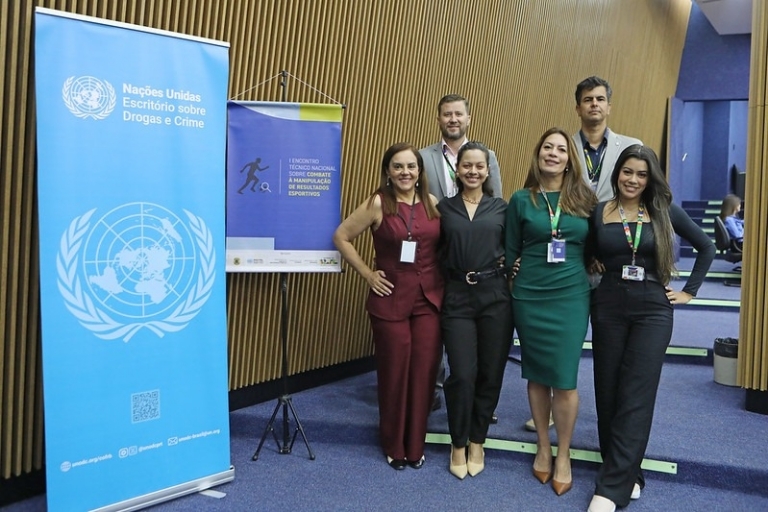
The goal was to allow participants to apply in practice the strategies discussed during previous sessions, under the facilitation of representatives from the Ministry of Sports (MEsp), Ministry of Justice and Public Security (MJSP), Ministry of Finance (MF), Federal Police (PF), UNODC, and Sportradar.
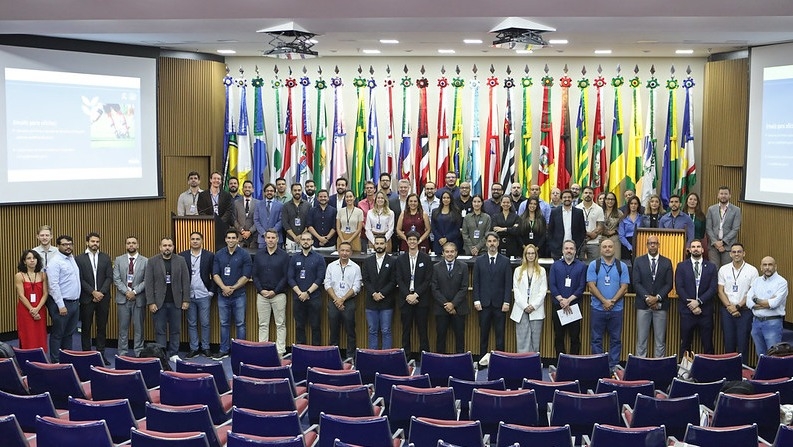
At the end, groups presented their findings, pointing out challenges, suggestions, and opportunities for improving match-fixing prevention. The moment also fostered experience-sharing among delegates from different states, strengthening cooperation and uniform practices nationwide.
As a legacy, the entire three-day program was recorded and will be edited into a video course library. This material will be available on a restricted training platform, allowing law enforcement to study, review, and consult the content whenever needed.
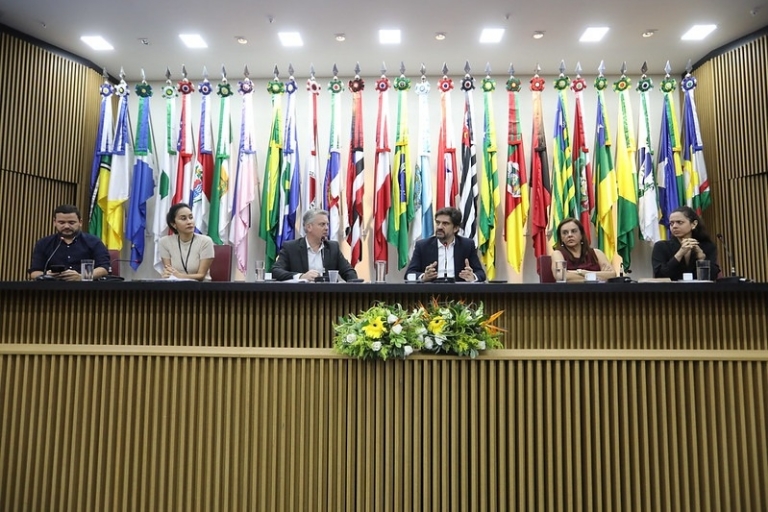
According to Giovanni Rocco Neto, National Secretary for Sports Betting and Economic Development of Sport, the goal is to ensure that the network remains active. “Our idea is to create this network so you can communicate, share experiences, and carry out the work in the best possible way. We are constantly improving this process.”
With Wednesday’s practical program, the meeting reinforced its mission to train public security forces, uniting theory and practice in the fight against match-fixing. The closing marks the beginning of a continuous process of training and cooperation, essential to consolidating Brazil’s National Policy to Combat Sports Manipulation.
Source: GMB