




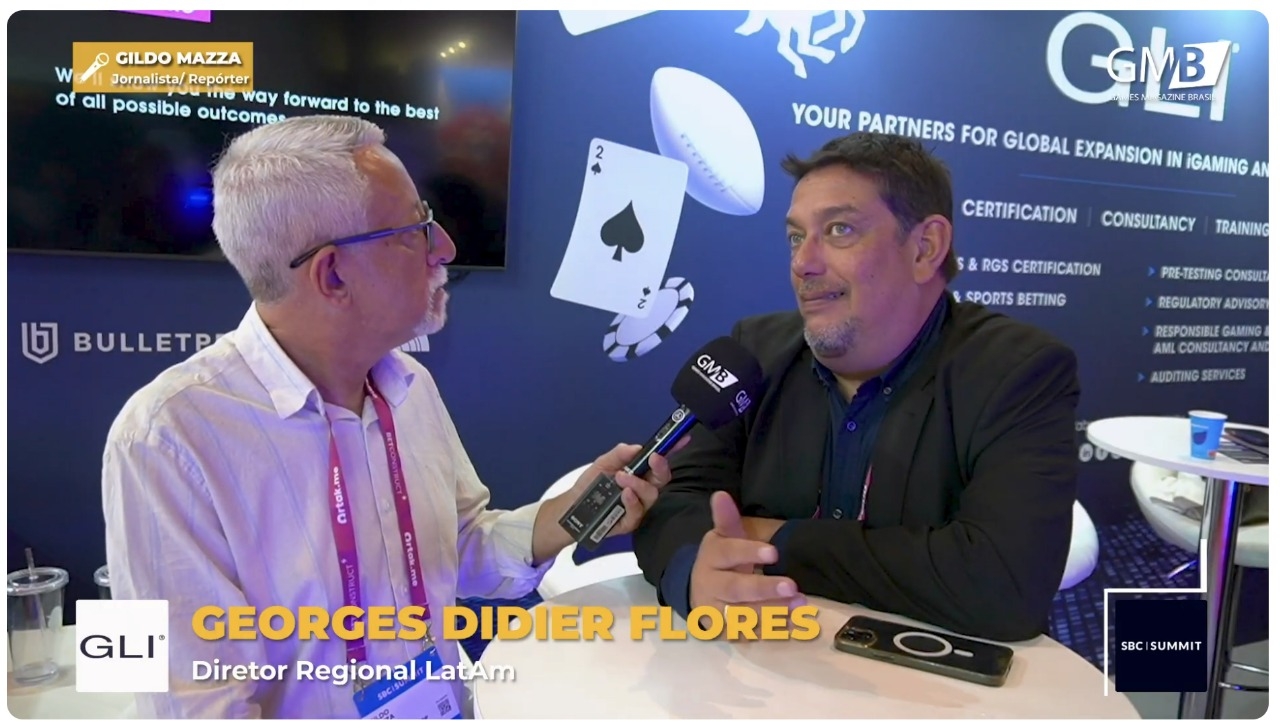
GMB - What were GLI’s highlights at SBC Lisbon and what goals did you pursue at the event?
Georges Didier Flores - GLI attended to support the industry, engaging with both providers and operators, as well as regulators who visited us at the event. We always aim to share the latest updates, provide regulatory insights, and assist operators in expanding their businesses into new jurisdictions according to their needs or strategic plans.
New markets! The main focus today is Brazil, which is already operating, along with other Latin American countries such as Peru and Chile, which are moving forward. How is GLI addressing this in the region?
Indeed, the largest market in the region right now is Brazil, where there are more operators and brands operating under SPA regulation. Other jurisdictions, like Peru, are also growing and advancing in their regulatory processes. For example, in Peru we are looking at more than 100 licenses for both online gaming and sports betting.
In Brazil, there are more than 200 authorized betting brands. These are large markets, and other jurisdictions are beginning to develop as well, advancing their regulatory frameworks to open new opportunities for operators and suppliers.
Brazil’s regulation is said to be one of the strictest in the world. How was it for you at the beginning, and how is it today?
It is a very modern, solid, and robust regulation. We see a framework aligned with industry standards, while including unique requirements, as every regulation does. For example, biometrics, KYC, and control processes are part of the framework. Overall, it is a very strong regulation. Since it aligns with best practices in compliance and technical requirements, it makes it easier for operators and suppliers to enter such a market.
What are the challenges for operators and game suppliers in entering such a heavily regulated market like Brazil?
The main challenge is simply complying with the standards. The certification process is mandatory to obtain authorization as an operator. For suppliers, certification is required in order to offer their products to licensed operators. I view certification not only as a regulatory requirement but also as a guarantee of product quality, integrity, and security. It equips regulators with monitoring tools and ensures proper oversight in Latin America’s regulated gaming markets.
What support does GLI provide to the Latin American gaming ecosystem?
We currently have an executive based in Brazil managing communications and business development, while I, together with the Latin American team, monitor this area closely. We also have labs and offices around the world that provide resources for companies undergoing certification to complete their processes on time and in compliance.
How many laboratories does GLI have worldwide, and what are your plans for the next six months to a year?
We have between 30 and 40 offices worldwide, and there are plans to continue expanding, particularly in the region. We are closely watching Brazil, where a local office will soon be established to continue growing and offering greater support to clients in the region.
Are you also anticipating the possible legalization of land-based casinos in Brazil? How does GLI view this?
We are looking forward to it with great anticipation. We firmly believe every market should be regulated to ensure operational safety, government revenue, and proper oversight. Good regulation is always the best alternative.
Source: Exclusive GMB