




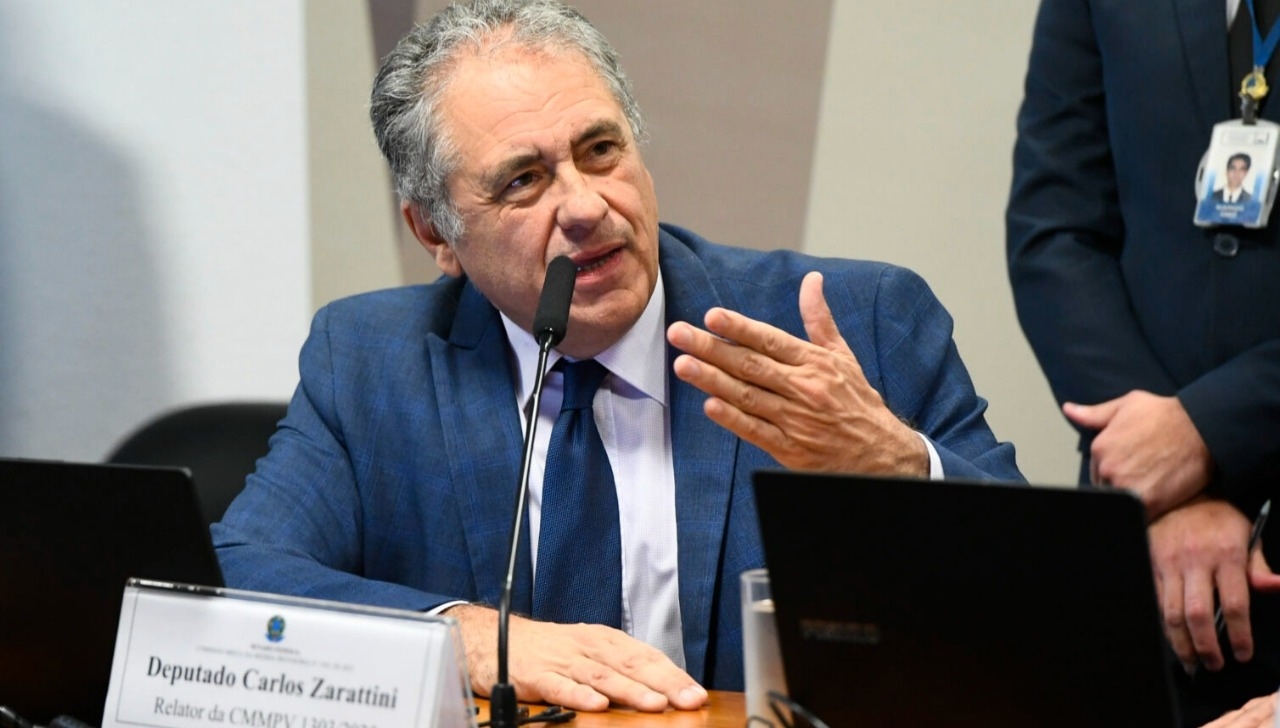
The goal of the Special Exchange and Tax Regularization Regime ('RERCT Litígio Zero Bets') is to collect taxes retroactively to avoid legal disputes. The new report was published Tuesday morning (7), and voting was scheduled to begin at 9 a.m. in a joint congressional committee. After that, the proposal must still be approved by both the Chamber of Deputies and the Federal Senate by Wednesday (8), or the MP will expire.
The government initially planned to raise the CSLL (Social Contribution on Net Profit) for fintechs — digital financial service providers operating like banks — from 9% to 15%, aiming to align it more closely with the 21% paid by traditional banks. However, the idea lacked political support.
Another proposal was to raise the gross revenue tax on ‘Bets’ from 12% to 18%, but Zarattini dropped it after failing to secure enough votes from allied parties. Instead, he adopted measures to strengthen oversight of the illegal betting market, such as requiring internet providers to take down unauthorized betting sites within 48 hours.
The updated report includes a program requested by the Federal Revenue Service to collect taxes from Bets that operated without regulation in Brazil between 2014 and 2024. The 'RERCT Litígio Zero Bets' sets a 15% income tax rate, plus a 100% fine, with a 90-day enrollment window. Only companies officially authorized by the Finance Ministry may participate in the program.
Among the measures kept in the MP is the increase in tax on JCP (Interest on Equity) from 15% to 20%, a mechanism used by major corporations to remunerate shareholders and as a low-cost form of reinvestment.
The MP also maintains a 17.5% tax on the appreciation of digital assets such as cryptocurrencies, but adds a transition rule with a temporary program to regularize legally obtained but incorrectly declared or undeclared virtual assets before the Federal Revenue.
To broaden parliamentary support, the rapporteur proposed that any additional revenue generated by the measure cannot be used for general expenses, but rather to offset the cost of expanding paternity leave, which the Chamber of Deputies is discussing increasing to 60 days, following a Supreme Court decision.
Despite the revisions, there is still no consensus for a vote. On Monday night (6), Finance Minister Fernando Haddad met with Chamber Speaker Hugo Motta (Republicanos-PB) and allied leaders to negotiate adjustments but failed to win over centrist parties.
PT leader Lindbergh Farias (RJ) said the government will try to preserve part of the expected revenue despite congressional resistance: “The government is trying to save most of it — around R$ 15 billion to R$ 17 billion (US$2.8bn–US$3.2bn),” he stated.
The total expected revenue for 2026 and 2027 was about R$ 35 billion (US$6.6bn).
The rapporteur also softened rules for the “seguro-defeso”, a social benefit for artisanal fishers, removing requirements such as the National Identity Registry (CIN) and geolocation verification. Some provisions were left to be defined later by the Codefat (Worker Support Fund Council).
The revised report also confirms the withdrawal of new taxes on certain investment securities that are currently exempt from income tax when purchased by individuals. Instruments that will remain exempt include LH (Mortgage Notes), LIG (Covered Bonds), LCA (Agribusiness Credit Bills), LCI (Real Estate Credit Bills), and LCD (Development Credit Bills).
Other assets — such as CRIs (Real Estate Receivables Certificates), CRAs (Agribusiness Receivables Certificates), and incentivized debentures — also remain exempt, as Zarattini had decided earlier.
Additionally, he withdrew part of the changes the government had proposed for REITs (Real Estate Investment Funds) and Fiagro (Agroindustrial Investment Funds), keeping rules close to current standards and maintaining income tax exemptions on property-related earnings.
Source: GMB