




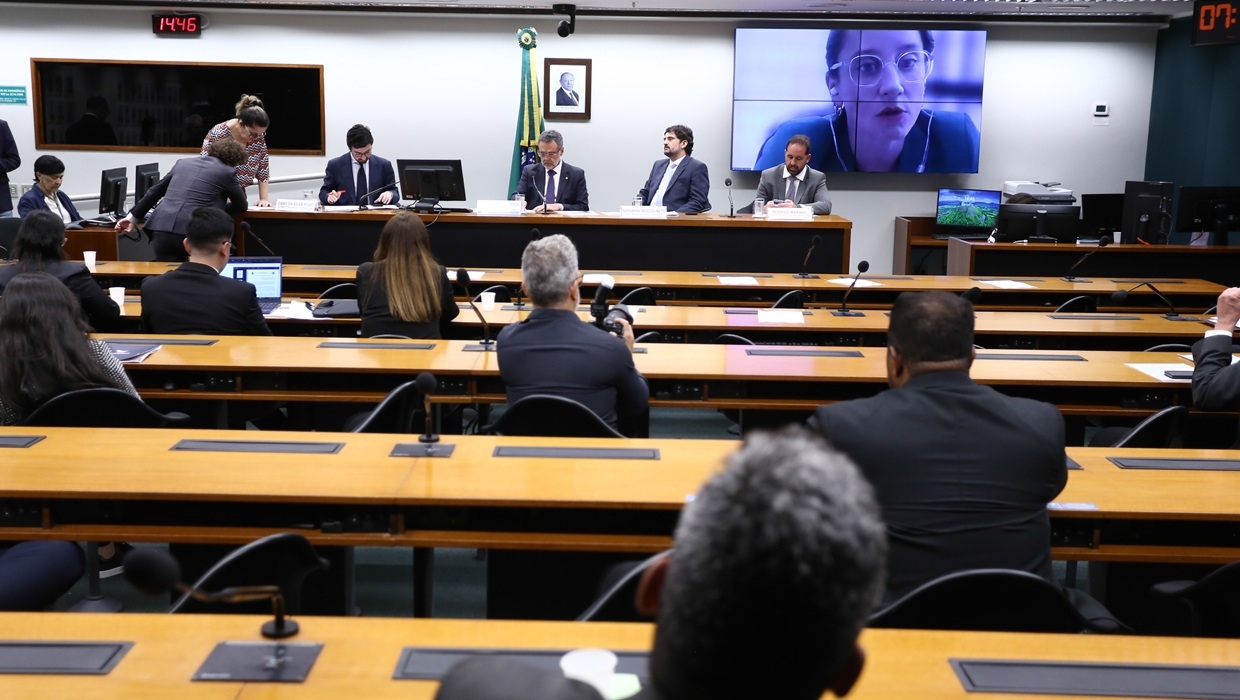
Andiara Maria Braga Maranhão, coordinator of Responsible Gaming Monitoring at the Secretariat of Prizes and Betting (SPA), stated that the Betting Law has made the sector safer and more transparent by establishing rules for licensing, supervision, and social responsibility. She warned, however, that proposals such as Bill 2663/25 — which seeks to revoke the law — would create legal uncertainty and leave consumers highly vulnerable.
According to Andiara Maranhão, the creation of the SPA in January 2024 marked the beginning of a new regulatory structure for the sector, which had previously operated in a legal “gray area.” The secretariat began overseeing licensing, inspection, monitoring, commercial promotion, and Responsible Gaming, while publishing rules on payment transactions, advertising, game certification, and anti-money laundering measures.
She also emphasized that the Betting Law is one of the most consumer-protective regulations in the segment. “The law recognizes the activity as a public service and a consumer relationship, fully applying the Consumer Defense Code,” she stated.
Andiara recalled that the legislation prohibits the participation of minors under 18 and restricts gambling advertising — banning campaigns in schools and universities, as well as the use of children, adolescents, or celebrities who might encourage gambling.
Transparency in advertising
Marina Giocondo Cardoso Pita, a representative of the Secretariat of Social Communication of the Presidency, said that further progress is still needed in regulating digital advertising. She stressed the importance of transparency and drew attention to the growing number of influencers involved in irregular gambling promotions.
“Often, influencers promote betting offers disguised as content. And that practice already constitutes a violation,” she said.
Pita noted that the U.S. Federal Trade Commission (FTC) sets standards requiring platforms to provide tools to identify commercial posts — a measure that, according to her, enhances oversight and transparency for the public.
Marcelo Pagoti, Director of Supervision at Procon-SP, criticized the intensity of gambling advertisements, especially during times aimed at child audiences. “Procon is not against legalized betting, but we advocate for greater balance. The consumer is the most vulnerable party in this relationship and needs more protection,” he said.
Pagoti also reported that the agency has seen an increase in complaints against betting companies and a rise in gambling-related debt, including on licensed platforms.
Deputy Daniel Almeida (PCdoB-BA), who requested the public hearing, stated that gambling advertising is one of the main challenges in regulation. “The issue of advertising seems particularly sensitive to me because everyone is exposed daily to a large volume of gambling ads,” he declared.
Blocking illegal sites
Giovanni Rocco, National Secretary for Sports Betting at the Ministry of Sports, highlighted that Brazil is now the second-largest betting market in the world, behind only the United States, and that more than half of the companies operating in the sector are illegal.
Since the start of regulation, the Ministry of Finance has blocked more than 23,000 illegal websites. Currently, the blocking process is indirect: the ministry identifies the irregular sites and notifies the National Telecommunications Agency (Anatel), which then requests that internet providers restrict access to those addresses.
Rocco advocated for Congress to grant Anatel direct powers to block illegal sites without requiring ministerial intermediation. “This measure would represent a significant step forward in oversight and in combating illegal gambling,” he stated.
Bets traceability
Rodrigo Marinho, representative of the Instituto Livre Mercado, supported the approval of Bill 3523/25, which sets rules for the operation of lotteries and betting in Brazil — such as automatic prize payments via Pix and mandatory registration of a taxpayer ID (CPF) for each bet.
He also praised the use of public blockchain technology to enhance transaction traceability. “It’s an opportunity to use technology to ensure greater legal security,” he said.
Source: Agência Câmara de Notícias