




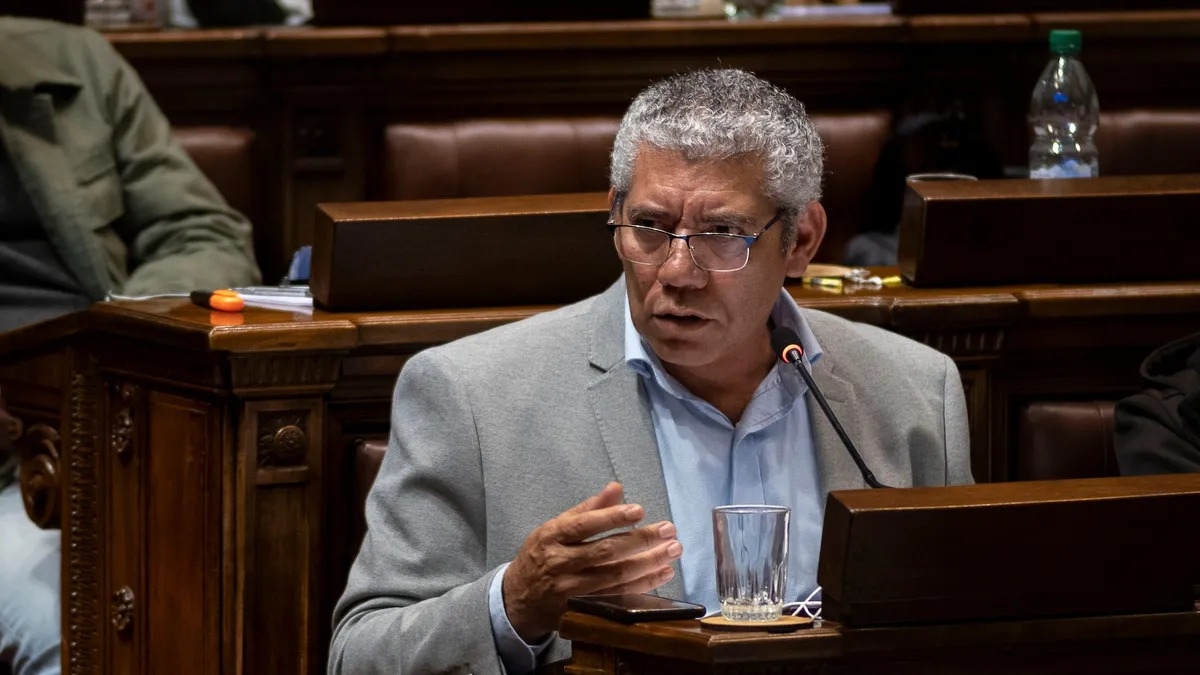
The bill, presented to his party’s caucus, proposes the creation of a State Online Gaming Platform, managed by the National Directorate of Lotteries and Quinielas.
This platform would be responsible for operating, regulating, and controlling all online games of chance. Carballo describes it as a “mixed model”, combining direct state operation with the participation of private operators under strict technical, fiscal, and public-health standards.
A central element of the proposal is the creation of the National Online Gambling Regulation Agency, a new autonomous public body that would consolidate regulatory responsibilities currently scattered across multiple agencies, including the Casino Directorate, the National Lottery authority, and the telecommunications regulator (Ursec).
The new agency would oversee licensing for private operators, audit platforms and algorithms, supervise financial transactions, regulate advertising and marketing practices, manage a National Digital Bettors Registry, and impose administrative sanctions or revoke licenses when required.
The bill establishes that all online gamblers must be registered in this database, which would include financial traceability and customizable spending limits. It also criminalizes operating online gambling platforms for profit without proper authorization.
In the bill’s explanatory memorandum, Carballo notes that Uruguay has upheld a state monopoly on games of chance since the 19th century, but rapid technological change has reshaped user behavior and exposed significant regulatory gaps. He warns that the growth of international platforms, the use of cryptocurrencies, and VPNs has weakened the state’s capacity to supervise and tax the sector.
Currently, the only authorized operator offering online sports betting in Uruguay is Supermatch, run under concession by La Banca. According to Carballo, this has led to a “de facto private monopoly” where the state does not directly participate in most of the profits generated. State-run gambling today is largely limited to lotteries whose proceeds fund health, education, sports, and social programs.
Carballo frames the regulation as both an economic opportunity and a public-health necessity. Data from the University of the Republic’s School of Medicine indicates that around 35,000 Uruguayans suffer from gambling addiction, while a survey by Fundación Manantiales shows that one in four adolescents places daily bets.
“These figures highlight the urgency of a modern regulatory framework that allows the state to regain its central role in protecting citizens, preventing gambling addiction, and promoting responsible gambling habits,” the senator argues.
Source: GMB / El Observador