



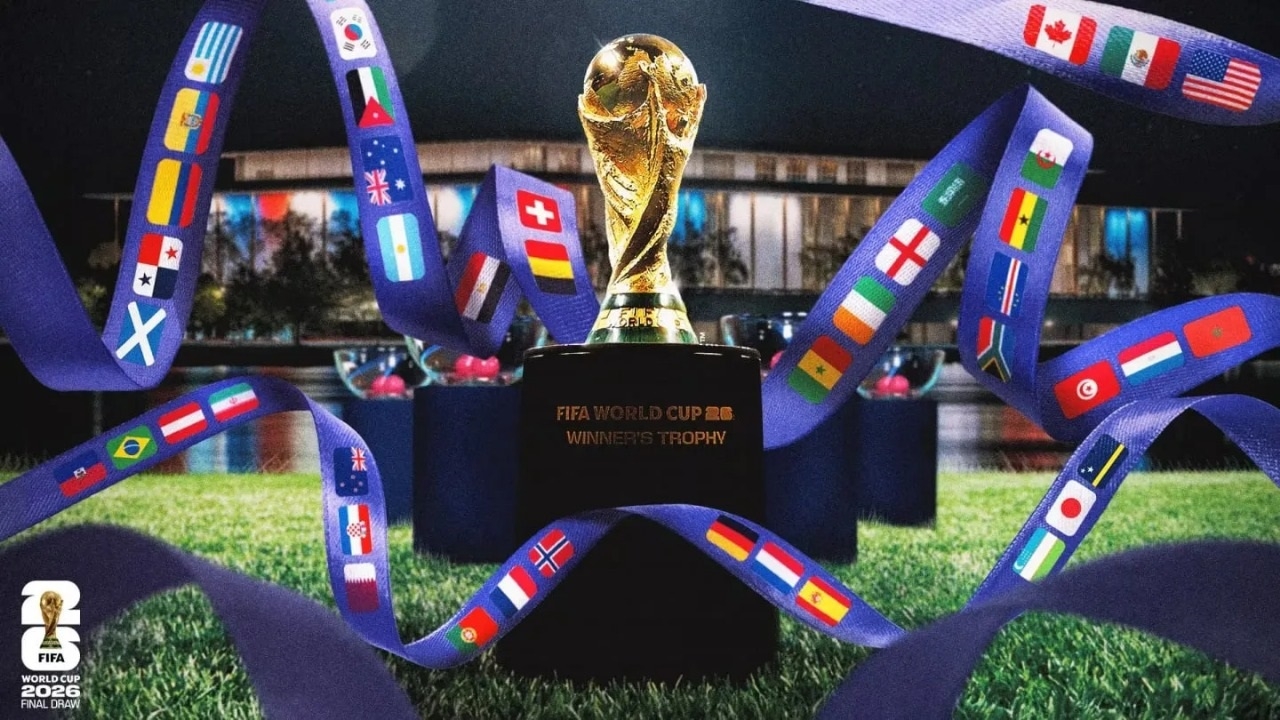
Considered the largest sporting event in the world in terms of audience and financial turnover, the FIFA World Cup, held every four years, draws the attention of a wide range of economic sectors.
In the sports betting segment, it is the competition that attracts the largest number of bettors worldwide. According to a survey by the British multinational bank Barclays, the Qatar World Cup in 2022 generated US$35 billion in sports betting. This amount was 65% higher than that recorded at the 2018 World Cup in Russia. Projections for 2026 are, naturally, even higher, according to market analysts.
The Betlaw firm, focused on managing the betting industry, estimates that 10% of this amount (US$3.5bn) will come from Brazil, currently considered the fifth-largest market in the world by revenue, behind only the United States, the United Kingdom, Russia, and Italy.
Expectations are high, as this is the first time the country has entered the list of largest markets compiled by Regulus Partners, driven by the fact that 2025 marks the first year of regulation of the sector in Brazil.
Sports betting companies operating in Brazilian territory are excited about the proximity of the tournament, which will take place between June 11 and July 19 next year, hosted by three countries: Canada, the United States, and Mexico.
Rafael Borges, CEO of Reals, noted that the World Cup has always driven the global sports betting market and that Brazil is currently a regulated, competitive, and rapidly expanding market: “At the last World Cup, in 2022, the country was experiencing a completely different scenario, with no defined regulation, lower investment, and a market still in its early stages.”
“For Brazil, the scenario of the 2026 World Cup within the sports betting sector is unique, as the country has become one of the most relevant global hubs for betting, with major operators competing for space, robust campaigns, and a much more educated and engaged audience,” he said.
“Projections for 2026 are even more aggressive. The event arrives exactly at the peak of the transformation of the Brazilian sector, which boosts investment, competition, and transaction volume like never before,” Borges added.
In the view of Marco Túlio, CEO of Ana Gaming, the group that manages the brands 7K, Cassino, and Vera, the World Cup is a special and distinctive sporting event.
“It is a moment when even those who are not particularly interested in sports begin to follow, cheer, and enjoy it with their families and friends. To increase excitement and make the entertainment even more intense, it is natural for fans around the world to place more bets during the competition, generating greater activity than in other periods,” the executive explained.
For Hans Schleier, marketing director at Casa de Apostas, the sector has become more consolidated and gained greater public awareness after the pandemic, with the merchandising of betting brands and the introduction of Pix: “It achieved a level of notoriety never seen before. All of this has contributed, along with an ever-growing range of options, not only in sports but also in entertainment.”
In the opinion of Eduardo Biato, Chief Strategy Officer (CSO) at 1PRA1, the master sponsor of Avaí, the World Cup is an event that transcends sport and becomes a cultural, social, and even family phenomenon, which increases interest in betting as a form of entertainment.
“A large part of the volume wagered during the World Cup comes precisely from this ‘occasional’ audience. People who do not regularly watch matches start following national teams, create temporary rivalries, organize betting pools among friends, and begin interacting with the betting universe for the first time,” he said.
“This combination of collective emotion, a concentrated match schedule, and high media exposure turns the World Cup into one of the most heavily bet-on events in the world,” Biato added.
Ivan Dutra, CEO of Luck.bet, emphasized that during the period in which the competition takes place, there is a “super exposure” of the event. “For betting operators, this is a unique moment because it combines emotion, mobilization, and a high frequency of matches. That is why the World Cup becomes, with each edition, the tournament with the highest engagement on betting platforms,” he stated.
Pietro Cardia Lorenzoni, legal director of ANJL and partner at Betlaw, observed that there was significant growth in the sector during the 2018 and 2022 World Cups as a result of the U.S. Supreme Court’s decision to allow sports betting. “I believe the global scenario will also be strongly impacted by the regulation of the market in Brazil,” the expert projected.
Alex Rose, CEO of InPlaySoft, an international technology company focused on the sports betting sector, described the tournament as a “magical moment.” “Even people who are not passionate about sports come together to follow and cheer for their country’s matches. With two giant markets opening their doors to online gaming in recent years — the United States and Brazil — it is clear that betting will grow even more during the next editions of the tournament,” he said.
Source: Brazil Economy