




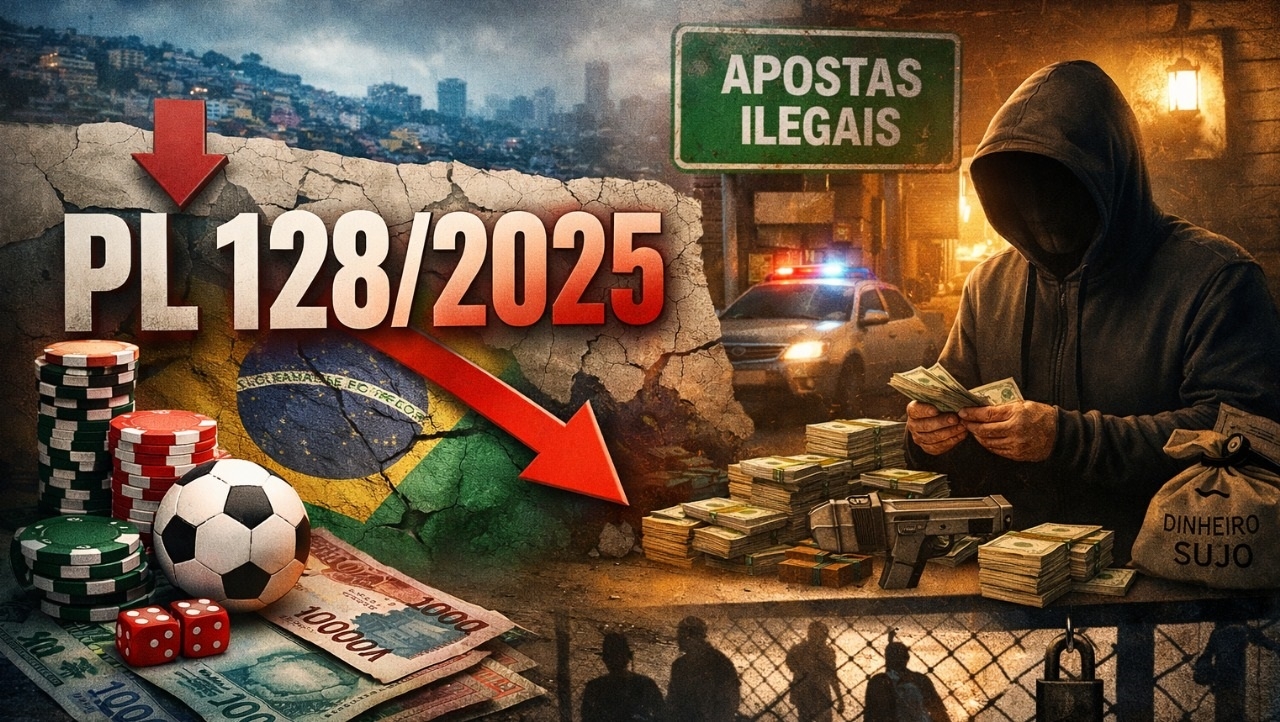
On LinkedIn in particular, a text describing all the negative consequences this measure could bring to the regulated market is already going viral, as the sector once again faces a new shock to its revenue projections.
According to industry representatives, the bill could compromise the sustainability of the recently legalized betting market by further increasing the operating costs of companies that have already invested millions of reais to comply with Brazilian regulatory requirements.
The prevailing assessment is that the measure will not result in an effective increase in tax revenue, but rather the opposite effect: the migration of bettors to illegal platforms.
One of the main warnings raised by executives is the risk that up to 25 million Brazilians could start using clandestine betting houses if the regulated environment becomes economically unfeasible. According to the sector, the illegal market operates without paying taxes, without anti-money laundering mechanisms and without consumer protection or responsible gaming policies.
Statements also highlight that strengthening illegality tends to benefit organized crime, expanding practices such as money laundering and capital flight, while reducing the State’s capacity for oversight and control. For critics of the bill, penalizing licensed operators weakens precisely the ecosystem that regulation has sought to build since 2025.
Another recurring point in the criticism is the direct impact on bettors. Without a strong regulated market, users lose basic guarantees such as operational transparency, data security, self-exclusion mechanisms and betting limits. Experts say that the right to safe and responsible gaming is undermined when public policy pushes consumers toward unregulated environments.
Industry executives describe Bill 128/2025 as a regulatory setback, arguing that abrupt changes in taxation undermine legal predictability and affect the confidence of both domestic and foreign investors. In their view, the current moment calls for regulatory stability and technical adjustments based on data, not measures that could make the emerging legal market unviable.
Amid the debate, the sector reiterates the need for smart regulation capable of balancing revenue generation, consumer protection and the fight against the illegal market. The central message of the statements is clear: punishing the regulated market does not eliminate betting—it only strengthens illegality and weakens the core objectives of Brazilian public policy for the sector.
What was approved yesterday (16)?
In the early hours of December 16, 2025, the Chamber of Deputies approved the base text of Complementary Bill (PLP) 128/25, which proposes cutting federal tax benefits and increasing taxation on specific sectors, including online sports betting.
The bill, which now moves to the Federal Senate for review, establishes a 10% reduction in tax incentives across a range of taxes, while increasing the tax burden on certain sectors such as fintechs and betting platforms.
For operators, this means allocating part of the additional net revenue collected to Social Security, reducing the share retained by operators. Specifically, the proposal changes the current tax incidence—which had already been set at 12% of the operator’s gross revenue under the regulatory framework—introducing rising rates in the coming years (up to 15% in 2028), which could affect the economic model of companies operating in Brazil.
In parallel, another bill known as the Anti-Match-Fixing Bill, which also sought to further tax the sector through the creation of the so-called CIDE-Bets, had its vote postponed until 2026.
Source: GMB