




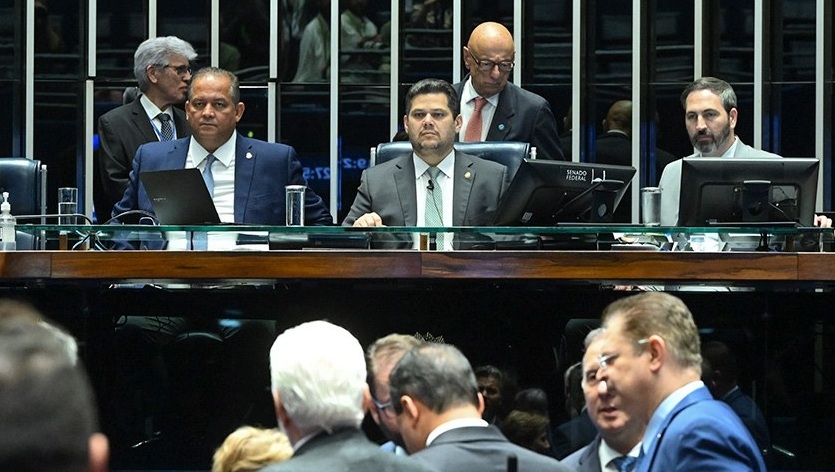
The bill (PLP 128/2025) was approved with 62 votes in favor and six against. The rapporteur was Senator Randolfe Rodrigues (PT-AP), the government’s leader in Congress, who issued a favorable opinion on the proposal.
In defending the bill, Randolfe said that tax benefits granted by the federal government must be constantly assessed and monitored to prevent the widening of social inequalities.
“This is therefore a proposal that points to a reduction of incentives, greater transparency and control over amounts, moving toward greater fiscal responsibility and, at the same time, combating distortions caused by the lack of evaluation of such measures [the granting of incentives],” he said.
Benefit cuts will be carried out according to the type of granting mechanism. The bill also establishes new transparency and results-control rules within the Fiscal Responsibility Law.
At the government’s request, to help balance the 2026 budget, the Chamber of Deputies included provisions in the text to raise taxes. One of them applies to betting operators: the rate will increase from 12% to 13% in 2026, 14% in 2027 and 15% in 2028.
Half of the additional revenue is expected to go to social security and half to healthcare initiatives.
To strengthen oversight, the text provides that those who advertise unauthorized betting platforms, or institutions that continue to operate with unauthorized betting operators after formal notification, may be held jointly liable with the betting companies for the taxes due.
As for the effective date, most changes will take effect on January 1, 2026, except those subject to the 90-day waiting period — such as the reduction of tax exemptions, the taxation of betting operators and the increase in the CSLL.
Senator Rogério Marinho (PL-RN), the opposition leader in the Senate, accused the federal government of raising taxes under the pretext of benefiting the underprivileged.
The government has previously attempted to increase the betting tax but was defeated. In October, the Chamber rejected a provisional measure on the issue. The increase in the rate for betting sites was later included in the Anti-Evasion Bill, which will be voted on in the Senate in 2026, and in another proposal reported by Senator Eduardo Braga (MDB-AM), approved by the Economic Affairs Committee (CAE).
Late on Tuesday afternoon (16), before the bill was debated, Finance Minister Fernando Haddad met with the Speaker of the Chamber, Hugo Motta, and the bill’s rapporteur, Aguinaldo Ribeiro, to include the provision in the PLP that reduces federal tax incentives.
The government has defended the increase in the betting tax as a way to reduce the fiscal deficit. Its argument to secure support in the Chamber was that, without the additional revenue generated by the higher betting tax, spending cuts would be necessary, especially to public policies and parliamentary earmarks.
There are currently three bills in Congress that raise betting taxation. The Anti-Evasion Bill creates the CIDE-Bets, levied on bettors’ deposits; the Public Security PEC seeks funding from betting operators to finance public security; and Bill 5,473 also proposes a stepped increase in the betting operators’ tax to 18% starting in 2028.
Sector warns: 25 million Brazilians could migrate to the illegal betting market
The approval of Bill 128/2025, which increases the tax burden on betting operators in Brazil, has sparked a strong reaction from executives, experts and entities linked to the gaming sector.
On social media, they warn of the risk that up to 25 million Brazilians could turn to illegal betting platforms if the regulated environment becomes economically unviable, among other adverse effects.
According to industry representatives, the bill could undermine the sustainability of the recently legalized betting market by further increasing operating costs for companies that have already invested millions of reais to comply with Brazilian regulatory requirements.
The prevailing assessment is that the measure will not lead to an effective increase in tax revenue, but rather the opposite effect: the migration of bettors to illegal platforms.
One of the main warnings from executives is precisely the risk that up to 25 million Brazilians could begin using clandestine betting houses if the regulated environment becomes economically unviable.
According to the sector, the illegal market operates without paying taxes, without anti–money laundering mechanisms, and without consumer protection or Responsible Gaming policies.
The statements also emphasize that strengthening illegality tends to benefit organized crime, expanding practices such as money laundering and capital flight, while reducing the State’s capacity for oversight and control.
Industry executives describe Bill 128/2025 as a regulatory setback, arguing that abrupt changes in taxation undermine legal predictability and affect the confidence of domestic and foreign investors.
For them, the moment calls for regulatory stability and technical adjustments based on data, not measures that could jeopardize the nascent legal market. Amid the debate, the sector reinforces the need for smart regulation capable of balancing revenue collection, consumer protection and the fight against the illegal market.
The central message of the statements is clear: punishing the regulated market does not eliminate the betting problem; it only strengthens illegality and weakens the core objectives of Brazilian public policy for the sector.
Source: GMB