




According to the ministry, this card can no longer be used for betting, but the extension of this ban to other payments has not yet been made.
In November, Lupi reported that the legal department of his ministry was studying the possibility of prohibiting the use of INSS resources for betting in the case of all benefits paid by the institute.
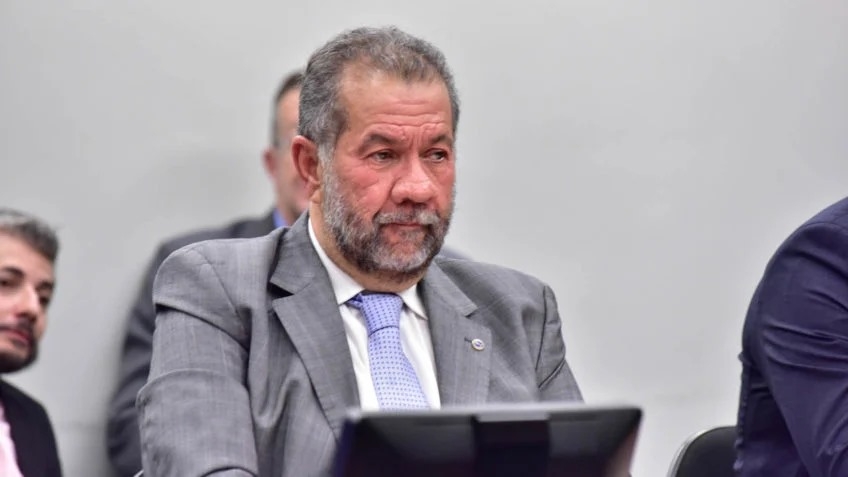
“We still have some legal issues, because there is an interpretation that this is violating the right of citizens to use their money as they wish,” said Minister Lupi in response to Metrópoles during a press conference on Wednesday (6/2).
He added that he has not given up on the idea and is seeking a solution: “We still do not have a legal definition from our legal consultancy that gives us support to ban the system, but I am working on it.”
What is at stake:
* In 2024, when the government began regulating the fixed-odds betting market in the country, some members of the government defended the ban on bets by beneficiaries of social programs.
* The issue was taken to court and the Executive Branch has not yet implemented the ban on any public.
* Experts claim that the ban would be a type of discrimination against those who receive social benefits and interference in the freedom of choice of each citizen. The Social Security Ministry, on the other hand, maintains that it is necessary to protect retirees and pensioners from debt.
* Minister Carlos Lupi defends the prohibition of using funds paid by the INSS in 'Bets' (as the operators are called in Brazil), but the legal department has not yet found a legal loophole to approve this impediment.
The INSS pays social benefits to around 40 million people per month, mainly retirees. Although, as a rule, they do not face food insecurity like those who receive Bolsa Família, retirees have a tight budget and there are concerns about the risk of debt among this group.
Regulation of 'Bets' in Brazil
Between 2023 and 2024, the government worked on regulating the fixed-odds betting market in the country, which had been authorized by law in 2018, but without due regulation.
Last year, the Secretariat of Prizes and Betting (SPA) was established within the Ministry of Finance. The department conducted the first process of analyzing and evaluating authorization requests.
At the end of last year, the plenary session of the Supreme Federal Court (STF) upheld the decision of Justice Luiz Fux, who decided that the government should institute measures to prevent Bolsa Família beneficiaries from using program funds to place bets.
The Lula government (PT) then filed an appeal with the STF against the decision, through the Office of the Attorney General (AGU). One of the arguments was that the market oversight bodies do not have the direct regulatory authority to process data on beneficiaries of social programs, including the funds paid to these beneficiaries.
In addition, the government claimed that the financial amount transferred by the program to each beneficiary family is a private resource from the moment it is included in their bank account, and no longer a public resource.
The argument was also presented that the bank account used to pay Bolsa Família benefits (used by 99% of beneficiary families) is not for the exclusive use of the program and can handle monetary amounts from various sources, without any connection to the program.
Finally, the government argued that there are no technical means to prevent Bolsa Família funds deposited in a bank account from being used for specific purposes (such as gambling).
The issue is being analyzed in two Direct Actions of Unconstitutionality (ADI), filed by the National Confederation of Commerce of Goods, Services and Tourism (CNC) and the Solidariedade party, respectively. Today, the case is in the appeal phase, following allegations by the Union.
The appeal requests clarification on compliance with the preliminary decision, effective immediately, given by Minister Luiz Fux and ratified by the plenary of the STF.
Fux opened a period for counterarguments by the CNC and the Solidariedade party and, subsequently, for the Attorney General's Office (PGR) to comment on the appeal.
Source: Metrópoles