




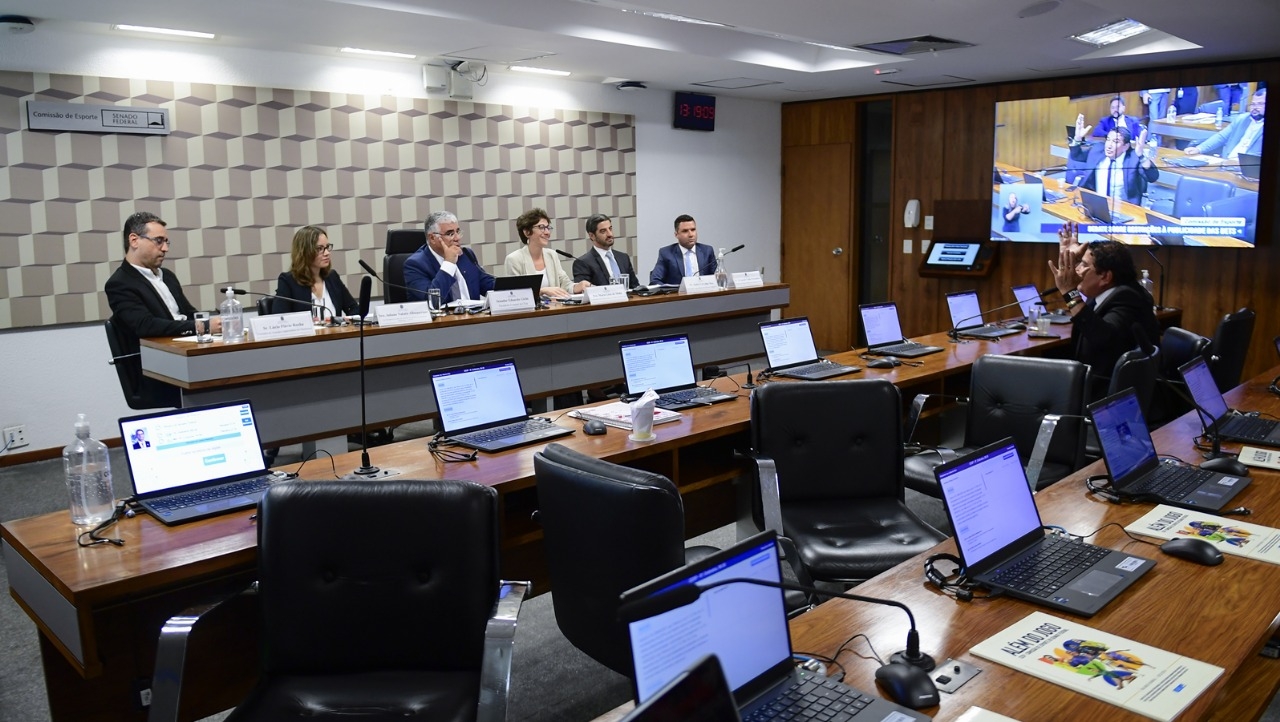
With great expertise, Heloísa Diniz, public relations officer for the Association of Bets and Fantasy Sports (ABFS), made several remarks on the topic. According to her, the sports betting, online gaming, and fantasy sports sectors have already adapted to the rules regarding advertising and the promotion of Responsible Gaming.
One of the points she highlighted was the self-regulation adopted by the sector itself. She emphasized that “there are not a lack of rules, but a lack of time for them to take effect, as we are talking about a market that effectively began just four months ago.”
Diniz reinforced that, rather than banning, the proper approach is to strengthen the oversight by the Secretariat of Prizes and Betting of the Ministry of Finance (SPA) against those who do not follow best practices in advertising.
In addition, she pointed out that the sector has already paid over R$3 billion (US$461m) in license fees, and the oversight fee has been collected since January 2025. “Is the SPA receiving this fee? Where is that money going?” she questioned.
Another important statement came from Fernando Vieira, executive president of the Brazilian Institute of Responsible Gaming (IBJR). He has consistently taken a very clear stance on the subject, and it was no different at the Public Hearing of the Senate Sports Committee.
During his speech, Vieira highlighted that several tools are already in operation within regulated platforms, such as facial recognition, time limits, and mandatory warnings. These mechanisms were not only designed to comply with the law but also to promote a safer, more transparent, and more responsible environment for everyone.
Vieira stressed that the overwhelming presence of the illegal market directly undermines the expected outcomes of regulation. Today, according to IBJR estimates, about 50% of the national betting activity still occurs outside the regulated environment. “It is evident that any regulation, no matter how robust, will have its effectiveness compromised in the face of the strength of the unauthorized market,” he said.
For this reason, the executive president of the IBJR argued that advertising and communication play a strategic role: helping bettors clearly identify who is operating legally.
“To inform and educate is to protect. And only through this path of transparency will we be able to guarantee the full benefits of regulation,” he said.
The Brazilian Association of Radio and Television Broadcasters (Abert) was one of the entities that took part in the debate. “Abert believes in and defends responsible advertising as an important source of information. And as information, it is the greatest weapon in combating illegal betting sites and gaming addiction,” said its president, Flávio Lara Resende.
Representatives from the Forum for Advertising Market Self-Regulation (Cenp), the National Advertising Self-Regulation Council (Conar), among other entities, also participated in the debate. Overall, all emphasized the importance of responsible advertising.
Cenp’s VP, Eduardo Godoy, was categorical in stating that “banning advertising is the worst path, as it pushes the industry into illegality. And when a sector operates in the shadows, the ones who lose are the citizens, the state, and society.”
Senator Carlos Portinho, the rapporteur for the bills that deal with banning advertising, stated that the current situation in the iGaming sector was caused by the federal government’s failure to regulate the betting industry.
“They had a year to prepare advertising regulations; and during that year, they did very little—if anything at all—and what we are now seeing is absolutely predatory, massive advertising that is harming fair competition among betting houses,” he stated.
Portinho said that the sector must be disciplined, especially by restricting young people’s access to betting ads. He advocated for the definition of time slots for airing such ads and for banning this type of advertising on social media. According to Portinho, the role of self-regulation is to complement the establishment of rules that ensure free competition and a free market.
Among the voices opposing advertising, only psychiatrist and University of São Paulo professor Hermano Tavares, who has always opposed gambling due to concerns about its risks to players’ mental health, spoke against it.
Source: GMB