




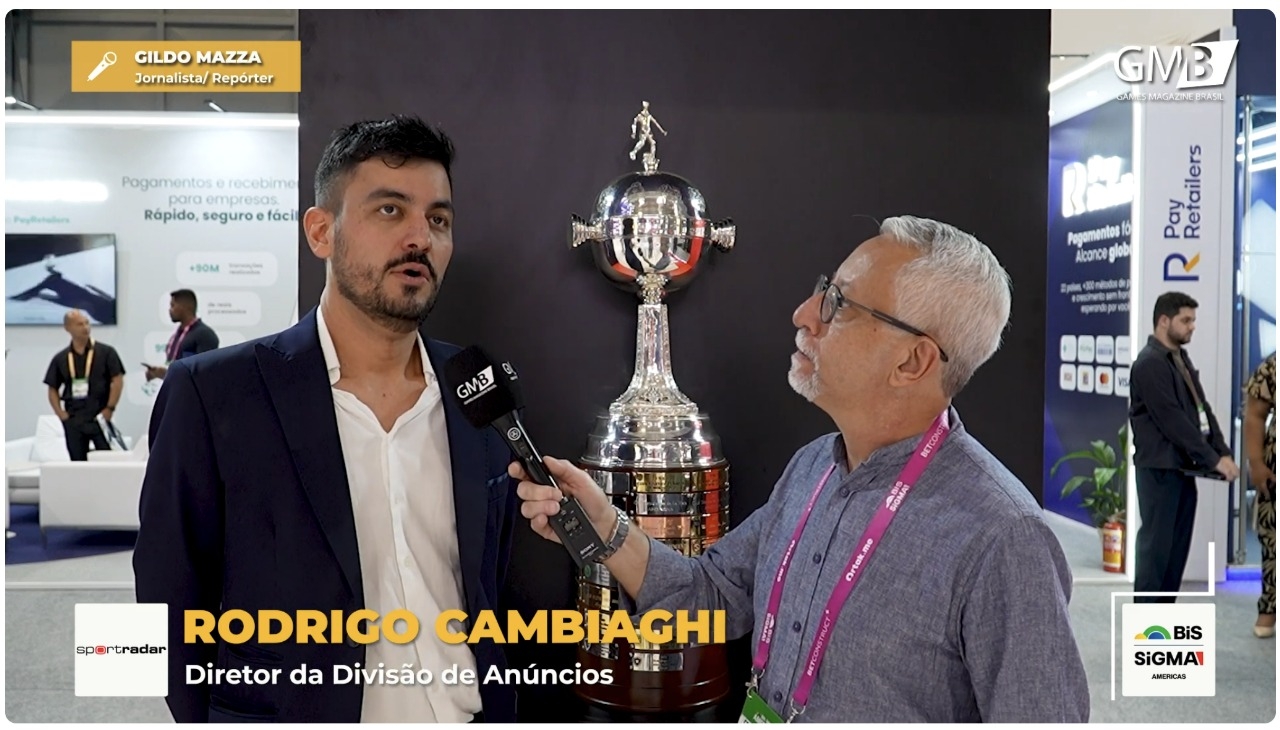
GMB – What is the importance, especially now in a regulated market, of transparent and accurate advertising in the sports betting sector?
Rodrigo Cambiaghi – With the regulation coming into effect, many rules have changed and are being reinforced. It’s extremely important for our clients to stay alert and maintain responsible communication. We see that the government itself is closely monitoring this to prevent the industry from communicating with users in an abusive or irresponsible way.
Sportradar, with its global presence, has always emphasized this type of communication and encourages clients to speak responsibly. Our tool is built for that—to help clients stay close to users. It’s a certified platform that has been tested by the largest global operators, and now also here.
Advertising is one of the backbones of the sports betting segment, and doing it responsibly requires a lot of care and technology. Could you talk a bit about how Sportradar approaches this?
We have our own ad platform. It’s a technology developed from scratch. We run it across more than 200 active campaigns globally. In Brazil, we currently work with the main operators. This platform has been validated for quite some time, and we care deeply about user protection and integrity, working locally with each country.

How does artificial intelligence, for instance, help identify improper practices, risks to players, and threats to sports integrity?
We are one of the global leaders in integrity. It's part of our core, our DNA, and that must also reflect in the way we operate in marketing. Our tool is there to validate that. We want to protect our clients from sending out any message that isn't responsible, and for that, we even have a human validation layer from Sportradar. We also work to ensure that a campaign doesn’t appear, for example, on a site aimed at users under 18 or a children’s website—or even on platforms that don’t align with a brand’s content. So, we look at various angles, not just protecting the user but also the betting operator’s own interests.
The Brazilian market is now in its fourth month of regulated operation. How do you see the current moment from the perspective of ads and, of course, proper operator conduct?
We’re still going to see a lot of changes in the market. It still has a lot of room to grow—and as I mentioned on a panel, we often look to the European market to understand what might happen in Brazil. The European market is much more mature and is no longer growing at the same rate. It faces many restrictions on the type of advertising that can be done. In Brazil, we’re still in a growth phase. So, it’s very likely that as the market matures over time, we’ll face new challenges.
I like to say the European market is much more challenging because it has no room left to grow—so growth there comes from stealing customers. Fortunately, we’re not at that point yet in Brazil, but it will come.
What are the upcoming plans for Sportradar's ads division in this regulated market?
We already have a certified tool to work with Meta, of which we are an official partner. We’re also official partners of Google. In addition, we have our own platform, which I mentioned earlier. We operate within the largest platforms, integrating with the main tools, top digital out-of-home campaigns, major score websites, and more.
Sportradar has been heavily involved in issues of sports integrity and match-fixing reports. Will this decrease now with a regulated market, or will it persist because it's inherent to sports?
We focus heavily on prevention and education. We work on detection and report suspicious results to federations and leagues. But we also focus on education, speaking directly with players and explaining the risks to their careers. We work on both fronts.
Education is the positive side. The problem is the infiltration of criminal practices in sports. How can we strengthen the sector to prevent this from happening—or at least minimize it?
It requires strong dedication to education and staying close to athletes and leagues, explaining that this kind of involvement can end a career. It really can ruin a player’s career. Sometimes, even when it isn’t proven, just being involved in a scandal of this kind can seriously damage a career.
Source: Exclusive GMB