



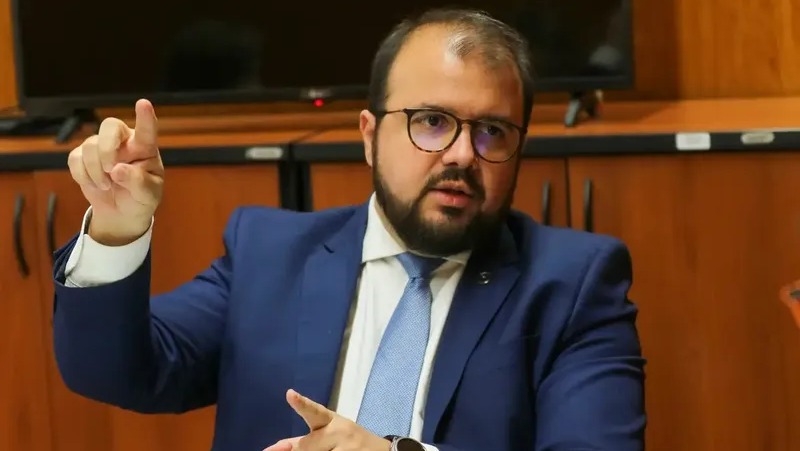
The secretary says that the regulation of online betting served as a learning experience. Authorized in 2018, "the so-called Bets" operated in Brazil for four years without regulation or tax collection.
"The experience from 2019 to 2022 taught us that we cannot rush the process. We need time to create clear and detailed rules to ensure a safe and well-structured market," he states.
Dudena says the government respects any decision made by Congress and observes the issue as the regulatory body of the activity. "The law under discussion defines that the competence for regulation will belong to the Ministry of Finance, and there has already been an amendment to explicitly assign it as our responsibility [SPA]," he says.
Bill 442/91, which deals with the legalization of casinos, bingo, and the "jogo do bicho," has already been approved by the Chamber of Deputies in 2022 but is awaiting a vote in the Senate, under the rapporteurship of Senator Irajá.
The original project has been under discussion in Congress for 33 years. The proposal faces resistance from conservative sectors of Congress but has the support of lawmakers who advocate for its potential to generate jobs and tax revenue.
Combating illegal 'Bets'
In the interview, Dudena also states that Brazil has achieved "well-done regulation that requires companies to comply with the rules."
"Our regulation is well-done and requires companies to comply with the rules, with active oversight. We are conducting monitoring and inspection cycles, such as regarding welcome bonuses, and monitoring the behavior of influencers," he says.
Since January, only "Bets" authorized by the Ministry of Finance can operate in Brazil, under specific rules, such as using the domain ".bet.br." Currently, 73 companies are authorized, totaling 162 legalized websites, in addition to eight other companies operating under judicial decision, linked to 18 brands.
The main challenge, according to Dudena, is combating illegality. The secretary says the strategy relies on three fronts: taking down illegal domains, restricting advertising and social media presence, and financial strangulation.
Full interview
How is the government viewing these more than 100 days of regulation? What has been implemented as defined by law and what still needs adjustment?
Some things are, from our point of view, very positive. We are no longer talking about future regulations; now all the rules are in force. We have well-known companies providing regulated services. From here, the challenges branch into two fronts. One is the regulated market, which must be monitored, supervised, and any violations addressed with sanctions. The second, and significant, challenge is combating illegality.
Can you elaborate more on combating illegality?
Yes, in combating illegality, we have an important role in public awareness. People need to understand that betting is not an investment; it is a way to spend money for entertainment. This message must be widely disseminated. Moreover, people should seek out authorized operators, as only they can protect bettors' mental and financial health. In parallel, we are actively tackling illegality. We are working on three main fronts:
First, the continuous takedown of illegal domains. This is difficult and costly but necessary. We have taken down over 11,000 sites since the beginning of the year.
You mentioned the cost, both operational and financial, of carrying out these actions. Could you explain better?
The cost is indirect. It is not extra spending per se, but the need to allocate personnel to monitor, recognize companies, and their service providers. Public administration resources are scarce, so it involves reallocating time and teams.
What is the second measure?
The second front involves social media and digital platforms. We are working to get them to implement regulatory restrictions to prevent illegal operators' presence. The National Council for Advertising Self-Regulation (Conar) has been a key partner in self-regulating advertising, helping block the illegal operators' advertising chain.
And the third?
The third front is financial. It involves prohibiting financial and payment institutions from providing services to illegal sites, as determined by law. We issued a decree to regulate this provision further. Financial and Payment Institutions (IFIPs) must monitor and report the existence of such sites. Together, these three fronts are expected to suffocate illegal companies.
Experts and regulated operators claim that financial action is key to shutting down illegal activities. What is your view?
I would not underestimate the impact of domain takedown. It forces illegal operators to redo marketing campaigns and change links, which is complicated and discouraging. However, financial strangulation is indeed a critical factor. If financial institutions stop servicing illegal betting companies, they will face serious operational difficulties. These measures complement each other, with financial measures being especially effective since profit is the main motivation behind these businesses.
Is it already possible to estimate the size of the Brazilian betting market?
Regarding market channeling, we do not yet have an exact number. We are working with monitoring tools but are still in the phase of domain takedowns before fully sizing the market. Our responsible gaming decree mandates, for example, that advertising highlight responsible gambling practices and the minimum legal age of 18+.
And what about lawsuits? Was the Ministry expecting this, and how is it handling them?
We always expected judicialization. Our role is to provide information to the judiciary. We are confident that we have not committed any procedural errors and that companies whose applications were denied had indeed failed to meet requirements. The number of lawsuits relative to the number of denials and withdrawals is small. We believe that higher courts will review these cases with better understanding of the regulatory context and the need to protect bettors. Betting in Brazil is a public service, and the discretion over who can operate is based on the public interest.
How does the Secretariat plan to raise public awareness about the risks of betting? Will it be through government campaigns or requiring operators to do so?
The changes we are seeing are not spontaneous; they are a response to regulation. Companies understood that excessive advertising could backfire legislatively. Conar has been an important partner, regulating the entire advertising chain. We can also require operators to carry out awareness campaigns on behalf of the government, which is being planned. Additionally, we plan to launch public awareness campaigns, explaining what a bet is, the difference between legal and illegal companies, and promoting the protection of mental health. We are working on this and will have news soon.
Regarding advertising, what is your position on the proposed ban on betting ads being discussed in Congress?
Our position is clear: we respect judicial decisions and Congress’s legislative competence. Our concern about banning advertising is that people would lose the ability to distinguish between legal and illegal operators. Advertising helps identify authorized companies. If the ban is enforced, we will need to create other identification mechanisms, such as the ".bet.br" domain.
Another topic under discussion is the legalization of land-based casinos. How does the government view this?
Regarding the legalization of land-based casinos, the bill under discussion assigns regulatory competence to the Ministry of Finance, and an amendment has confirmed this as SPA's responsibility. Our expectation is that, once approved, the SPA will regulate the market. Our main concern is that any new market, like casinos, must be strictly regulated before operations start. The experience from 2019 to 2022 taught us not to rush the process. We need time to create clear and detailed rules to ensure a safe and structured market.
What about betting and the Bolsa Família program?
We are working on ways to comply with the Supreme Court decision prohibiting Bolsa Família funds from being used for betting. We will announce the solution as soon as it is finalized.
How would you assess all these measures?
We have achieved a major breakthrough by establishing a regulated market, something that should have been done back in 2019. We spent four years with no real regulation. In 2023, the government addressed the issue with a provisional measure, submitted a bill, and created the Secretariat. We finalized the regulation by July and began cracking down on unauthorized companies, especially after the new year.
Now it’s time to fine-tune implementation. Our regulation is robust and requires companies to comply, with active supervision. We are conducting monitoring cycles, supervising influencers, and tackling misconduct. Problems include influencers promoting illegal sites or making prohibited claims, such as guaranteed easy winnings. We are on the right path, implementing effective controls. The task of monitoring, supervising, and punishing violations will continue going forward
Source: Exame