




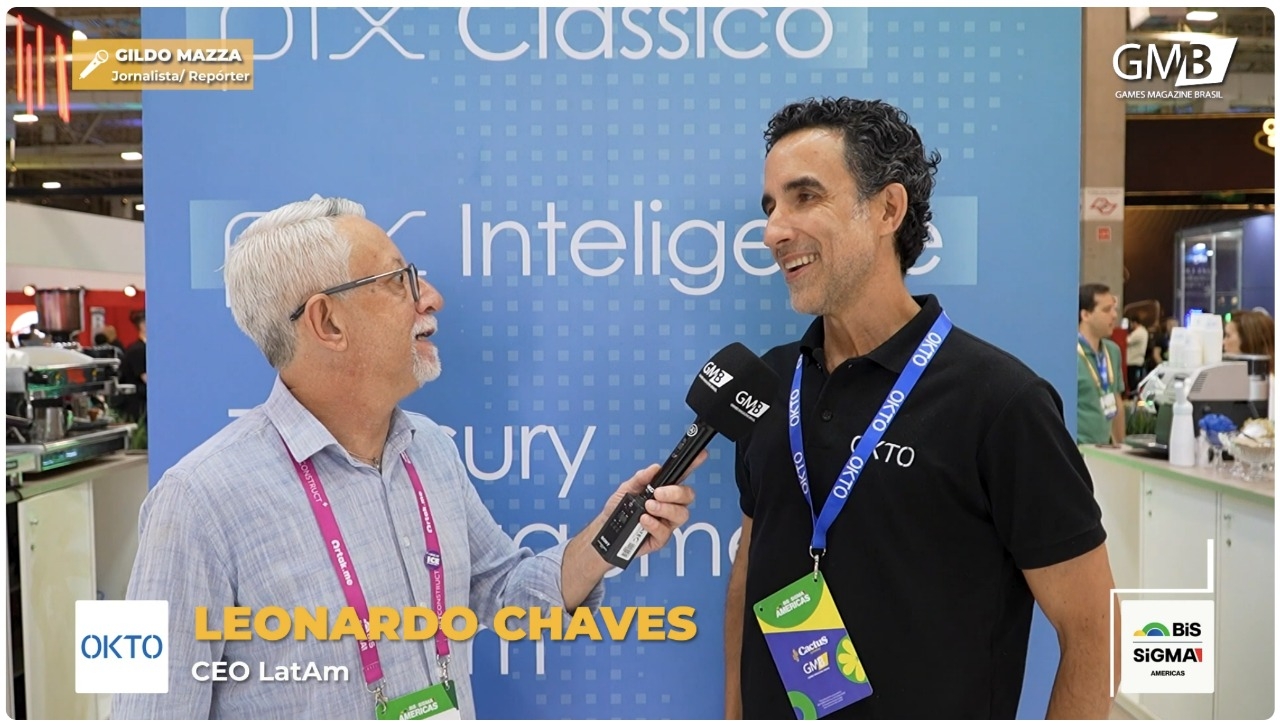
GMB - What objectives led OKTO to participate in BiS SiGMA, and what is your assessment of the event?
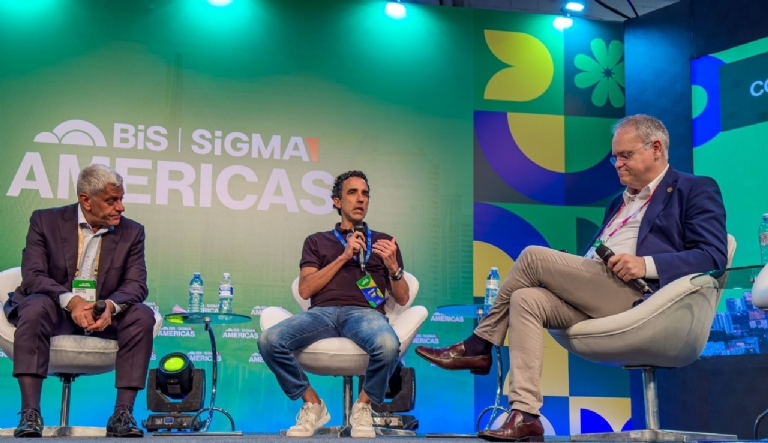
Leonardo Chaves – It’s always a very important event for the industry and the largest in Latin America. So, in terms of brand positioning, as one of the leaders in payments in Brazil and Latin America, it’s essential for us to be at BiS SiGMA. It’s great to see how the industry has transformed. It’s much more professional with regulation, and the level of discussion is extremely high. The discussions focused on customer onboarding, KYC, and payment issues, and it’s fantastic to see much greater Brazilian participation.

We’ve seen several OKTO solutions for the regulated market, but did you present anything new?
We always need to differentiate ourselves. Our mantra is closely tied to excellence in execution through innovation. What we always aim to offer our clients is something that brings ease. We know the main friction points in the user journey are KYC and payments. When we can minimize that friction, we deliver a better experience for the user and, consequently, better conversion for the operator. That’s why we’re constantly seeking innovation—from new products like biometric Pix, developed by the Central Bank via Open Finance. This product is an innovative solution. Now, our clients' users no longer need to open the bank app, authenticate, and go through copy-paste. The solution recognizes the user directly via their mobile and carries out the transaction much more smoothly and frictionlessly.
But as I mentioned, friction is not only in payments. We want to look at the entire journey. So, we’ve integrated the KYC experience with payments. Last year, we launched “Pay and Play.” Now we’ve adapted it for regulation, adding facial recognition and other requirements demanded by regulation, making the process easier. A typical KYC and data entry process that might take 3 to 4 minutes, we’ve reduced to under 1 minute, with much less friction and greater ease for the user.
How has the response from operators been regarding these solutions that are available to enhance the end-user experience?
To our delight, it’s been very well received. All the operators we've presented our solution to are already working on integrating it. They’re already seeing positive results from these new products because they truly bring convenience. Operators that fail to differentiate themselves, especially during these friction points, will end up losing out. All operators invest heavily in marketing, and there’s no point in bringing in the customers only to lose them when they’re ready to play because something went wrong during registration or the payment didn’t work.
So, anything that facilitates the process brings financial return, and that’s what our clients are looking for. More than just presenting a product, we like to do consultative sales. Our team, whenever implementing a new product, goes onto the client’s website, tests it together with them, collects feedback, and offers suggestions to make the most of every solution.
Were these solutions created only due to regulatory requirements, or also based on feedback and needs from the operators?
It’s always a combination. We like to work proactively. When we see a challenge in the regulations that affect the operator or the user, we immediately look to address it and bring it into discussion. We always aim to provoke discussions with the operator, because they know their customers and their user journey best. Each operator designs their own journey, and we don’t offer something fixed or overly standardized, because the idea is to give operators the freedom to constantly assess and improve their user journey.
So, we listen to the operator to adapt our product to their needs. We always invite our clients to co-develop the product with us so we can create something truly meaningful. That mindset has driven our success. Even with Pix, which is a standard used by everyone, we introduced a lot of innovation last year in some journeys, allowing our clients to achieve conversion rates of 90% or more during migration, while many others struggled with 60-70%.
In addition to this full suite of solutions, you were awarded at BiS and the SiGMA Awards. Tell us about that.
It’s very rewarding to receive that recognition. At SiGMA, it was even the second consecutive time. I think it’s really great and satisfying to see OKTO’s reputation being recognized by the industry itself. I believe the appreciation from everyone who contributes to our work—clients, providers, and all who witness our efforts—shows how committed we are to delivering excellent service.
As I mentioned, our mantra is excellence in execution through constant innovation, and that leads to a strong reputation, which in turn has earned us these two recognitions, the industry's two main awards.

We can't limit ourselves to Brazil. How is OKTO's operation and expansion in Latin America progressing?
We currently operate in Mexico, Chile, Peru, and Argentina—the main countries in Latin America for the betting market—where we’re doing very well and already have operations running. We started in those countries in the middle of last year, and it’s great to see that we entered quickly and were well accepted by our clients, delivering good results in every country we’re in.
We like to work very locally. We are a global company, with a global strategy and a deep understanding of the industry. We bring that experience, but with local adaptation. That means, in every country we operate, we understand which payment methods make sense, what the user profile is like, and what they prefer. We know it’s no use bringing a standardized solution and trying to fit it in everywhere. Each country has its own specific characteristics, and we need to adapt our solutions to them so we can get the best out of the local ecosystem.
You mentioned four countries but not Colombia, which is the birthplace of the sports betting market in Latin America. Do you plan to enter Colombia?
Yes, we haven’t entered Colombia yet. We’re in the early stages, and let’s see what the next steps bring. It’s definitely a very important market in Latin America and, as you said, the birthplace. We’re working on a solution there soon.

Source: Exclusive GMB