




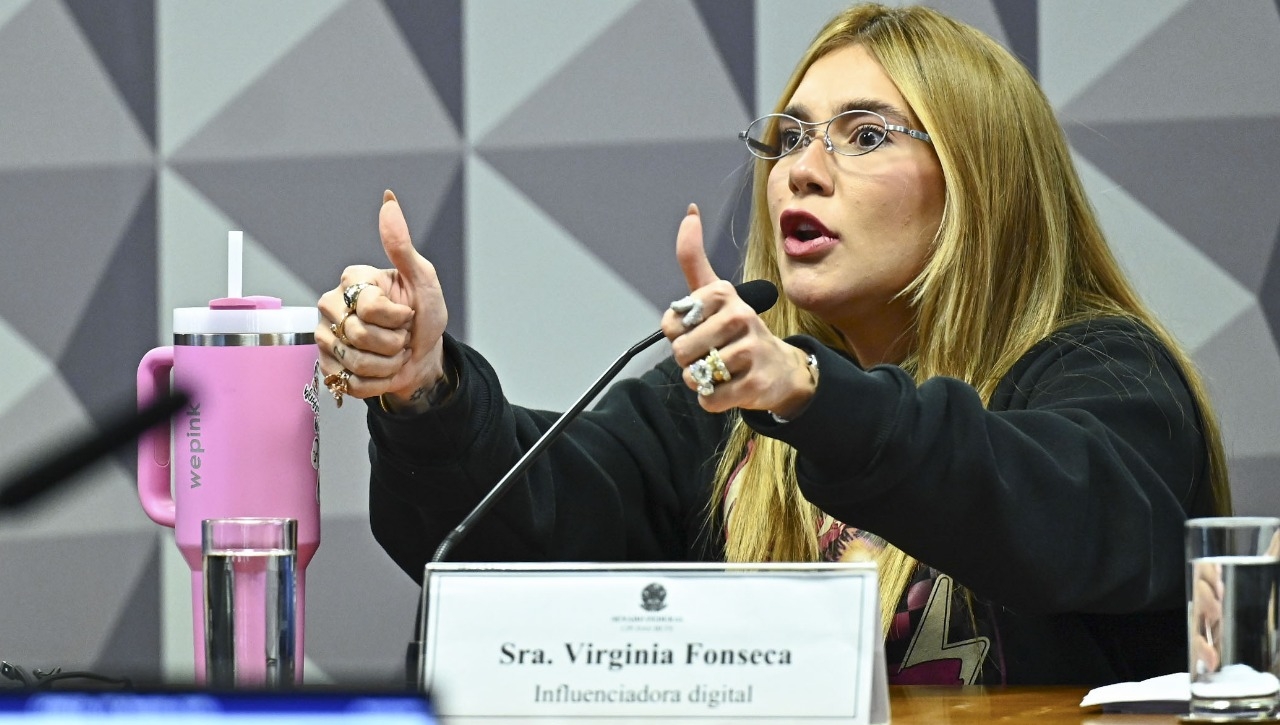
The CPI of ‘Bets’ heard from influencer and SBT presenter Virgínia Fonseca. The wife of Zé Felipe, son of singer Leonardo, came under scrutiny by lawmakers for being one of the top personalities promoting gambling and online betting on social media.
With over 53 million followers on Instagram and million-dollar contracts with online betting operators, Virgínia is seen as a key figure to understand the communication strategy of these companies, which have been using popular internet personalities to attract new bettors—especially young people.
At the request of Senator Soraya Thronicke, the CPI’s rapporteur, Virgínia agreed to hand over to senators the contracts with the betting companies she has promoted: Esportes da Sorte and Blaze, the latter of which she still partners with.
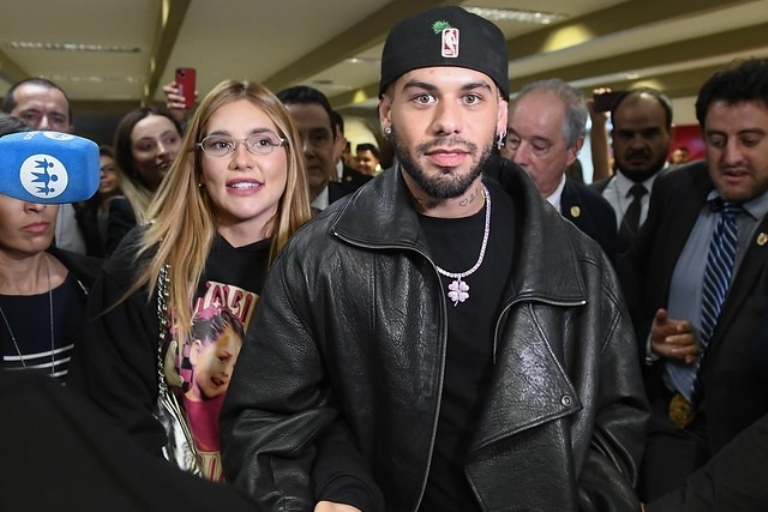
The influencer refuted an article by Piauí magazine published in January. The outlet, according to Soraya, “has power and credibility.” Virgínia further asserted that her contracts “have nothing abnormal.”
“If Piauí magazine acted in bad faith, I won’t waste my time [suing]. I believe in divine justice. If I doubled the company’s profit, I would receive 30% more. That was a standard clause at the time in all my other contracts, not just with ‘Bets’. At no time [did it refer to] losses of my followers—there was never anything like that in the contract,” she said.
Virgínia's testimony followed a request by Senator Soraya. The CPI is investigating alleged irregularities in the betting sector and the use of digital influencers to promote online gambling.
Online sports betting and gambling were legalized in 2018 with Law 13.756. The sector received new regulations in 2023 (Law 14.790), and after a six-month transition, the full regulation came into effect as of January 2025.
Before the meeting, Soraya stated in a press conference that “there may be room for debate regarding the legality or illegality” of betting operations and their promotion between 2018 and 2025.
Warnings
Virgínia explained that her current contract requires one post per week on Instagram, where she has over 50 million followers. According to her, her betting-related posts began in December 2022 and comply with advertising rules as they are introduced.
“When I post, I always make it very clear that it’s a game, for fun, that [users] can win or lose. That under-18s are prohibited, that if someone has any kind of addiction, they shouldn’t participate, and that they should play responsibly… I include all the images required by Conar [Brazil’s National Advertising Self-Regulation Council]. I’ve never told anyone to play to make life-changing money. I’m not doing anything illegal,” she added.
Thronicke said she had trouble finding these warnings in Virgínia’s posts and “would like to see more” of them. The rapporteur questioned Virgínia about a video shown during the session, arguing that it lacked clear risk disclaimers.
In response, Virgínia argued that the video predated stricter advertising rules: “Back then, it was different. There weren’t yet Conar’s requirements to state [responsible gambling warnings] at the beginning of the video. Conar is constantly changing and imposing more requirements. The betting companies already send everything properly now, including what not to say. For example, my daughters can’t appear.”
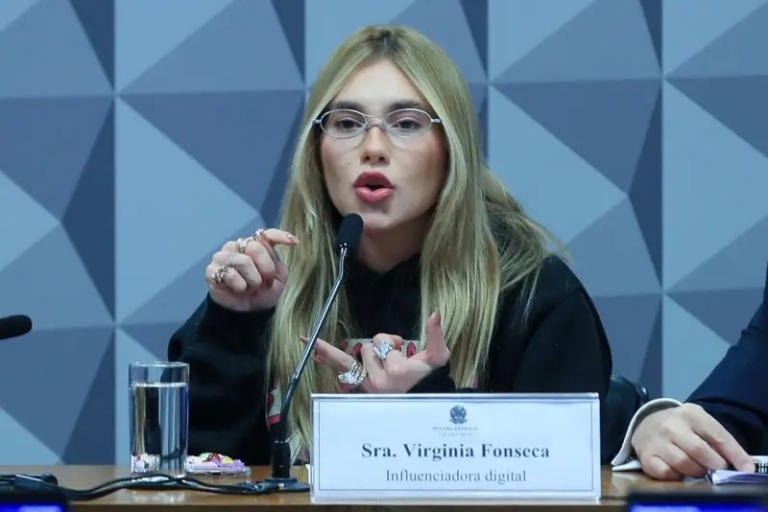
Conar is a nonprofit self-regulatory body in which private sector agents voluntarily submit to its rules and decisions. It currently maintains a partnership with Brazil’s Ministry of Finance, which is responsible for developing and implementing betting sector regulations.
Algorithms
Soraya asked whether Virgínia uses the same type of account as regular users to produce promotional content. According to the rapporteur, some betting companies provide influencers with accounts and apps that may manipulate outcomes for advertising purposes.
“The account I use to play is not necessarily a fake account. [I play] on the same platform [as other users], you win and lose,” she said.
According to Soraya, irregularities in betting algorithms are one of the CPI’s lines of investigation. The senator said the final report will be thorough in its findings and resulting actions. Faced with criticism from senators about the short deadline for the report’s completion, Soraya assured the CPI “will not be ineffective.”
“There are confidential documents, and our team has been working for a long time. It will never end in a whitewash—only if the report isn’t approved,” she stated.
Debate
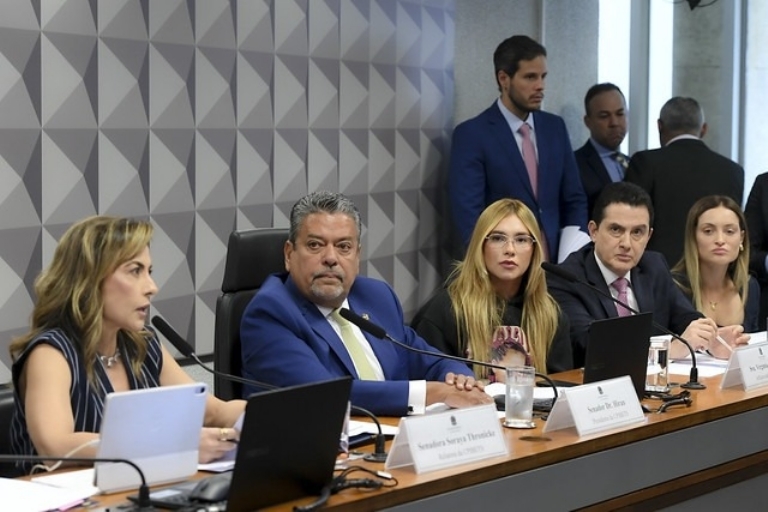
Senator Dr. Hiran, the CPI’s president, pointed out that Virgínia is protected by a habeas corpus issued by Brazil’s Supreme Court (STF), shielding her from arrest. He clarified that the hearing was not intended to “point fingers” or “criminalize” the influencer.
Senator Jorge Kajuru criticized Virgínia’s summons and praised her willingness to cooperate. He stated he had been pressured to criticize Virgínia during the session, but her advertisements were not illegal: “What she does is endorse a product. I ask: is the product she endorses illegal? No.”
Senators Cleitinho and Eduardo Girão criticized the legalization of online gambling due to the financial and mental harm associated with it. Girão suggested that Virgínia reconsider her involvement in betting content.
“You have the talent to communicate well. Few people are profiting [from betting], mostly powerful ones, while the general population is losing. Marriages are breaking up, there are suicides. Addiction enslaves,” he warned.
Virgínia believes the solution must come through legislation so that all stakeholders in the betting sector are held to the same standards.
“[Betting ads] are everywhere, there’s no way to escape them. The solution has to come from within. We need to find a solution where everyone plays by the same rules. [My relationship with betting] is something I’ll think about, but I have a contract. Ending a contract is not simple,” she explained.
Senator Izalci Lucas also asked whether Virgínia or her team receive messages from followers reporting negative consequences from betting. She said she was unaware of any such messages.
Advertising
According to Senator Carlos Portinho, betting advertisements by influencers should be restricted. He is the rapporteur for a bill on the matter (Bill 2.985/2023).
“We need to tighten advertising—it’s out of control. Often it reaches people who are not the target audience and leads them to unlicensed sites. We’ll have to restrict influencer involvement in this type of advertising. The phrase ‘responsible gambling’ means nothing. It should say ‘betting causes addiction,’ ‘betting causes financial harm to you and your family.’ That has to be made very clear,” said Portinho.
Controversial photos
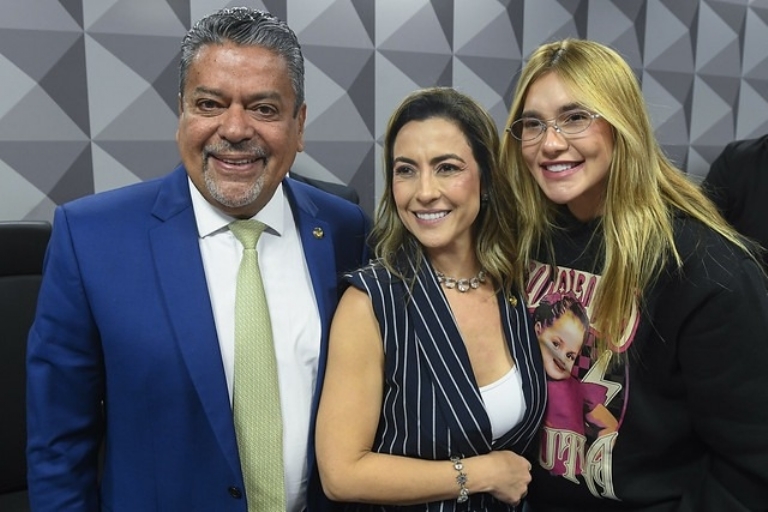
A photo posted by the influencer after her testimony at the CPI upset several senators. The image, shared on her Instagram stories, showed Virgínia alongside CPI president Dr. Hiran and rapporteur Soraya Thronicke (Podemos-MS), all smiling, with the caption: “Thank you for the respect and kindness.”
Minutes after the post, lawmakers questioned the casual and friendly tone the image conveyed. Behind the scenes, senators deemed the photo inappropriate since, although she was summoned as a witness, Virgínia has ties to the online betting companies under investigation.
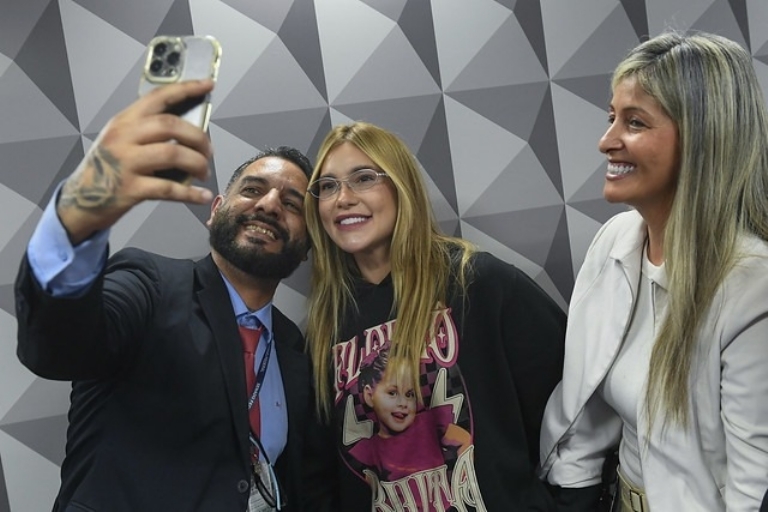
According to some senators, the photo reinforced a “misguided attitude” displayed by some CPI members during the session, such as Senator Cleitinho, who asked for a selfie with the influencer during her testimony.
Lawmakers expressed concern that the CPI’s credibility could be undermined if senators act like “fans” in the presence of other famous influencers who are yet to testify. One member of the committee said the image might give the impression that everything related to the influencer and her ‘Bets’ contracts had already been clarified.
Both CPI president Dr. Hiran and rapporteur Soraya Thronicke shared the post on their own Instagram profiles. Dr. Hiran also reposted content from his daughter—who attended the session and took a picture with Virgínia—as well as a video in which the influencer, already back at her hotel in Brasília, told followers about her congressional testimony.
Main points from Virgínia Fonseca’s testimony
1. Why was Virgínia called to the CPI?
Virgínia Fonseca was summoned due to the CPI’s investigation into the use of digital influencers to promote betting houses. The committee is probing whether internet celebrities encouraged the public—especially minors—to gamble irresponsibly.
Senator Soraya Thronicke, the CPI’s rapporteur, said the goal is to understand influencers’ role in promoting gambling, given its potential social and psychological impacts.
“No one beats the ‘Bets’—they exist to profit from the bettor. This is a public health issue,” said Soraya.
2. Controversial contract and the 'misery clause'
A major topic during the hearing was Virgínia’s contract with betting company Esportes da Sorte. The CPI is investigating whether influencers received a percentage of bettors’ losses, dubbed the “misery clause.”
Virgínia denied that her contract included such a clause and explained that the only bonus she would receive was a 30% increase in pay if she managed to double the company’s profit. However, she stated that this goal was never reached.
“That goal was never reached—I never received a penny more than my 18-month fixed advertising contract. It was a fixed amount. If I doubled the profit, I would receive 30% more from the company. But that never happened,” said the influencer.
3. Warnings about gambling risks
During the session, Virgínia emphasized that she always warned followers about the risks of ‘Bets’. She stated that she follows Conar guidelines and made it clear that gambling involves both winning and losing money.
“I always make it clear that it’s a game, that you can win and lose. That under-18s are prohibited on the platform. If you have any type of addiction, it’s recommended not to play. And play responsibly,” said Virgínia.
4. Use of accounts provided by companies
Another controversial point was the use of betting accounts in promotional videos. Virgínia clarified that she didn’t use her personal account for these videos but accounts provided by the betting company.
“They send a password. It’s an account created for me to play. It’s not a fake account,” she explained. She emphasized that although the account wasn’t the same as those used by followers, the app was the same one accessed by the public.
5. Regret and continuation of partnerships
Asked about the social impact of betting and whether she intends to continue promoting betting companies, Virgínia said she does not regret any of her advertising actions but admitted she plans to reflect on her ongoing partnerships.
“I don’t regret anything I’ve done in my life. I believe everything was a lesson. I’ll go home and think about it, for sure,” she said.
She also said she can’t help followers facing financial problems due to gambling. “I don’t have the power to do anything. So it’s complicated,” said the influencer.
What’s next?
After Virgínia’s testimony, the CPI of ‘Bets’ will continue hearing from other influencers and representatives of betting companies. The investigation aims to understand whether advertising campaigns encouraged irresponsible gambling and what measures can be taken to protect consumers.
Virgínia handed over documents related to her contracts with Esportes da Sorte and Blaze to the committee. These will be analyzed confidentially. The expectation is that other testimonies will help clarify influencers’ role in promoting gambling.
Tight deadline
The committee has until June 14, 2025, to complete its work, after a 45-day extension. The CPI aims to clarify the impact of digital betting on Brazilians’ financial health and investigate possible wrongdoing. The rapporteur stated that the CPI primarily seeks to improve legislation so that the sector operates “in the least harmful way possible to Brazilians.”
Source: GMB / Agência Senado