




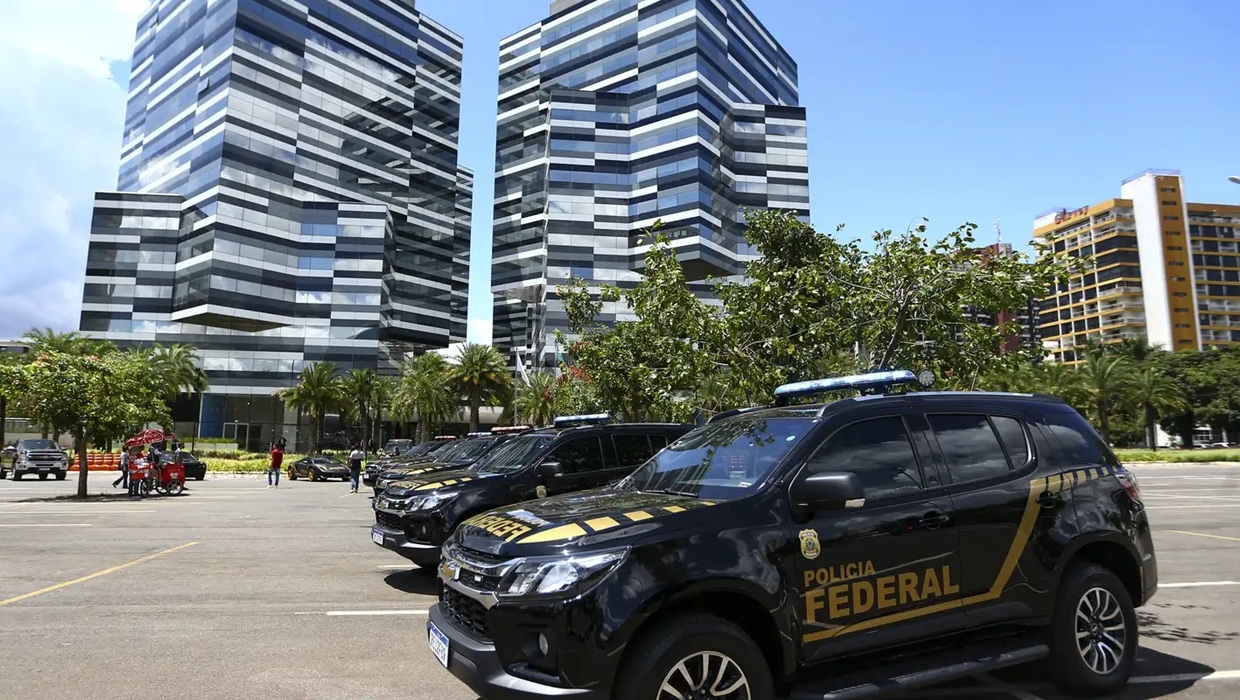
However, the document contradicts the official position of its superior body, the Ministry of Justice. The department headed by Ricardo Lewandowski is working to prevent the proposal from advancing. “We understand that the bill creates a large loophole for organized crime to operate, particularly through money laundering,” said Marivaldo Pereira, Secretary for Legislative Affairs at the Ministry of Justice.
“We believe that the potential increase in revenue that may come from this type of activity does not justify the problems it brings in terms of health, social impact, and public security. We hope this position prevails in the National Congress,” he added.
Folha reached out to the Federal Police (PF) through its press office since Friday (9) but received no response.
Other departments in Lula’s government, such as the Ministries of Finance, Tourism, Labor, and Social Development, disagree with the Ministry of Justice and support legalization.
The PF document was sent to Senator Irajá (PSD-GO), the rapporteur of the bill in the Senate, in 2024.
In the technical note, the PF’s parliamentary affairs division states it is “in favor, with reservations” regarding the proposal, based on an analysis by Dicor (Directorate for Investigation and Combating Organized Crime and Corruption).
The only necessary adjustment, according to the agency, is that part of the revenue collected from gambling should go directly to the Federal Police.
The argument is that legalizing casinos, bingo halls, and the jogo do bicho (an illegal numbers game) will increase the Federal Police’s workload in preventing and suppressing crimes directly linked to these activities.
Therefore, investigators will need specific training and “high-performance equipment.”
The bill currently under review in the Senate stipulates that 6% of the sector's revenue go to public security. However, the PF requests a specific allocation for its own fund, Funapol (Fund for Equipping and Operationalizing the Core Activities of the Federal Police).
The technical note does not mention the historical ties between jogo do bicho and organized crime, nor does it detail specific concerns about the possibility of casinos and bingo halls being used for money laundering—a central concern of the Ministry of Justice.
It simply states that the new criminal offenses related to these activities, “as well as related crimes, such as money laundering,” would need to be investigated by the PF, which would therefore need to invest in this area.
According to the PF itself, its intention is to use Funapol funds to help “ensure the integrity of gambling and betting at the national level.”
The bill legalizing physical gambling advanced in the Senate in 2024, following the legalization of online betting, known as ‘Bets’. The text is awaiting a vote in the Senate Plenary. According to lawmakers, there is still resistance, especially from the evangelical caucus.
As with online bets, supporters of legalizing physical casinos and jogo do bicho argue that these activities already exist in Brazil, but operate outside the law, making oversight impossible.
The bill addresses four types of physical gambling (bingo, casinos, jogo do bicho, and horse racing) and includes rules on how these activities should operate, as well as penalties for irregularities.
The sector’s regulatory body (National Gambling and Betting System) would be part of the Ministry of Finance, and the federal government would be allowed to issue only 34 licenses for physical casinos in Brazil, distributed according to state size. The Ministry of Finance already oversees online betting regulations.
The bill also provides for two additional types of casinos: on ships (limited to ten along the Brazilian coast) and in resorts (one for each national tourism hub).
Licenses for jogo do bicho would be limited to one per 700,000 inhabitants per state, and bingo licenses to one per 150,000 inhabitants per municipality.
The proposal sets a 17% tax on the gross net revenue of gambling operators.
“If the bill is approved and the PF’s responsibilities increase, it is considered appropriate that [...] a percentage of the collected revenue be allocated to Funapol,” says the agency’s note.
According to CNN Brazil, however, at the beginning of 2025, the PF submitted a list of priorities to the Ministry of Justice, in which it aimed to block the casino bill.
The legalization of casinos and jogo do bicho has broad support from organizations linked to the hotel, events, commerce, and betting sectors, but raises concerns due to the risk of gambling addiction and the connection of these activities to organized crime. The bill includes mechanisms for oversight and addressing health-related issues.
In another technical note, the Ministry of Social Development states it sees no “legal obstacle” to the bill but warns that it “may” be against the public interest. The Finance and Labor Ministries expressed support, with reservations.
“By establishing clear rules and limits for the implementation of these enterprises, such as defining the number and location of these establishments, the bill will contribute to strengthening the sector in the country, as well as being a strong driver for income and job generation,” said the Ministry of Tourism.
Source: Folha