




Installed in November 2024, the CPI of ‘Bets’ emerged with the mission of investigating crimes committed by online betting houses. For months, it remained on the sidelines of political news.
But now, on the eve of its conclusion, the CPI made headlines with the summoning of digital influencers — a kind of new public enemy number one.
What draws attention, however, is not the sudden interest in the CPI, but the distorted perception of the role of the State in this debate. The National Congress, the same one that regulated sports betting in Brazil, now claims to be concerned about the “destruction of families” and the “increase in debt”.
A type of institutional amnesia that borders on the comical. The claim is that betting houses are consuming the disposable income of the population, especially those of classes C, D and E, as pointed out by the Locomotiva Institute survey.
The number of bettors has grown, as has the volume of money — and, as always, bureaucrats are now running after the damage they helped to cause.
But this discussion has been marked by a false moralism that needs to be dismantled. On the one hand, the Brazilian State behaves like a strict and omniscient parent. On the other, it treats citizens like children incapable of making decisions — good or bad — on their own.
The idea that the population needs to be saved from itself is a constant in the statist mentality that prevails in the country.
The most common arguments are predictable: betting produces addiction, ruins family budgets and causes harm to health mental and physical. None of these claims are absurd. But they are disingenuous. After all, alcohol and tobacco do exactly the same thing — they are even legalized, taxed and even encouraged by lobbying behind the scenes in Brasília.
And when it comes to federal lotteries, curiously, no one complains. No one questions how they work — even though they finance soccer clubs and Brazilian Olympic sports with the money of millions of Brazilians hoping to change their lives with a winning ticket.
The same goes for the animal game: a criminal offense, informal, beyond the reach of the tax authorities — and yet celebrated for funding samba schools and cultural traditions. But now, with ‘Bets’, is it as if Brazilian citizens have suddenly lost the ability to control their own impulses?
Betting, like gambling, is an expression of individual freedom. The State can — and should — curb fraud, money laundering and manipulation. But wanting to prohibit or restrict citizens’ freedom of choice under the pretext that they do not know what they are doing is a Authoritarian regression disguised as social care.
The compulsion to gamble will not be solved with the stroke of a pen, just as it was not solved by banning casinos — a market that today moves billions in countries with serious legal frameworks.
In Brazil, we continue to insist on prohibiting choices, as we do with our anachronistic labor laws, the rigid public health model, the bankrupt social security system or the inefficient protection of “strategic” sectors of the economy.
For decades, Brazil has avoided responsibility: it transfers everything to the State and demands miracles from it that not even the ancient gods would dare promise. But what we lack is not more regulation. It is financial education. It is a sense of responsibility. It is freedom with consequences — the only possible path to a truly mature society.
As long as we treat citizens as incapable, Brazil will continue to be the country of the wards. And Congress, their opportunistic guardian.
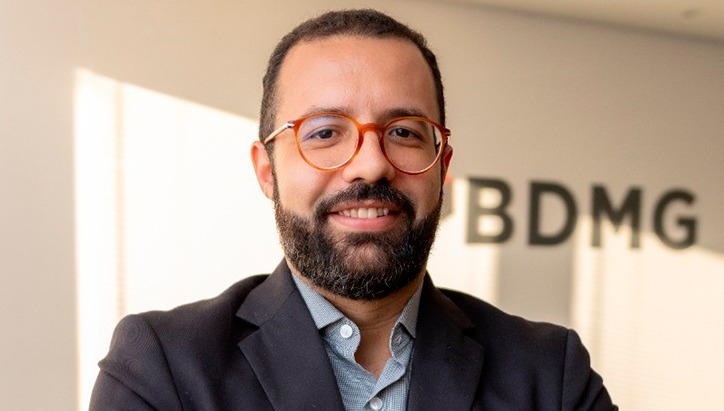
Izak Carlos da Silva
Economist (UFSCar), master and doctor in applied economics (PPGE/UFJF) and a finance specialist (FGV). He is Chief Economist at the Development Bank of Minas Gerais (BDMG).
Source: Exame