




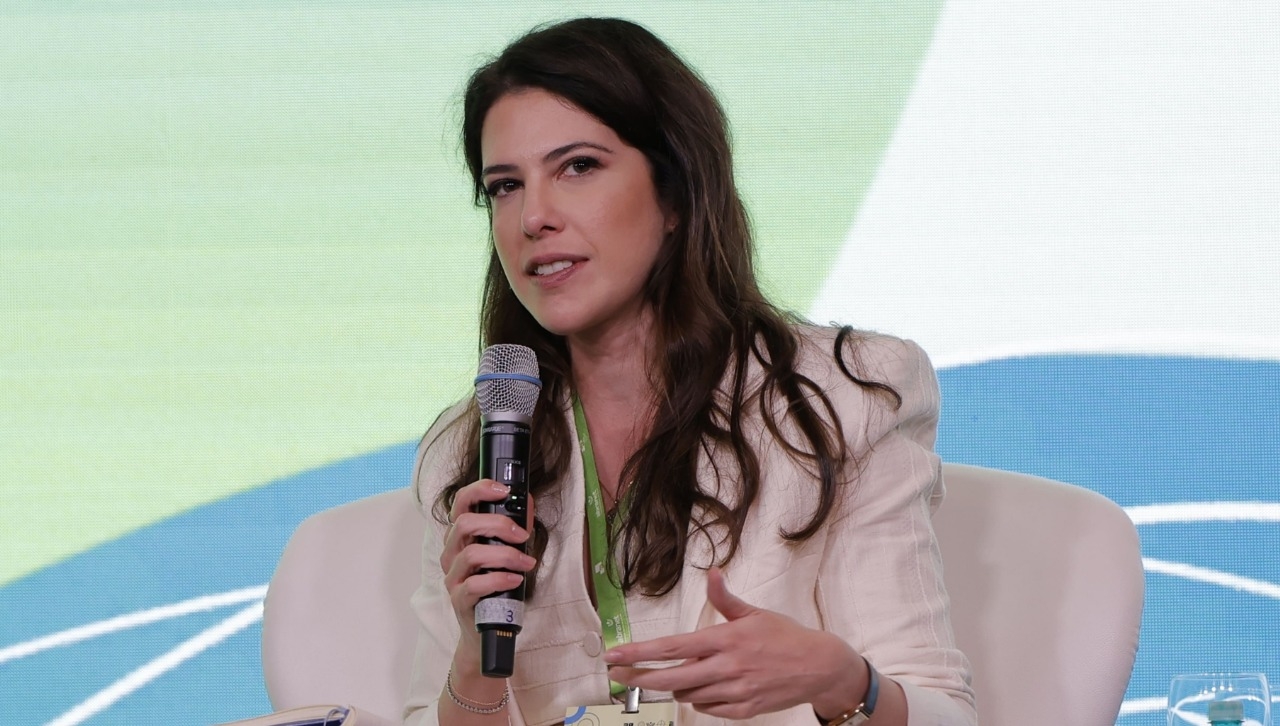
The director of the CVM cites, as an example, the mechanism known in the market as a "stop order," which is a precautionary measure that mandates the immediate suspension of a product offered irregularly, under penalty of a daily fine if not complied with.
"I'm not exaggerating when I say that the enforcement measures we have against this type of provider are absolutely ineffective, because these providers receive the stop order, shut down that platform, open another identical one, and continue operating. In this specific behavior, we're basically bailing out water with a sieve every day," Marina Copola said.
The statement was made by the CVM director at the 5th Brazilian Internet Congress, organized by Abranet (Brazilian Internet Association), in partnership with ITS Rio (Institute for Technology and Society), held in Brasília.
In her assessment, the offering of unregulated products "exploded" as people's interaction with social media deepened, and there was an exponential increase in the use of bets after the pandemic. The CVM director noted the emergence of a new investor profile, seeking a gamified experience.
In addition to ‘Bets’ – as operators of sports betting and iGaming are called in Brazil -, she mentioned Forex platforms that have resurfaced with new looks, CFD platforms (derivatives that allow speculation on the price variations of indices, stocks, currencies, commodities, cryptocurrencies, etc.), and other products that are not registered in Brazil but are freely offered to Brazilian investors.
According to Copola, the best way to address the problem and protect investors is to adopt a multidisciplinary approach in partnership with various entities. She argues that control should also come from the payments side.
"These illicit activities are rarely tackled with just one shot. We need to join forces," she said. During the panel, the speakers also discussed the development of open finance in Brazil — an ecosystem that allows for the sharing of personal, banking, and financial data between institutions, with the customer's authorization.
For Ana Carla Abrão, CEO of the open finance governance structure, the lack of communication is currently the biggest barrier to advancing the ecosystem envisioned by the Central Bank.
"Brazil's open finance system is currently the largest in the world, and still, we’re nowhere near reaching our full potential," she said. According to her, 50 million people have already joined the initiative.
"Unlike Pix, where we know exactly what we’re doing at the time of payment, we still face the challenge of communicating what open finance actually is," she stated.
Gilneu Vivan, Director of Regulation at the Central Bank, also emphasized the need for customers to see the benefits generated by data consent through open finance and pointed out a “backlog of things that need to be done” as a problem.
"What worries me most today is how we’ll manage to convey a sense of security so that people trust they can operate in the digital world without issues," he said.
Experts highlighted that greater data sharing through open finance will lead to more competition, increased efficiency, and more customized services for the population.
Source: GMB