




Brazil’s online sports betting and gaming market is moving steadily toward regulatory consolidation in 2025. However, a new tax development threatens the financial sustainability of licensed operations: the escalating tax burden on international remittances for payments to foreign providers.
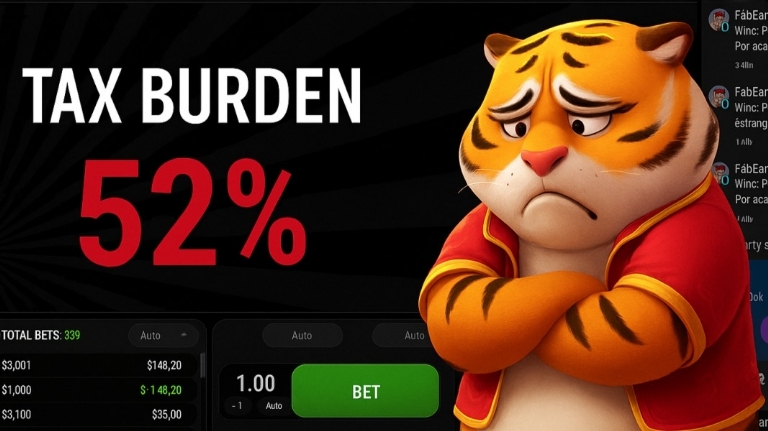
Following the publication of Decree No. 12,466/2025, the IOF (Tax on Financial Transactions) rate for cross-border service payments jumped from 0.38% to 3.50% — an 821% increase. When combined with other federal and municipal taxes like IRRF, CIDE, PIS/COFINS, and ISS, the total cost of a foreign payment can exceed 52.57%, putting enormous pressure on operator margins.
What taxes apply to foreign payments?
When a Brazilian-licensed operator pays a foreign supplier for games, platforms, CRM tools, or technology services, the following taxes apply:
* IOF (Tax on Financial Transactions): 3.50% (previously 0.38%)
* IRRF (Withholding Income Tax): up to 25% (higher if paid to a tax haven)
* CIDE (Intervention Contribution in the Economic Domain): 10%
* PIS/COFINS-Import: ~9.25%
* ISS (Municipal Service Tax): 2% to 5% depending on municipality and service type
Result: What was previously high tax impact now easily surpasses 50%, creating a severe strain on profitability, scalability, and innovation capacity.

A structural problem: overdependence on offshore providers
The majority of Brazilian operators still rely on international game and tech providers without a legal presence in Brazil. With the new tax structure, this dependency has become economically unviable.
Operators are now faced with two options:
* Absorb the losses and cut margins;
* Or require global partners to establish local entities in Brazil.
Why should game providers establish in Brazil?
Opening a Brazilian legal entity — whether a subsidiary, branch, or joint venture — brings numerous benefits:
* Lower overall tax burden with domestic payment flows
* No more costly foreign remittances
* Stronger alignment with SPA and federal tax compliance
* Eligibility for local innovation incentives, including R&D programs and the "Lei do Bem" (Innovation Tax Relief Law No. 11.196/2005)
This isn’t just a tax strategy — it’s a long-term market access strategy.
The role of SPA (Secretariat of Prizes and Betting)
The SPA/MF is well positioned to lead this transition by accelerating the localization of B2B providers in the Brazilian market.
Recommended actions:
* Set clear deadlines for current foreign providers to regularize
* Create transparent B2B accreditation criteria for local operations
* Promote tech hub development through fiscal incentives and regional partnerships
Turning a tax challenge into a competitive advantage
Localizing content and technology providers could help Brazil:
* Transfer global gaming technology to the domestic market
* Create highly qualified jobs in tech, risk management, and support
* Train a new generation of iGaming professionals
* Foster an innovation ecosystem, including local startups and academic partnerships
Brazil could evolve from being a consumer of iGaming to a net exporter of gaming platforms and innovation across Latin America.
Conclusion
The IOF hike exposed a deeper structural issue: relying on foreign providers is becoming too expensive.
Now is the time to act.
Nudging international suppliers toward establishing local operations is not just a compliance response — it’s a strategic opportunity to unlock innovation, reduce costs, and build a sustainable, world-class iGaming ecosystem in Brazil.
The future of gaming in Brazil will be built here — or it may cost too much to exist.
Elvis Lourenço
Chief Product Officer of Grupo Aposta Ganha