




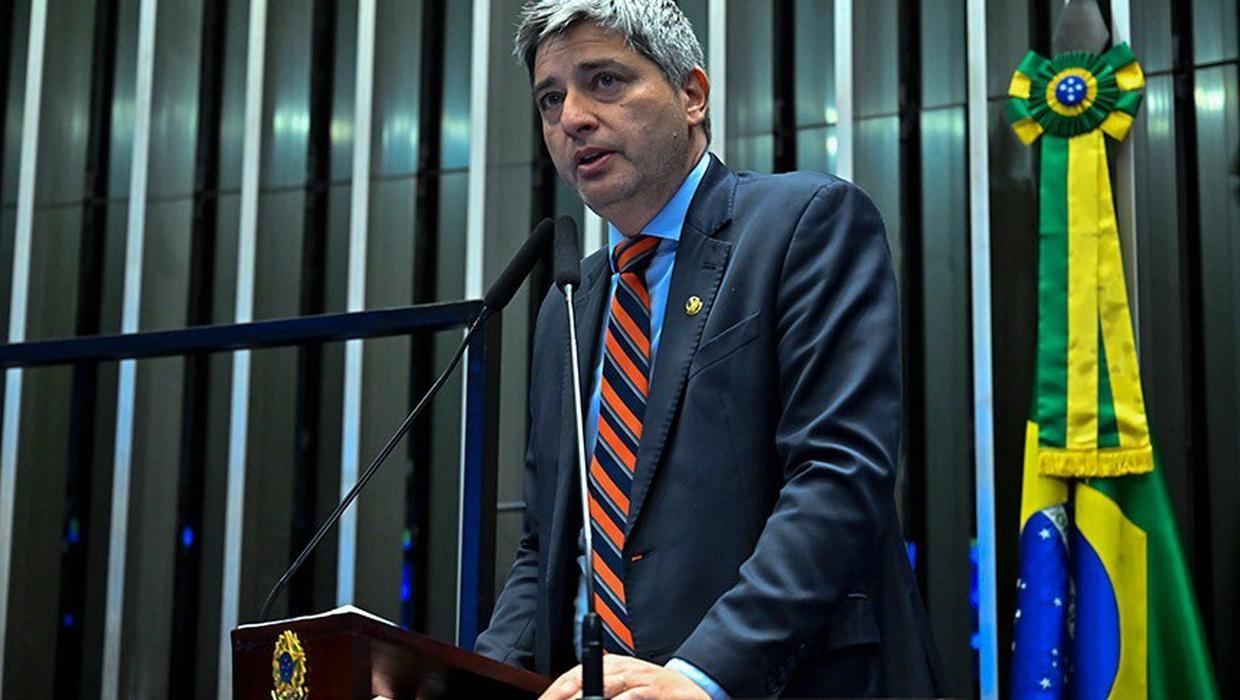
The bill, authored by Senator Styvenson Valentim (PSDB-RN), was approved in the morning by the Sports Committee (CEsp), in the form of a substitute proposed by the rapporteur, Senator Carlos Portinho. During the plenary session, senators managed to include the bill on the agenda, and the vote was held symbolically, without a nominal vote.
The original bill would amend Law 13.756 of 2018, which deals with the allocation of betting revenue, to completely ban the advertisement of this type of game in any media outlet. However, the version presented by Portinho removes the total ban and instead amends Law 14.790 of 2023, which regulates betting, by adding a series of permissions and prohibitions for the promotion of betting.
Portinho stated that he would have preferred to keep the original version, which included a complete ban on betting advertisements, but decided to modify the text to reach a consensus and avoid legal uncertainty for the sector, since the activity has already been authorized and regulated by previous laws.
As a result, despite the ban on betting advertisements in stadiums and sports venues, the text provides exceptions when the betting operator is the official sponsor of the event or holds naming rights to the stadium, arena, event, or competition; and when the betting operator is a sponsor on the uniforms of the teams participating in the match or event, limited to one advertiser per team.
Football clubs released a joint statement on Tuesday (27) in which they said the bill is “a prohibition disguised as a limitation.” The clubs claim that one of the consequences will be the “financial collapse” of sports, particularly football.
Associations representing the sector argue that restricting advertising harms the activity itself, as companies authorized by the Secretariat of Prizes and Betting (SPA) are operating under government-established rules.
What will be prohibited
* Broadcasting betting advertisements during live sports events;
* Broadcasting dynamic odds or real-time updated probabilities during live broadcasts, except when shown exclusively on the websites, internet pages, or apps of licensed operators;
* Advertising in printed media;
* Boosting content outside the permitted hours, even if originating from the official channels of betting operators;
* Use in advertising of images or participation of athletes, former athletes, artists, media personalities, influencers, authorities, professional coaching staff members, or any individual, even as an extra. Exception: Former athletes may advertise betting after five years of retirement;
* Direct or indirect sponsorship by betting operators of referees or other members of the officiating teams in sports competitions;
* Displaying advertising that portrays betting as socially attractive, a means of achieving personal success, an alternative to employment, a solution for financial problems, an additional income source, a financial investment, or a promise of financial return;
* Use of animations, cartoons, mascots, characters, or any audiovisual resources—including those generated by artificial intelligence—directly or subliminally aimed at children and adolescents;
* Promotion of communication programs and initiatives that directly or subliminally teach or encourage betting;
* Sending messages, calls, letters, app notifications, or any other form of communication without the recipient’s prior, free, informed, and explicit consent;
* Broadcasting sexist, misogynistic, or discriminatory advertising, including objectifying the human body or associating betting with gender stereotypes;
* Static or electronic advertising of fixed-odds betting in stadiums and sports venues, with exceptions as included by Portinho when the operator is the event sponsor, stadium rights holder, or uniform sponsor.
What will be allowed
* Broadcasting betting advertisements on free-to-air and pay TV, streaming platforms, social media, and the internet between 7:30 PM and midnight;
* Broadcasting betting ads on radio during two time slots: 9 AM to 11 AM and 5 PM to 7:30 PM;
* Broadcasting ads during live sports events in the 15 minutes before and after the match;
* Broadcasting ads at any time on the websites, pages, or apps owned by those sponsored by fixed-odds betting operators, as long as access is voluntary;
* Display of sponsor and betting operator logos in promos announcing sports broadcasts aired between 9 PM and 6 AM, provided they do not contain invitations, incentives, or promises of earnings from betting; do not refer to odds, lines, or promotional bonuses; and comply with age-rating guidelines;
* Broadcasting betting ads on social media or other internet platforms to authenticated users who are verifiably over 18 years old.
* In this last case, the rapporteur’s proposal ensures that users of the platform or digital service have the right to easily disable receipt of betting-related communications, advertisements, and marketing through settings.
Transition periods defined
The bill establishes a transition period to allow betting operators, television networks, influencers, and athletes to comply with the new legislation.
A 90-day period was set for:
* TV-related rules;
* End of contracts with artists, influencers, and athletes;
* Prohibition of animated content.
For stadiums and sporting events, the adaptation period will be one year.
The bill now goes to the Chamber of Deputies, where it will be analyzed by the relevant committees before heading to the Plenary.
Source: GMB