




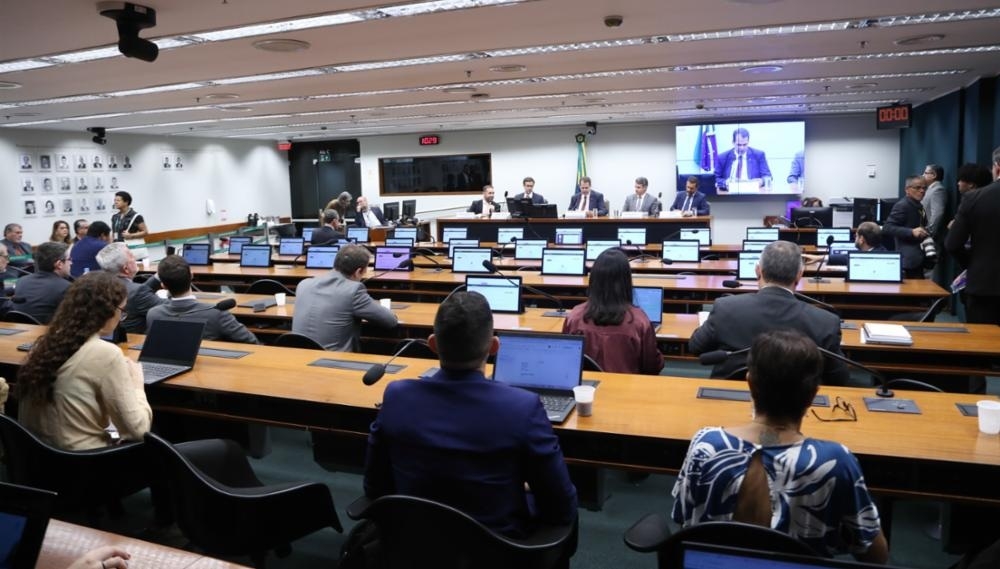
On Wednesday (7) this week, the Consumer Protection Committee (CDC) of the Brazilian Chamber of Deputies approved a request by Federal Deputy Márcio Marinho to create a subcommittee within the CDC to analyze and discuss the impacts of virtual games and online betting — the so-called ‘Bets’ — on consumers and the budgets of Brazilian families.
The subcommittee will consist of five full members and five alternates to address the topic within the Consumer Protection Committee. It will discuss the economic impacts on families and also address issues such as advertising control, consumer protection, and the mental health of gamblers.
In his justification, the deputy stated that “the creation of a subcommittee is warranted given the growing economic and social relevance of the topic in Brazil. The online betting sector, which includes sports betting platforms and digitized games of chance such as ‘O Tigrinho,’ moved around R$68.2 billion (US$11.9bn) in the past 12 months, according to the report 'Online Betting: Estimates of Size and Impact on Consumption' published by Banco Itaú in August 2024. Of that amount, R$44.3 billion (US$7.75bn) was paid out in prizes, resulting in a net loss of R$23.9 billion (US$4.2bn) for Brazilian gamblers — an amount equivalent to 0.2% of the national Gross Domestic Product (GDP).”
“The phenomenon disproportionately affects lower-income populations. A study by Klavi revealed that 70% of favela residents place regular bets, often using funds meant for food and basic expenses. In fact, the Central Bank identified that in just one month, recipients of the Bolsa Família program spent R$3 billion (US$525m) on online betting.”
The subcommittee will aim to:
1. Monitor the implementation of the regulatory framework;
2. Conduct studies on the economic and social impacts of the sector;
3. Hear from experts in mental health, financial education, and digital regulation;
4. Propose public policies for prevention, treatment, and consumer protection;
5. Recommend accountability mechanisms for operating companies; and
6. Promote oversight and mechanisms to mitigate harm to consumers.
Source: GMB