




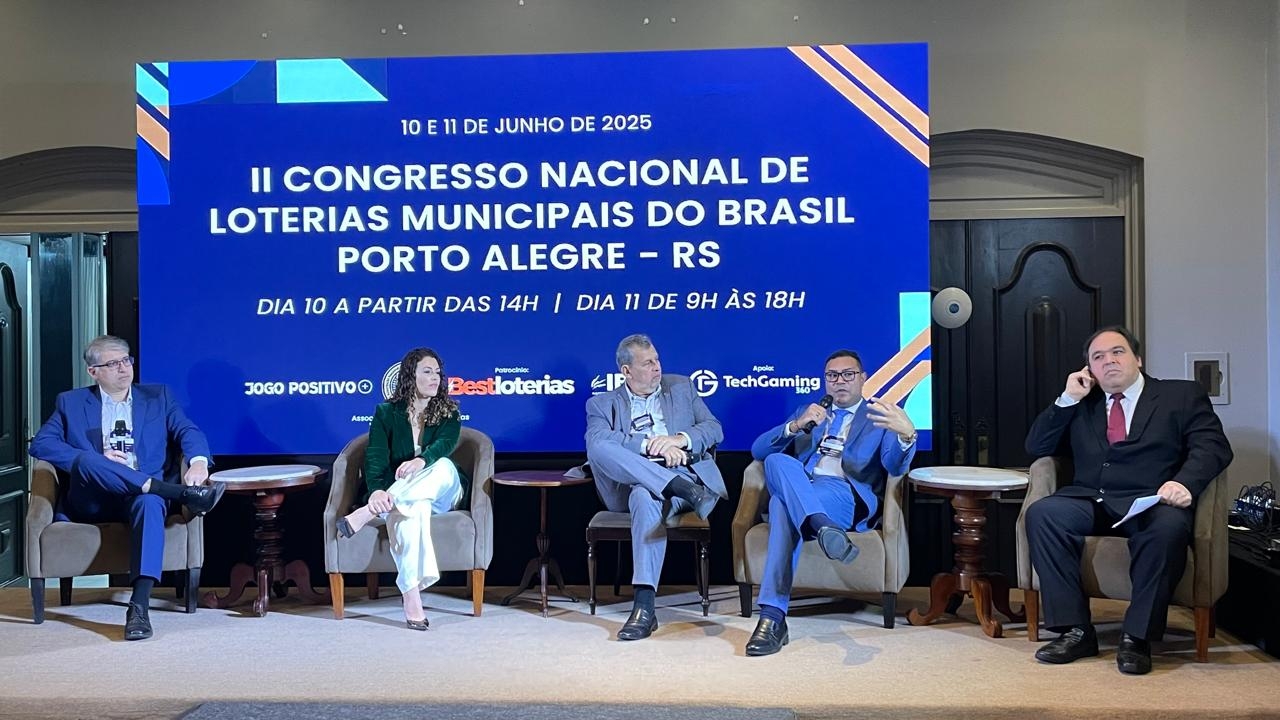
Organized by the Brazilian Association for Positive Gaming, in partnership with the National Association of Municipal Lotteries (Analome) and supported by the Brazilian Institute of Sports Law and Best Loterias, the event provided mayors and public officials interested in implementing municipal lotteries an intense exchange of knowledge and learnings with jurists and businesspeople from Brazil's gaming and betting sector.
In total, the 2nd National Congress held 10 panels that covered various aspects involved in the process of implementing municipal lotteries.
According to Filipe Alves Rodrigues, Secretary-General of the Special Commission on Lottery Gaming Law of the Rio de Janeiro OAB, President of the Positive Gaming Association, and organizer of the event, involving municipalities in the gaming debate is not only legal but also a democratizing measure that empowers cities and has the potential to generate funds for municipal services while promoting the concept of responsible betting.
“For years, municipalities were left out of the gaming debate, but they no longer want to be a dissenting voice. Moreover, in a municipality that does not engage [in the debate], the citizen is the one who loses, with fewer social projects and lower quality of life in the city, which is where we live.”
First day of the event
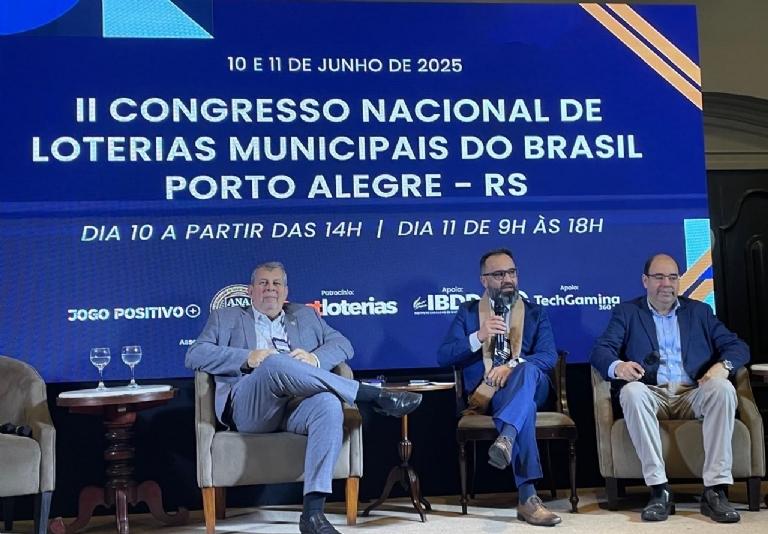
The 2nd National Congress of Municipal Lotteries began with the presence of authorities and institutional representatives. In addition to Filipe Alves Rodrigues, participants were welcomed by Camilo Roma de Brito, President of Analome, Paulo Horn, lawyer, Master in Urban Law and President of the Special Commission on Lottery Gaming Law of the Rio de Janeiro OAB, and state deputy Thiago Pereira Duarte.
The “Regulatory Landscape of Betting in Brazil” – a panel on legislative evolution and the legal challenges of the sector – was the second topic discussed in the afternoon. The panel featured Sávio Prado, business lawyer, João Motta, lawyer, Leandro Pamplona, lawyer and professor, Luiz César Martins Loques, PhD candidate in Regulation Law at FGV Direito Rio, and Paula Duarte, coordinator of the Advanced Studies Center on National Financial System Regulation (NEASF).
In the panel on “Cooperative Federalism and Municipal Lotteries” – a discussion on the role of municipalities and federal cooperation in structuring local lotteries – participants encouraged municipalities to create their own lotteries, seeking clarity and legal support, and not being deterred by potential initial barriers.
Experts believe that once established, lotteries can provide invaluable benefits to citizens. The panel included: Alexandre Bhering Kiffer, lawyer; Daniella Miranda, lawyer and former prosecutor of the State Lottery of Minas Gerais; Paulo Horn; and Marcello Correa, deputy secretary of the Special Commission on Lottery Gaming Law of the Rio de Janeiro OAB.
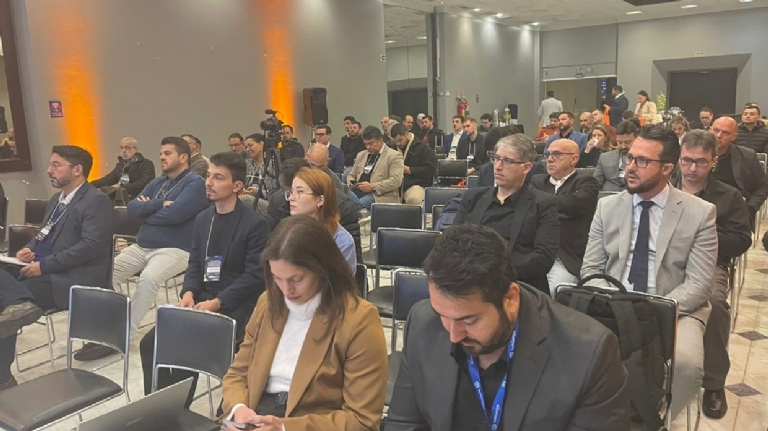
The closing debate of the first day focused on “Lotteries and the Development of Sports in Brazil” – how lottery revenues can foster public and private sports policies. One of the topics discussed was the importance of preventing gambling addiction.
According to lawyer Flávia Zanini, the State has a duty to carry out prevention and awareness campaigns before the problem arises. “It’s essential to treat addiction as a disease that requires treatment, but also to have strategies to prevent people from falling into it.”
Alongside Flávia were Raquel Lima, President of IBDD; Mariana Teixeira Fortes, Master in Law from UFRGS; João Vitor Portella Domingues, sports labor lawyer; and Hiago Piau, Vice-President of Analome.
Second day of the congress
The second day of the Congress opened with a panel on “Lottery Modalities and Local Opportunities Through VLTs” – exploring types of games and the advantages of the lottery terminal (VLT) sales model.
Moderated by lawyer João Rachid, the panel highlighted video lottery as a promising format capable of becoming a market leader.
In this regard, Carlos Silva, partner at Tech Gaming 360 and panel member alongside Amilton Noble, CEO of Hebara, argued: “VLT is the crown jewel. It’s not a lottery innovation, but a form of lottery distribution. With VLT, in my view, we can reach people more affordably and attractively, which ends up increasing interest in buying and, in a responsible way, brings entertainment to everyone.”
Ana Paula Gatti, a lawyer specialized in Gaming Law, and Fernando Prigol, lawyer and Master in Sports Law and Management, participated in the second panel on Wednesday, moderated by journalist Paulo Costa.
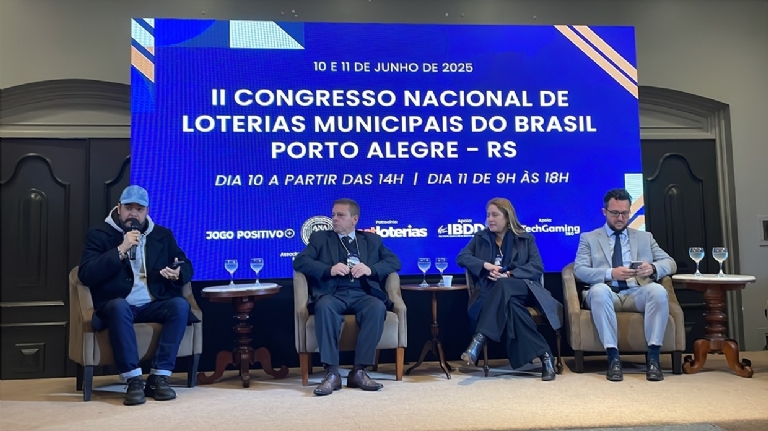
Focused on “Public Managers’ Choices When Creating a Municipal Lottery” – strategic, legal, and operational aspects for cities that seek to establish lotteries – the panel warned that, amid the Tax Reform transition, revenue from municipal lotteries could be crucial for city finances. However, the use of these funds must be handled with maximum transparency.
Moderated by Alessandro Lisboa, CEO of IgiExpo, the panel on “Payment Methods – regulatory challenges and the fight against fraud and financial crimes” brought together Átila Dalavia, lawyer; Ana Bárbara Costa Teixeira, head of regulation at Playtech; Ângelo Braga, legal director of PyxPay LatAm; and Paulo Pinto, CEO of OnlyUp.
Between praise for the Central Bank of Brazil’s regulation and comments on the engagement of market players in combating illegal practices, discussions focused on compliance, security, and anti-money laundering.
In this context, Paulo Pinto suggested that municipal managers take advantage of the existing ecosystem to develop safe gaming for the population of the cities they govern. “At the municipal level, a good practice is to work with financial and payment institutions regulated by the Central Bank. In addition to legal and compliance security, this also ensures tax collection security, because it guarantees that what is processed will indeed be collected as tax.”
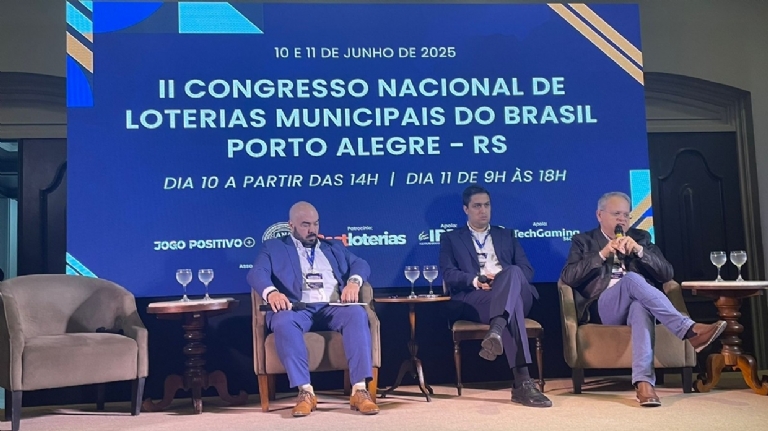
Heading into the final stretch of the Congress, the seventh panel was moderated by Filipe Alves Rodrigues, the event organizer, and focused on “Responsible Gaming and the Brazilian Consumer Profile – Reflections on ethics, advertising, and player protection.”
Alongside Pedro Rachid da Motta, lawyer and director of Best Loterias, Betpilot CEO João Victor Wallach argued that the concept of Responsible Gaming, essential to the financial and mental health of bettors, also serves as a marketing differentiator for companies that embrace it.
“Caring for the player makes them feel welcomed. Sometimes operators only focus on the commercial aspect. But when the player feels that the house is concerned with their healthy journey... it's a shift in perspective. Responsible Gaming is not an extra cost but an investment.”
If mayors decide to create legislation for municipal lotteries, thus ensuring new resources for investment in their cities, they must surround themselves with professionals knowledgeable and experienced in the matter.
Backed by this vision, the penultimate panel of the Congress brought together Hiago Piau, Amilton Noble, and Daniella Miranda under the theme “The Public Tender Notice and Local Development – How to structure effective tenders that generate economic and social benefits.”
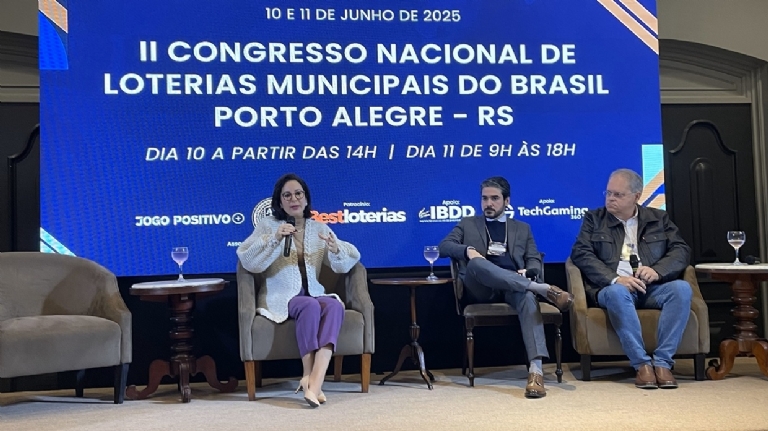
Hebara CEO Amilton Noble stated that public managers must consider their municipality’s particularities when drafting laws that will regulate gaming in their territory.
“Copy-pasting is probably the first step to disaster. Every place has its own reality, and there’s no one-size-fits-all solution. If you launch a product in Rio Grande do Sul with São Paulo’s features, it’ll be a disaster. Products must be tailored to each location.”
Future perspectives
Also present on Tuesday afternoon at the Congress’s opening panel, Camilo Roma de Brito, Paulo Horn, and Filipe Alves Rodrigues returned to the microphones on Wednesday evening to lead the event’s closing session.
Participants revisited the sector’s prospects and trends and officially announced that Analome will develop an education plan focused on training public servants and professionals working for city halls. These professionals will be able to specialize in lotteries and align with the market’s demands.
After completing the last of the 10 panels scheduled for the Congress, Filipe Alves Rodrigues celebrated the success of the event organized in Porto Alegre and revealed that several city halls in Rio Grande do Sul are already moving forward to officially join the Municipal Lotteries market.
“The 2nd National Congress of Municipal Lotteries was very important to bring local municipalities together. A major project is underway in which 34 municipalities will launch a municipal lotteries consortium to explore this lottery modality. It’s going to be a success here in Rio Grande do Sul.”
The Secretary-General of the Special Commission on Lottery Gaming Law of the Rio de Janeiro OAB also emphasized that the principle of Responsible Gaming will guide the development of these cities’ lottery sectors, ensuring sustainability for the industry while “mitigating negative externalities,” such as compulsive behavior, money laundering, and sports match-fixing.
Source: GMB