





Instituto Locomotiva reached the percentage of Brazilians who used illegal platforms in 2025 by presenting a list of the main ones to the respondents and then asking if they had placed any bets through those sites. The survey has a margin of error of 2.2 percentage points.
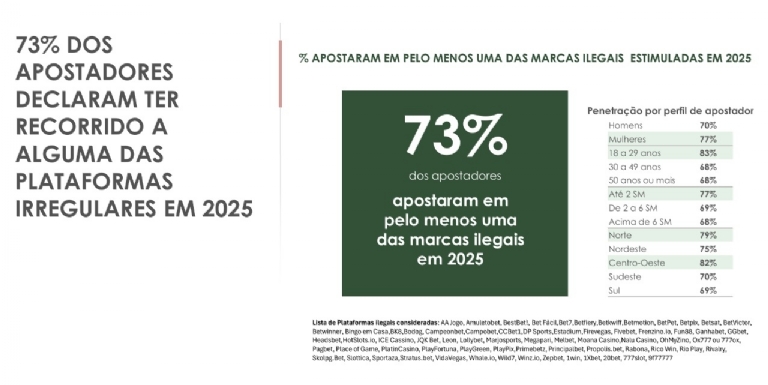
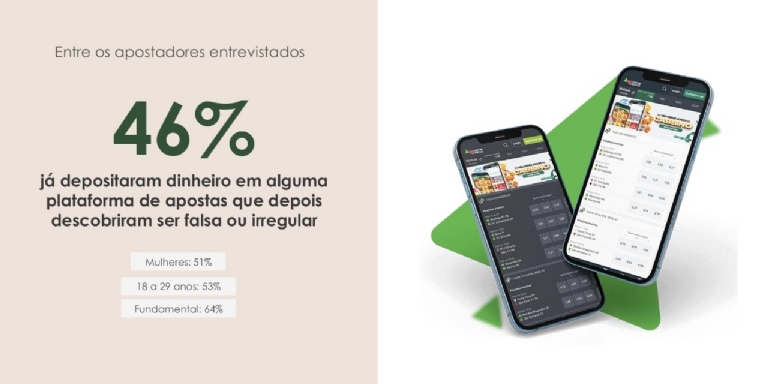
The institute also asked about practices associated with illegal platforms: 62% placed bets on sites that did not require facial recognition (which is mandatory); 44% made deposits using credit cards (which is prohibited); and 28% placed bets using cryptocurrencies (which is also banned).
According to IBJR and LCA Consultoria, between 41% and 51% of online betting companies in Brazil operate illegally. The annual loss to public coffers, due to uncollected tax revenue, could reach R$ 10.8 billion (US$1.8bn).
Survey context
The data was released four days after Finance Minister Fernando Haddad announced plans to increase the tax on legalized betting companies from the current 12% to 18%. On Wednesday (11), the government issued a provisional measure confirming the increase. This is just one of a series of initiatives by the economic team to bring public accounts in line with the fiscal framework. Congress has resisted and is pressuring the government to cut spending.
Business leaders are also opposing the move. Online betting operators call the tax hike “unjustifiable.” In an interview with Poder360, IBJR president Fernando Vieira said the higher tax could “render much of the already legalized betting market unviable.”
The companies argue that, when added to the Selective Tax – known as the "Sin Tax," currently being regulated – the sector’s tax burden will approach 50%. According to projections, in just three months, Brazil missed out on between R$ 1.8 billion (US$324m) and R$ 2.7 billion (US$486m) in tax revenue due to the illegal market.
IBJR states that the annual uncollected amount – up to R$ 10.8 billion (US$1.95bn) – would be enough to pay the salaries of 184,000 basic education teachers for a year or build 41,000 units of the “Minha Casa, Minha Vida” housing program.
From legalization to regulation
Online betting was legalized in Brazil in 2018, during the Michel Temer (MDB) administration. For almost six years, it remained unregulated – a situation that only changed in January 2025, under the current government of Luiz Inácio Lula da Silva. During this legislative vacuum, sites proliferated, using communication strategies that are now banned – such as suggesting that betting can be a source of income.
Bettors with lower income and education levels are the most affected by the continued operation of illegal platforms, according to the IBJR. These are individuals who, according to the institute, end up without access to the protection mechanisms against addiction offered by regulated sites.
Currently, the number of authorized sites exceeds 200. Each operator may use up to 3 domains. In addition to taxes, companies must pay a concession fee of R$ 30 million (US$5.5m) to operate for five years. Brazilian authorities have already taken down over 11,000 unauthorized domains, but illegal operators persist.
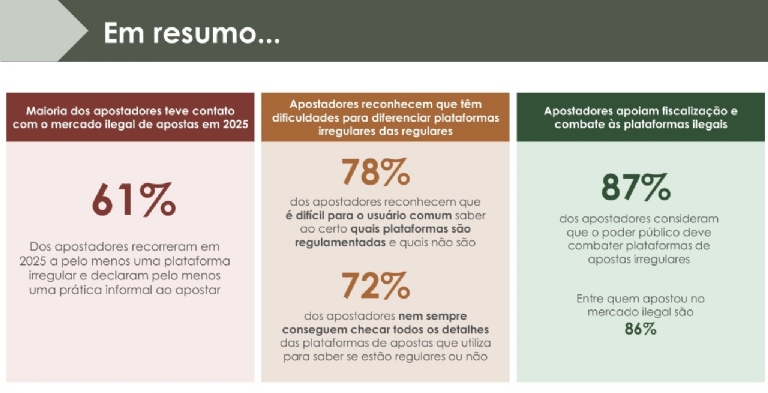
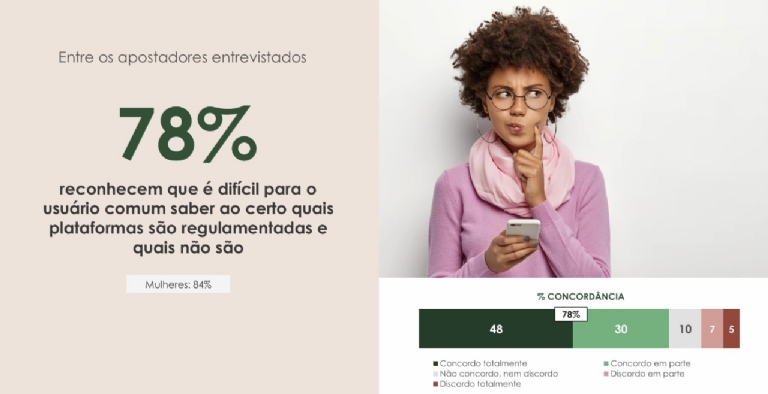
“Consumer confusion is exploited by these illegal operators. That’s why it’s essential to run educational campaigns, reinforce clear communication about the risks, and ensure that regulatory bodies act firmly in monitoring and severely punishing offenders,” said Renato Meirelles, president of Instituto Locomotiva.
To assist consumers, the Secretariat for Prizes and Betting (SPA) has established criteria to identify secure websites. Authorized platforms must use the ".bet.br" domain and adopt strict registration systems with facial recognition to prevent underage access.
Regulated sites must also offer financial loss and playtime limits, allow only Pix transfers and debit payments from the account holder, and provide self-exclusion mechanisms for bettors.
Source: GMB