




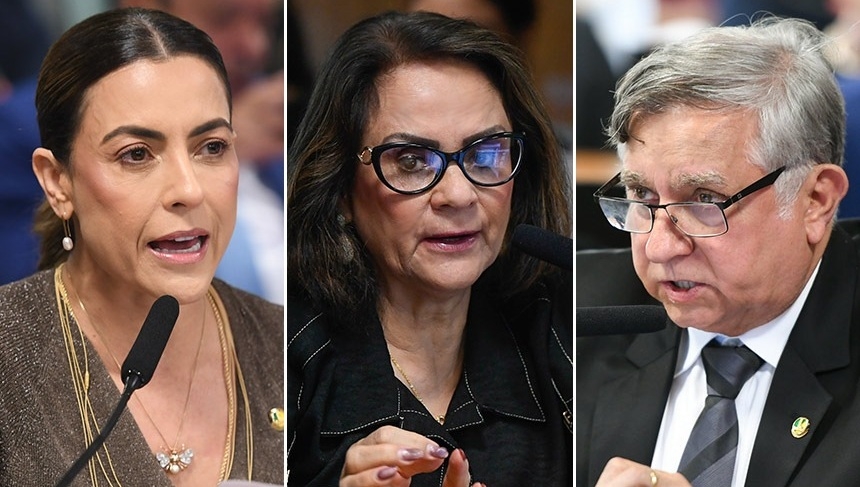
Signed by senators Soraya Thronicke, rapporteur of the CPI, Damares Alves and Izalci Lucas, the proposals range from the creation of a National Betting Registry (Bill 2.889/2025) to the accountability of internet operators that do not block access to illegal betting sites (Bill 2.877/2025).
The National Bettors Registry, according to the rapporteur defeated in the ‘CPI of Bets’, should gather information about players, such as their CPF, betting history and any financial limits.
“In the same way that betting sites need authorization from the Prize and Betting Secretariat (SPA) to operate, the bettor must also be registered. Why? Because there we will even control the blocking of CPFs. We will have an overview of the age of bettors, what is the average betting ticket? So it would be an authorization, like a driving license, because at least we will be able to develop public policies, with security, because all these numbers, despite being shocking, are still underreported,” said senator Soraya Thronicke.
Bill 2.889/2025 extends to the National Telecommunications Agency (Anatel) the role of supervising and monitoring internet access and application providers. In practice, the text requires operators and digital platforms to block unauthorized gaming sites in Brazil, increasing the siege on the clandestine betting market, as Soraya explained.
“Are all those who are trying to obtain authorization already facing unfair competition from the international market? However, I believe that we will be able to develop sufficient technology, as is the case in the United States, where you cannot access any website or any online casino from outside the United States, even via VPN. This technology already exists. We have done a lot of research and are now looking for solutions,” said the senator.
The regulatory framework for betting also provides for the creation of three new crimes: exploiting bets without authorization; advertising illegal bets, such as advertising aimed at minors; and facilitating transactions between users on illegal platforms.
In addition to the projects that limit the hours and channels for offering fixed-odds bets, proposals that prohibit bets for those registered in the Single Registry (CadÚnico), preventing vulnerable families from spending money on bets, and those that require banks to allow voluntary blocking of bets, with self-control mechanisms for users, may also be analyzed.
Source: Agência Senado