




In today’s world, falsehoods can become accepted as truth in a matter of hours. Failing to respond promptly and assertively to misinformation can lead to irreversible damage.
In Brazil’s newly regulated online 'Bets' and gaming environment, two untruths are being repeated by public figures from different political backgrounds, distorting the debate:
*That online 'Bets' and gaming do not create jobs in the country;
*That 'Bets' operators currently pay “only” 12% in taxes.
Since fixed-odds 'Bets' were legalized in 2018, Brazil has become one of the largest markets in the world. As of 2024, with market regulation—including digital sports 'Bets' and other virtual games—carried out by the Secretariat of Prizes and Betting (SPA) of the Ministry of Finance, this growth has accelerated.
According to Statista, global online gaming revenue surpassed US$100 billion in 2023, with expectations to exceed US$136 billion by 2029. As the industry grows, so does job creation, with estimates pointing to over 300,000 direct and indirect jobs in iGaming in 2023—and increasing.
Brazil is currently among the three largest markets in the world and, therefore, cannot lag behind in global job creation trends in this sector.
The direct jobs created by Brazilian regulation are a logical and immediate result of the legal requirement that 'Bets' operators have headquarters, operations, and partners based in Brazil. These jobs include iGaming software developers, 'Bets' system programmers, site and game operators, risk analysts, sports 'Bets' traders, and cybersecurity experts. Brazil currently has 78 authorized companies operating in the country.
Brazilian law requires 24/7 call centers staffed by Portuguese-speaking agents, prompting outsourced companies to expand their teams to meet operator demands. This same phenomenon applies to various other service providers in the sector. Therefore, it is shallow—and even naïve—to assume that, because it is a virtual environment, the industry does not generate employment.
Brazil’s 'Bets' and online gaming market has the potential to create hundreds of thousands of jobs. The industry should have long ago hired specialized firms to calculate and publicly disclose these figures with precision.
The claim that 'Bets' operators pay “only 12%” in taxes is another fallacy.
'Bets' operators authorized to operate in Brazil have already paid R$30 million (US$5.5m) each for their license—valid for up to three brands over five years. With 76 authorized companies, revenue from licenses alone exceeds R$2.3 billion (US$418m).
The 12% figure refers solely to the statutory levies on gross gaming revenue (GGR)—calculated after prize payouts—and the withholding income tax charged to 'Bets' users.
In addition to these 12%, 'Bets' operators also pay: 25% corporate income tax (IRPJ), 9% social contribution on net profit (CSLL), between 3.65% and 9.25% for PIS and COFINS, a regulatory oversight fee, over 20% in payroll and service contractor social security contributions, and 2% to 5% in municipal service taxes (ISS).
Altogether, the nominal tax rates paid by authorized 'Bets' operators may exceed 60%, creating one of the most significant effective tax burdens across all sectors of the economy—depending on the tax regime, revenues, and profit margins.
This is not to mention the future tax landscape once Brazil’s tax reform on consumption is implemented. PIS/COFINS and ISS will be replaced by new taxes (CBS and IBS), estimated at 28% for 'Bets' operators—who are not eligible for reduced rates or special regimes granted to many other industries.
'Bets' operators may also face the selective tax (Imposto Seletivo), at a rate yet to be defined, but rumored to be so high it could make operations for regulated companies in Brazil unfeasible. A true gift to illegal operators if it ends up choking legitimate, tax-paying businesses.
If Brazil’s online 'Bets' and gaming sector genuinely aims to establish and thrive, it must unite under a single representative body and develop swift and effective mechanisms to combat misinformation and present its version of the facts.
Given the many unaddressed attacks over recent months, it is clear that spreading falsehoods about the sector can be an effective populist political strategy—especially in a pre-election scenario like 2026. Allowing lies to prevail—or arrogantly believing they will fade on their own—is a losing bet.
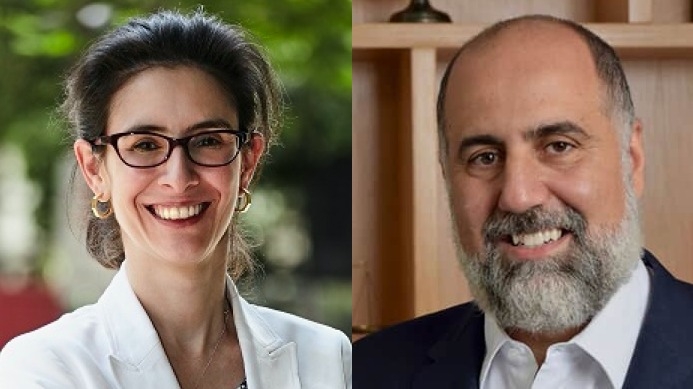
José Francisco Cimino Manssur
Guest professor of sports law at USP and partner at CSMV Advogados. In 2023, he was a special advisor to the Executive Secretariat of the Ministry of Finance, responsible for the regulation of sports 'Bets' and online gaming. He was part of the Ministry of Sports working group that drafted the Fan Statute and also worked for São Paulo Futebol Clube. He is one of the authors of the law that created the Corporate Football Clubs (SAF).
Ana Carolina Monguilod
Lawyer and partner at CSMV Advogados, and board member at ABDF (Brazilian Association of Financial Law). She is a PhD candidate at the University of Lausanne in international tax law—transfer pricing (APAs and BAPAs)—and a professor at Insper.