




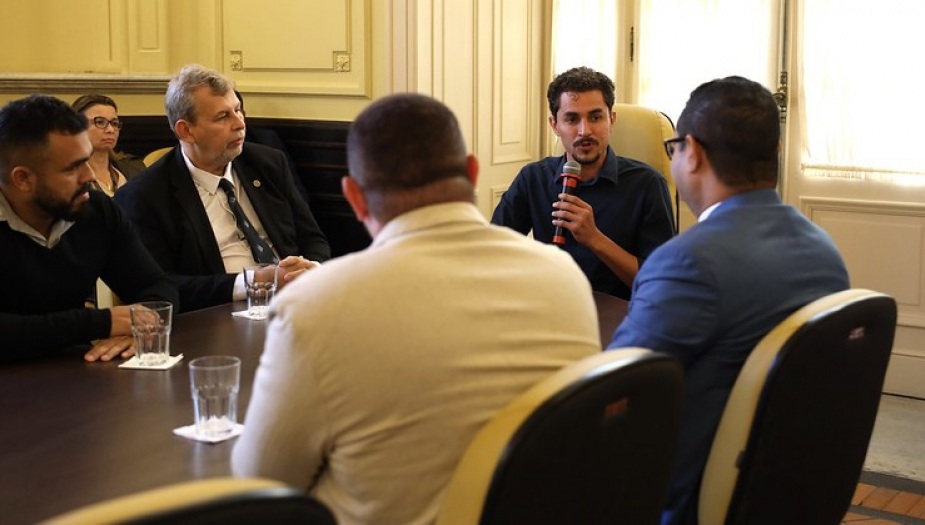
Committee Chair, Councilman Salvino Oliveira, emphasized that gambling addiction is still a rarely discussed topic. According to the councilman, it is essential that coordinated actions from all three levels of government be carried out to address the issue not only from an economic standpoint but also considering the health and education sectors.
"We left the meeting with thought-provoking discussions on Responsible Gambling and how the government can, through strict regulation and a package of laws that meet the population’s expectations, ensure that those who can gamble do so consciously. Gamblers must have a full legal framework to protect them and a healthcare network available for those who, in some way, cross the line,” Oliveira emphasized.
Committee Rapporteur, Councilman Wagner Tavares, also expressed concern about mental health issues. "What are betting companies doing to help people currently suffering from disorders caused by gambling addiction? How are they acting to minimize the harm?” he asked.
Legal operators comply with Responsible Gambling laws
Filipe Alves, president of the Associação Jogo Positivo (Positive Gambling Association), explained that legal betting companies comply fully with existing legislation, especially Law No. 14,790 of December 29, 2023, which regulates fixed-odds betting as a lottery modality, and Ordinance SPA/MF No. 1,231 of July 31, 2024, which sets rules and guidelines for Responsible Gambling and for communication and marketing activities, as well as the rights and duties of bettors and operators.
"The first point is that betting companies must comply with what the law dictates, which includes offering platform features to block excessive gambling. There are self-exclusion buttons. Suppose a player realizes they are in a difficult situation and have bet more than they should have. They have the option to pause their activity and self-exclude from the platform," he explained.
"The second point is self-regulation. Many betting operators are offering psychological support to players. The Bettor Support Institute, for example, is funded by some betting companies and has already assisted over 6,000 vulnerable individuals," added Alves.
Information sharing
Councilman Salvino Oliveira also questioned whether there is currently any system for sharing bettor data with government entities or any economic impact studies being conducted to support the development of effective public policies.
Filipe Alves stated that the Secretariat for Prizes and Betting (SPA) is now starting to gain the ability to map the legal betting market in Brazil, as regulation began on January 1st.
"Currently, there are 78 legalized companies capable of submitting reports. This enables the Secretariat to carry out this mapping. There are already studies that help identify the profile of Brazilian bettors."
"A recent survey shows that men are the most frequent bettors, and two-thirds of them are between 18 and 28 years old. However, it is estimated that there may be around 6,000 illegal companies, and the Secretariat can only map the legal ones. A significant regulatory effort is needed, uniting federal, state, and municipal governments to obtain a real diagnosis—especially since municipal lotteries also exist," Alves added.
Paulo Horn, president of the State of Rio de Janeiro's Lottery Gaming Commission, agreed: "If the federal government, states, and municipalities are involved in this relationship, they will be collecting revenue, and these resources can be allocated to public policies in social areas, for example. It’s important to highlight that the betting sector generates employment, income, and entertainment."
Source: GMB