



Revamped with bold ambitions, the tournament is aiming to fill the international men’s football void — but not without challenges or criticism, from concerns around player safety to the sight of half-empty stadiums.
Skeptics have questioned whether such a large-scale event is necessary outside the traditional international calendar. Yet, despite its imperfections, the Club World Cup has exceeded expectations in at least one key area: fan engagement and betting activity from Latin America.
Passionate Latin American support
Fans across Latin America have travelled in their droves to stadiums across the United States, fueling the tournament and transforming host cities with vibrant displays and a reminder that, for many, this tournament is anything but a sideshow.
Take away the passion of supporters from the likes of Palmeiras and Flamengo, and the Club World Cup risks becoming a significant misstep for FIFA. Instead, their presence has injected energy and legitimacy into the tournament, silencing at least some of the doubters.
From a sports betting perspective, this passion is translating directly into engagement. Across Kambi’s network, average turnover per Club World Cup match has approximately matched that of a typical UEFA Champions League group stage fixture — an impressive feat for a debut edition.
What’s even more telling is the composition of this interest: five of the top 10 betting countries by turnover are from Latin America, underscoring the region’s deep-rooted football culture and competitive stake in the tournament.
Nowhere is the impact more pronounced than in Brazil. Since launching its regulated sports betting market on 1 January 2025, Brazil has got off to a somewhat slow start but its long-term potential remains — and the Club World Cup has given rise to some interesting trends.
Matches involving Brazilian clubs have seen turnover levels five times higher than their domestic league equivalents. In fact, six of the ten most popular football events in Brazil so far in 2025 have been Club World Cup fixtures.
From Palmeiras to Botafogo, Brazilian clubs have delivered high-quality performances against some big clubs, drawing both casual fans and seasoned bettors into the action.
The international nature of the Club World Cup — where top teams from Europe, Asia and the Americas go head-to-head — has created some compelling matchups and unpredictable outcomes.
At Kambi, we decided to provide our widest possible offering from the start, including our comprehensive AI-powered odds catalogue. For bettors in Brazil and across Latin America, that means more markets and more opportunities to create their own unique betting stories.
The knockout stages: opportunity for operators?
As the tournament heads into the knockout stages this weekend, the question becomes whether this momentum can build even further?
There are reasons to be optimistic. The remaining fixtures promise even more dramatic showdowns, and with many Latin American sides still in contention, interest — and betting turnover — could intensify.
Knockout soccer brings more than just drama with the potential for extra time and penalty shootouts — it often drives betting activity to new heights. During the UEFA Nations League final, for example, just 13% of match time was played in extra time, yet it accounted for 21% of total turnover across the Kambi network.
With 15 knockout fixtures on the Club World Cup schedule, there’s significant opportunity for operators to capitalise on this surge in engagement. Kambi’s extensive market coverage during these phases ensures operators are equipped to capture the excitement when interest is at its peak.
For Latin American operators, the Club World Cup has so far provided both a short-term surge and some long-term lessons. It has showcased the potential of high-quality, internationally relevant soccer events in activating users, driving engagement and boosting turnover. With the market still in its early stages, events like this could continue to play a critical role in cementing sustainable growth in the future.
At Kambi, we’ve seen firsthand how a well-diversified product offering — featuring competitive pricing, high uptime and a wide range of pre-match, live and props markets — can amplify the impact of these marquee moments.
The FIFA Club World Cup may still be finding its identity, but in 2025, it has started to show its worth. In a summer without Copa América or the World Cup, Latin America has stepped up — on the pitch, in the stands and on the sportsbooks.
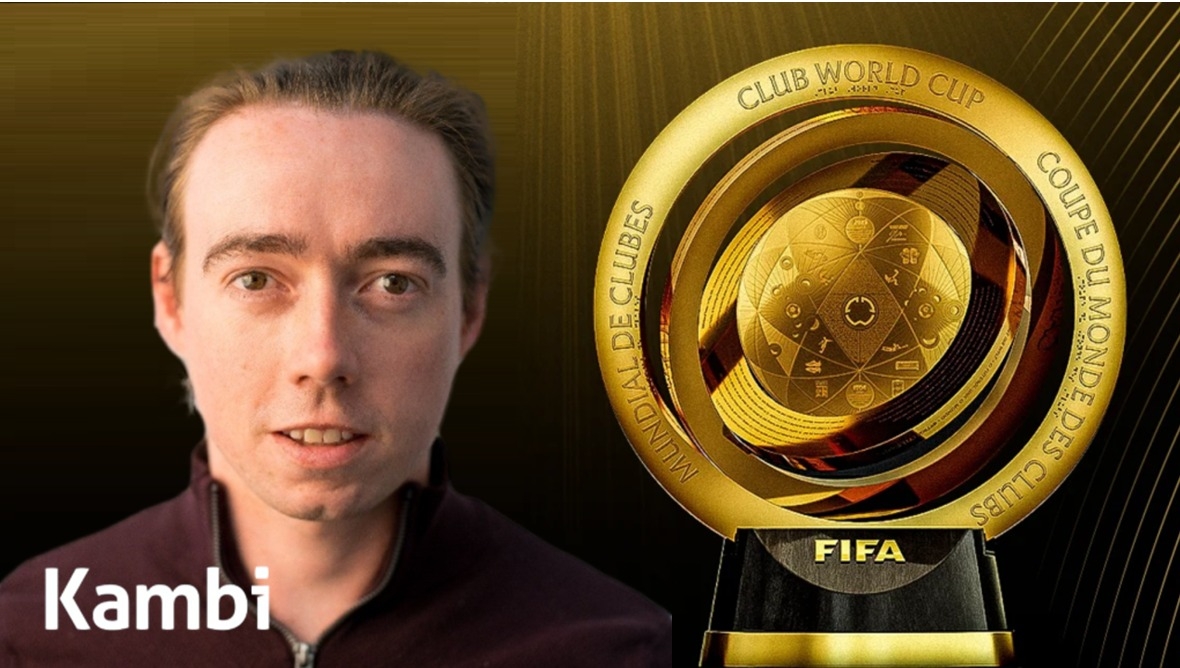
Danny Skelton
Kambi's Head of Soccer