




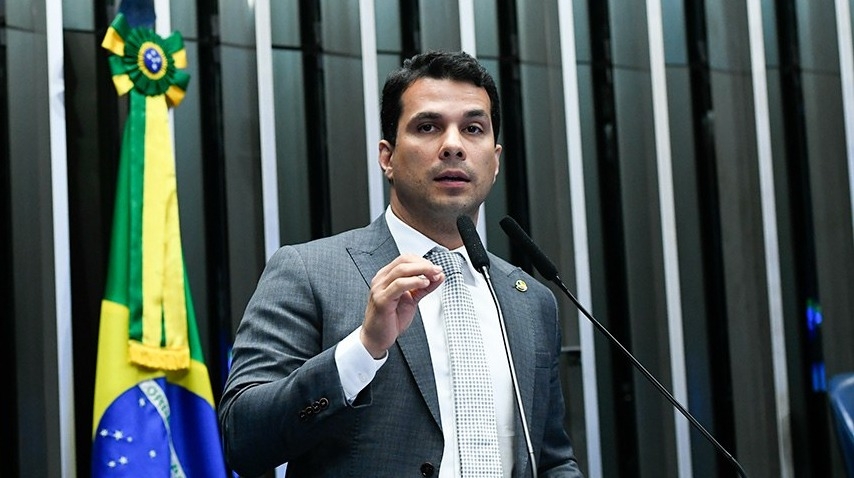
"This is a resource that Brazil cannot give up. The Brazilian people cannot afford to see this activity operate illegally and clandestinely, without benefiting from it in any way," said Irajá in an interview with ND Mais.
Gambling revenue surpasses budget contingency
At the end of May, Finance Minister Fernando Haddad (PT) and Planning and Budget Minister Simone Tebet (MDB) held a press conference to announce a R$ 20 billion (US$3.65bn) budget contingency and a R$ 10 billion freeze. The measures were triggered by low revenue in the first two months of the year.
The government's solution to increase revenue by raising the Financial Operations Tax (IOF) was widely criticized in Congress. After the President of the Chamber, Hugo Motta (Republicanos-PB), threatened to overturn the government’s decree, the Finance Ministry announced a new decree to recalibrate the IOF hike. The dispute has dragged on through June and has become a major hurdle for the government’s legislative coordination.
Although gambling revenue is distributed among municipalities, states, and the federal government, it could help ease this fiscal scenario. As an example, the bill’s rapporteur converted the estimated revenue into public benefits. "If we translate this into health centers, it would mean more than 10,000 new centers built every year — almost two per city in the country. As for affordable housing, it would be over 200,000 new homes annually," said Irajá.
Investment and job creation
In addition to tax revenues, the rapporteur projects that regulating the gambling market could attract over R$ 100 billion (US$18.25bn) in investments and generate more than 1.5 million new jobs, both direct and indirect.
The decision to issue licenses for gambling operators in Brazil will rest with the Ministry of Finance. The executive branch is expected to create a regulatory agency for the sector, which will oversee the establishments. The number of licenses will be based on population criteria, and casino projects, for example, will need to prove their feasibility to the authorities.
"With these pre-defined criteria, we are not allowing the opening of bingos, illegal lotteries, or casinos throughout Brazil. These will be federal licenses, federal authorizations, including paid concessions, meaning companies will have to pay to operate in this sector," Irajá explained.
The economic aspect is key to persuading lawmakers who still oppose the bill. However, according to Irajá’s statement to ND Mais, there is a favorable environment in Congress for passing the Gambling Bill before the parliamentary recess in July.
Gambling revenue accounts
The gambling revenue forecast in the bill is based on estimates from jurist Felipe Santa Cruz and professor Pedro Trengrouse, using data from the Brazilian Institute of Geography and Statistics (IBGE) and the Legal Gaming Institute.
The figures show that the gambling market, including legal and illegal activities, moved between R$ 8.6 million (US$1.56m) and R$ 18.9 million (US$3.45m) in 2014. Adjusted for inflation using the Broad Consumer Price Index (IPCA), the total would be between R$ 14.34 billion (US$2.6bn) and R$ 31.5 billion (US$5.75bn) in 2023.
Mental and financial health of the population
The main concerns among senators regarding the bill, as reported by ND Mais, involve the impact on Brazilian families’ budgets and gambling addiction, characterized by compulsive gambling even when it causes significant personal harm. In the second half of 2024, a report from the Central Bank revealed that in August alone, five million recipients of the Bolsa Família program spent R$ 3 billion (US$545m) on digital betting platforms.
This data led to the formation of the “CPI of Bets” (Parliamentary Inquiry Commission), which ended in early June without the approval of its final report, which had recommended the indictment of digital influencers. Despite the end of the CPI, senators involved in the commission argue that there is no longer political room to approve gambling legislation, even if it addresses different issues.
Senators Izalci (PL-DF) and Eduardo Girão (Novo-CE) have already stated to ND Mais that they will vote against the bill, even if gambling revenue is allocated to offset its negative effects.
The bill's rapporteur insists that the reality of illegal gambling in Brazil must be addressed. According to Irajá, the best approach is to regulate, supervise, and use the revenue from gambling to mitigate its harms.
"We know there are bingos operating across Brazil, illegal lotteries, and clandestine casinos too — and the government and population gain nothing from it. No taxes are collected, and no benefits go back to society. So, we would be shedding light on an activity that currently operates in the shadows," argued Irajá.
"Is it better to let this happen illegally or bring it under public control? That’s our main point."
Protection measures for players
The mechanisms proposed in the Gambling Bill include mandatory registration of players using their taxpayer ID (CPF). According to Irajá, all registered gambling activity will be recorded and subject to audit by the Federal Revenue Service. In addition, the bill requires that all payments be made by debit or Pix (instant transfer), with the goal of preventing indebtedness.
"A number of measures were adopted in the bill to protect the player—not the operator. These are safeguards built into the bill that must obviously be respected," said Irajá.
Source: ND Mais