




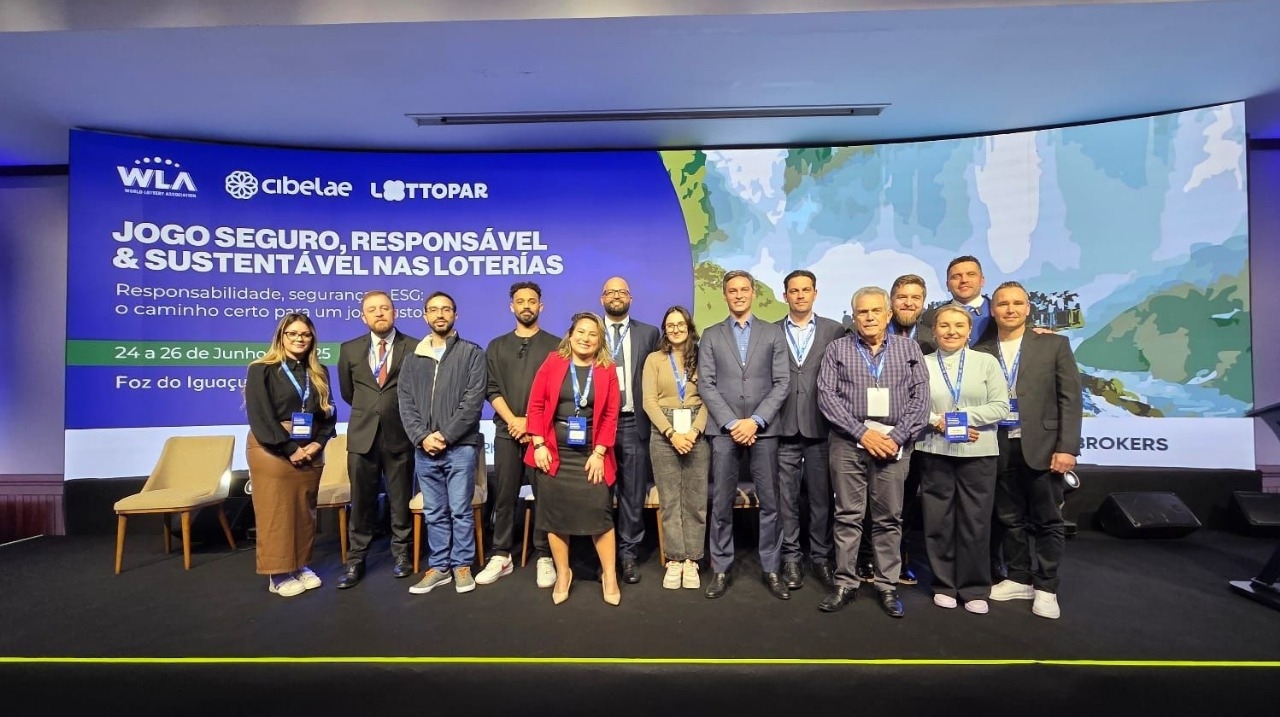
The International Seminar “Safe, Responsible, and Sustainable Lottery Games,” organized by CIBELAE with the support of the World Lottery Association (WLA) and hosted by the State Lotteries of Paraná (Lottopar), concluded with resounding success, gathering 150 in-person participants from 16 countries (Argentina, Brazil, Canada, Chile, China, Colombia, Costa Rica, El Salvador, Spain, Honduras, Mexico, the Dominican Republic, Singapore, the United States, and Uruguay).
Closed with strong engagement and a rich exchange of best practices, the seminar reinforced the role of state lotteries as tools for responsible public policy.
The meeting was considered a crucial milestone for strengthening the integrity of the lottery sector and promoting responsible and sustainable practices.
The event addressed critical challenges such as combating illegal gambling and the need for strong governance, reaffirming the sector’s commitment to transparency and social welfare.
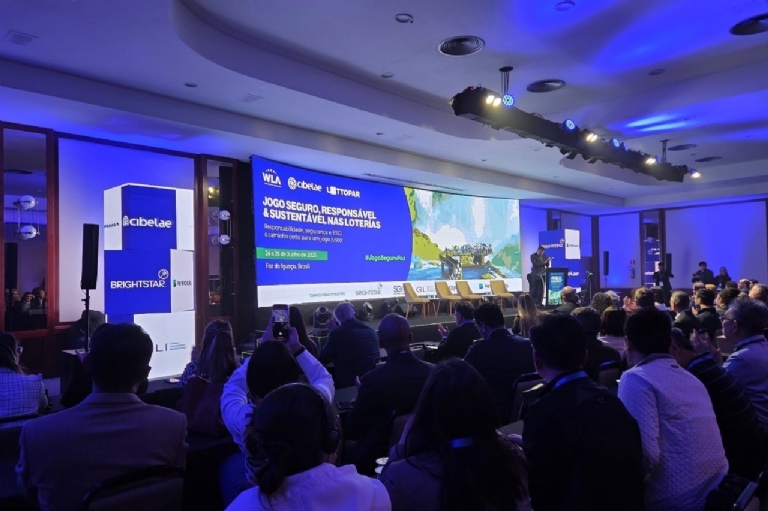
Key findings and perspectives from key stakeholders:
1. Combating Illegal Gambling and Protecting the Sector’s Integrity:
Andreas Kötter, President of the WLA, highlighted the importance of WLA standards (Security Control Standard – SCS and Responsible Gaming Framework – RGF) as pillars of the industry’s integrity, which “set our industry apart from any other player in the market.” In a “retail and digital” world where borders are fading, Kötter warned of the threat posed by illegal gambling and stressed the need to fight it.
To that end, the WLA launched a "hybrid approach" project in partnership with the University of Lausanne, Interpol, the UNODC, the FBI, and others to quantify the illegal market—referring to this initiative as “a union of the good guys.”
“Lottery betting” operators (like Lottoland), which operate in low-tax jurisdictions, were called out for undermining legitimate lottery models that contribute to social causes and pay taxes. Kötter revealed that Brazil ranks second in web traffic to Lottoland (20%).
The risk of lottery courier services and bulk ticket purchases was also discussed, citing a specific case where a syndicate bought 99.3% of the possible combinations to win a $95 million prize. The WLA expressed “serious concerns” and is developing safeguards such as terminal limits and tracking of bulk purchases.
Regarding sports betting, Kötter was blunt: “Those who operate illegally cannot be members of our association.” He also announced the strengthening of ULIS (United Lotteries for Integrity in Sports) to prevent and detect irregular betting activity.
Meanwhile, Regis Dudena, Brazil’s Secretary of Prizes and Betting at the Ministry of Finance, emphasized that regulation is crucial to protecting people and the economy. He criticized the unregulated growth of sports betting in Brazil, which led to “nearly 50% of the platforms in the country today operating illegally.”
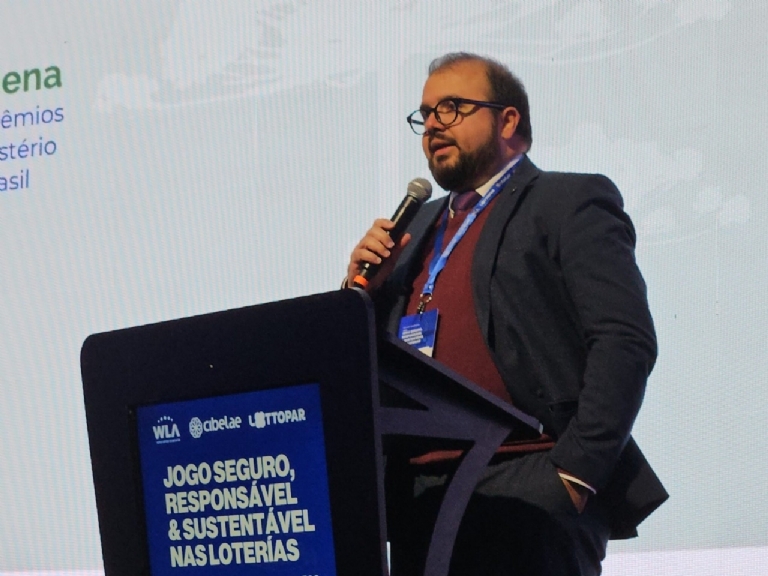
Dudena outlined Brazil’s enforcement efforts: the takedown of 13,000 illegal domains since last October, the fight against illegal advertising through agreements with digital platforms, and disrupting financial flows to illegal gambling operations by applying the principle of “follow the money.”
He also highlighted the creation of SINAPO (National Betting System), an initiative involving 16 states and the Federal District to strengthen national regulation and oversight.
In this context, Marcela Sánchez and Agustín Li Gambi, from CIBELAE’s Legal Affairs Commission, presented a study on illegal gaming in Latin America. Sánchez stressed that collaboration is “key” to facing industry challenges and raising consumer awareness about the importance of purchasing legal products that support social causes.
Along the same lines, Bernardo Núñez, Technology Manager at Polla Chilena de Beneficencia, revealed the brutal impact of illegal gambling operators in Chile, who invest “five times more in advertising” than the official lottery, resulting in an estimated annual loss of $5 million for the treasury and its beneficiaries.
Samanta Solórzano, from the Costa Rican Social Protection Board (JPS), shared that 51% of physical gaming establishments in her country are illegal, leading to a loss of $600 million for the JPS. She pointed out the difficulty of competing without specific legislation to combat these practices.
In this regard, Daniel Romanowski, CEO of Lottopar, emphasized that sector challenges “often cross borders” and that “knowledge, with data, is needed to solve them.” He acknowledged that lotteries are learning from WLA and CIBELAE experiences to make informed decisions.
Responsible Gaming and sustainability:
The seminar emphasized “Safe, Responsible, and Sustainable Gaming” as its central theme. Panels focused on:
- Prevalence studies to understand the social impact of gaming activity.
- Responsible product design and the use of risk-assessment scales.
- Technologies and Artificial Intelligence (AI) for player protection and illegal site detection.
- Responsible communication and advertising, with Alfonso Galiano (ONCE) sharing best practices.
- WLA Responsible Gaming Certifications, with Mélissa Azam (WLA) and Xu Ming (China Sports Lottery) detailing their importance.
- Corporate Social Responsibility (CSR) and Sustainability, including ESG (Environmental, Social, and Governance) principles as the foundation for industry growth.
Sustainability expert Mónica Gutiérrez, along with Christine Wechsler and Stephanie McFadden from Scientific Games, discussed how to integrate responsibility and sustainability into the lottery ecosystem for a resilient future.
The social role of lotteries was highlighted, showing how their proceeds fund social causes and contribute to redistribution, inclusion, and sustainability.
Cibelae presented its tools for sustainable development, including an online training platform, webinars, WLA scholarships, and access to the ULIS monitoring system. The development of a technical standard for anti-money laundering with three levels of compliance was also highlighted as a “dream come true that is already bearing fruit,” according to Carolina Galtieri, coordinator of Cibelae’s AML/CFT technical committee.
The event also featured a panel on “Women Leaders and Sustainability,” emphasizing a gender perspective in the sector’s growth.
The seminar reaffirmed the industry's commitment to a fair, safe, and responsible gaming model that generates social value and contributes to community development.
Source: GMB