



‘Bets’ also financially support events, championships, and specialized websites in vaquejada. The influence of betting companies is so significant that this traditional sport in Brazil's Northeast has evolved into a new format over the past two years: X1 Vaquejada.
Nathan Queiroz, known as Capa Loka, is one of the most followed cowboys on Instagram, with 2.1 million followers. In almost every post, he wears a Betesporte shirt and a Lance de Sorte cap. Both betting companies belong to the same group.
Other examples of influencer cowboys include Raimundo Edvando Silva Souza, known as Peixe da Lama or Peixão, and Geraldo José De Moraes Guerra Neto, known as Gera Guerra.
Peixão has over 500,000 Instagram followers and is also sponsored by Betvip. Gera, like Capa Loka, is sponsored by Betesporte. He has about 300,000 followers.
These and other influencer cowboys involved with gambling frequently appear in stories and vaquejada events displaying the branding of their betting sponsors. The videos they post typically include personalized links that direct followers to betting sites. If a follower places a bet, the company can track which influencer drove them to the platform.
Vaquejada: culture and sport
A popular tradition in the Northeast, vaquejada has been legally recognized since 2016 as a national cultural expression. In 2025, the Ministry of Sports included it in the list of sports eligible for fixed-odds betting.
According to Leonardo Dias, president of the Brazilian Vaquejada Association (Abvaq), betting companies have helped economically boost the sport. While he views this positively, he expresses concern about potential match-fixing, especially involving judges. However, he notes that no such cases have been recorded so far.
“Abvaq qualifies these professionals to ensure they understand the regulations, but the judges sign private contracts with event promoters. Therefore, we are concerned about result manipulation, but we have no control over it,” said Dias.
According to the Ministry of Finance’s Secretariat of Prizes and Betting (SPA), recognizing vaquejada as an equestrian sport helps mitigate the risk of betting on illegal sites.
The ‘Bets’ duel in Vaquejada
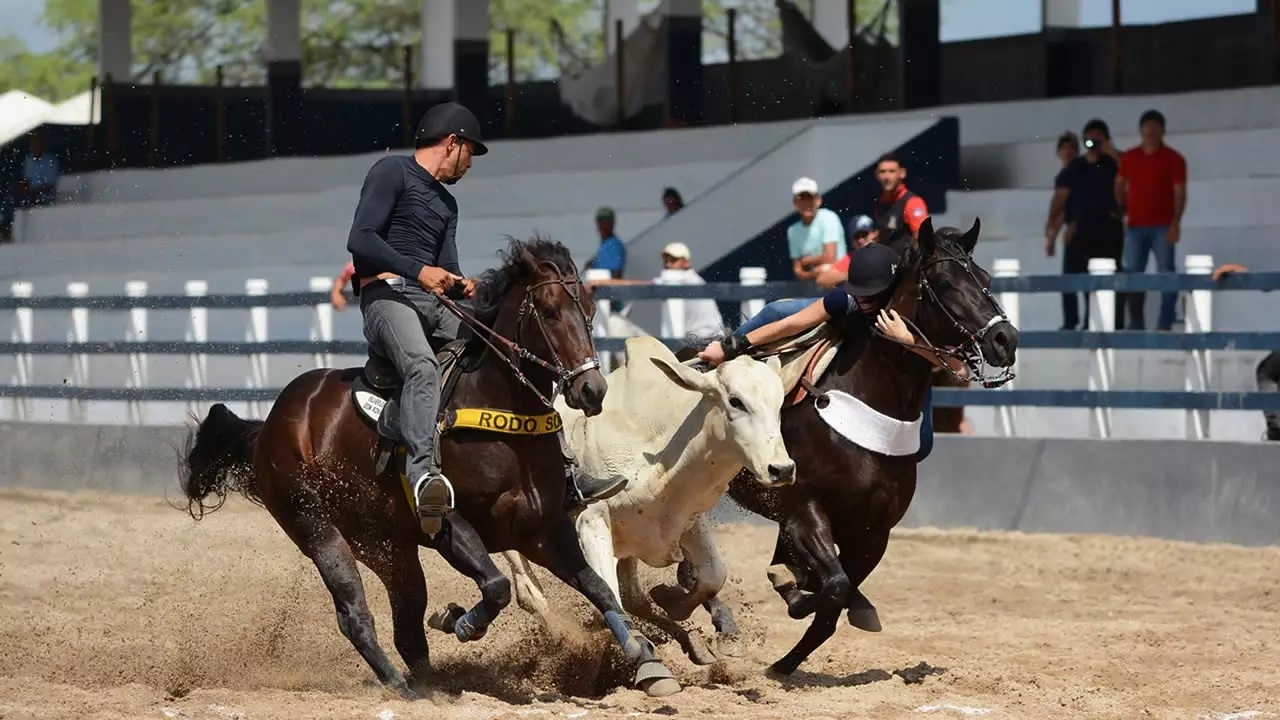
With the rise of betting, vaquejada adopted the X1 format, where one cowboy faces another. This format simplifies betting since the winner is the one who knocks down more bulls, similar to a penalty shootout. The competition also ends faster.
In the traditional format, several cowboys compete. Those who manage to knock down bulls advance to subsequent rounds with larger animals. The winner is the last one standing with the highest number of bulls knocked down, and the competition can last more than a day.
Betting companies also promote wagers in the traditional format, but the head-to-head duels between two cowboys drive social media engagement, generate excitement, and naturally stimulate more betting.
One of the most high-profile X1 contests was between Capa Loka and Peixe da Lama, held in June 2025 in Campina Grande, Paraíba. About 300,000 people watched the live broadcast on YouTube.
In practice, it was a duel between Betesporte and Betvip. The showdown was heavily promoted with strong betting incentives. Before the competition, the banter between the cowboys provided abundant content on social media.
While Capa Loka was the favorite, Peixe da Lama was the underdog and thus had higher betting odds. Those who bet on his victory profited. Peixão knocked down more bulls and won the competition.
According to Fábio Leal, CEO of Portal Vaquejada, which organizes one of the most important championships in the Northeast, betting companies help not only financially support events and cowboys but also increase the sport’s visibility.
“Viewership has grown thanks to influencers, and now some celebrities are practicing and promoting the sport,” said Leal. He refers to Cristian Bell, a comedian, singer, and digital influencer with over 5.5 million followers.
Northeastern ‘Bets’
Five betting companies currently offer wagers on vaquejada: Pixbet, Flabet, Betvip, Betesporte, and Lance de Sorte. All are registered with CNPJ numbers in Northeastern states.
Pixbet and Flabet belong to the same group and are registered in Paraíba under Diomar Tadeu Dantas de Farias and Ernildo Junior de Farias Santos.
Betvip has a separate CNPJ number but is registered at the same address as Flabet. Previously, a now-inactive company with the same name was also owned by Diomar and Ernildo.
Betesporte and Lance de Sorte are part of the same group registered in Pernambuco. The owners are Marcos Vinícius Pereira, Antonio Vinícius Nogueira Junior, Danylo de Castro Campos, Emerson Kelvin Pereira Bezerra, Rodrigo Manguinho Costa, and Thiago Carvalho Pereira da Silva.
According to Fábio Leal, these companies engage in vaquejada betting because they are from the Northeast and have cultural ties to the sport. “The volume of bets isn’t as high as in football. Sometimes the profitability isn’t what they expected, but these are people connected to vaquejada culture,” he said.
Leonardo Benites, communications director of the National Association of Games and Lotteries (ANJL), emphasized that the betting industry is highly relevant to all sports. “With vaquejada, it couldn't be different, since it’s not just a sport but also deeply rooted in Northeastern culture.”
The same cowboys who profit from promoting betting companies also promote "Pix do Milhão," a platform that holds weekly raffles with prizes of up to R$1 million (US$180,000). This platform is not a betting company but rather sells prize-linked savings bonds regulated by the Superintendence of Private Insurance (Susep).
Source: g1