




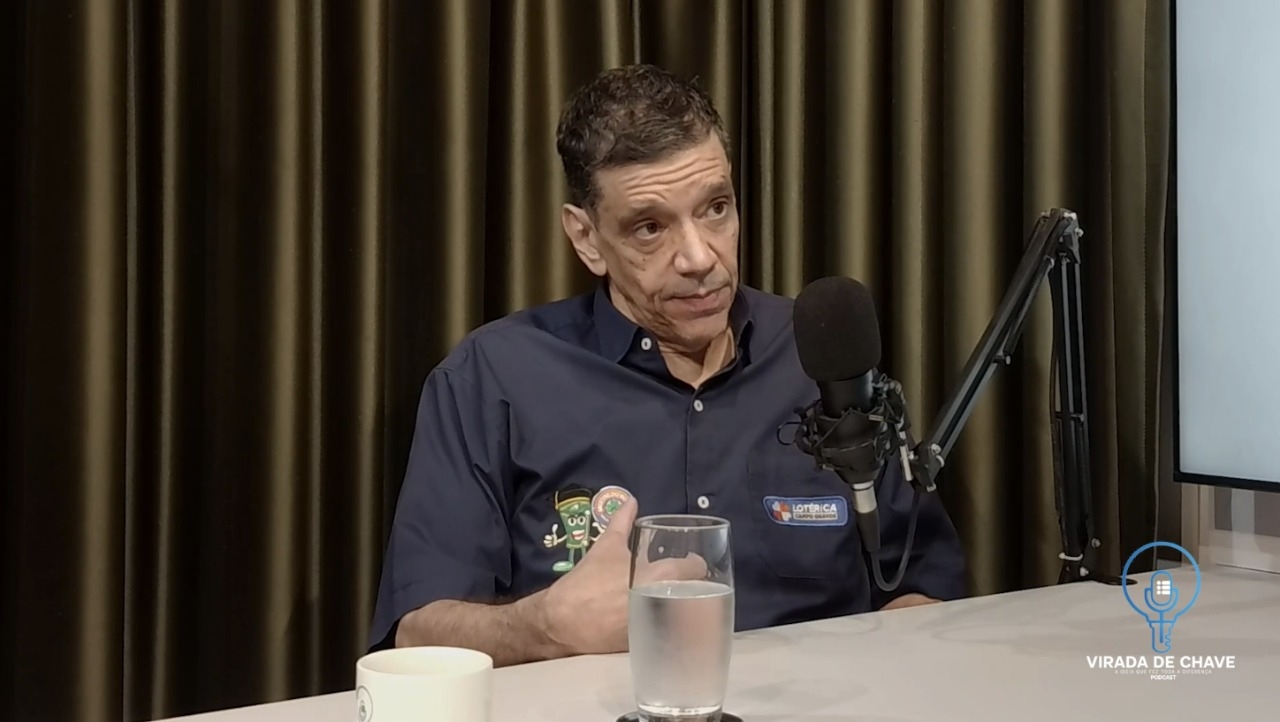
The latest episode of the 'Virada de Chave' podcast dives into a world that lives in the imagination of millions of Brazilians: lotteries. Leading the conversation is Ricardo Amado Costa, entrepreneur and owner of Lotérica Campo Grande, one of the most traditional in the capital of Mato Grosso do Sul and president of the Brazilian Federation of Lottery Companies (Febralot). With over four decades of dealing with other people’s dreams, he’s familiar with the fine line between luck, risk, and responsibility.
The tone of the conversation brings serious topics to light. And right from the start, the question that floats in every bar across the country: “Can you really win the Mega Sena?” Ricardo responds candidly: “Yes. But without luck, it’s nearly impossible. The odds are one in 51 million.”
Behind the lottery slips and group bets lies a robust system. He explains that only about 30% of the bets placed in Caixa’s lotteries become prizes. The rest is divided between system maintenance and, mainly, social allocation. According to him, Caixa is one of the strictest lottery operators in the world in this regard.
A turning point at 21
Ricardo was only 21 years old when he traded his bank job for the adrenaline of lottery business. In 1984, he had to choose between buying a butcher shop or a lottery outlet. With his mother’s help, he sealed the deal and never left the scene. “Dealing with dreams is a huge responsibility. People walk in believing this could be the solution to their lives,” he recalls.
Over time, changes became inevitable: the Collor economic plan, the inclusion of banking services in lottery outlets, the rise of Pix, and more recently, the boom of betting websites. Ricardo witnessed—and led—each of these stages.
Virtual threat, real insecurity
What today fuels the internet with easy-money promises like the famous “little tigers” and “little airplanes” also puts the future of physical lottery shops at risk. According to Ricardo, the online betting sector moves staggering figures—around R$ 30 billion (US$5.4bn) per month, which surpasses the total annual revenue of Caixa’s lotteries in 2023, for example.
And that’s where the real question lies: “Either we become sales channels for these new games, or we’ll disappear,” he insists. As president of Febralot, he advocates for strict regulation of the gambling sector and warns about the dangers of ludopathy—addiction to gambling.
Among data and strategy, some curious stories emerge. Like the bettor who always makes four identical bets—one for each child—to avoid fights in case he wins. Or corporate group bets, driven more by fear of missing out than belief in winning.
Ricardo recalls when his lottery outlet sold a Lotofácil prize and how fame “energizes” business for a while. “People think that if it happened once, it can happen again. And they come back.”
More than just betting spots, lottery outlets still serve as community hubs. “Some clients come just to chat. They talk about soap operas, football. We build real bonds,” he says. One striking data point: a client may visit the same lottery outlet up to 12 times a month—to pay bills, place bets, or simply stick to their routine.
Reinvention as a rule
Ricardo's story is also one of reinvention. He even sold his lottery store and opened a travel agency. He returned. "I discovered that every business has its difficulties. And I realized that the lottery store was still my place," he says.
Today, with two lottery stores and 20 employees, he focuses on unique products and reliable service, even with customers from out of state. "What saves us is the relationship," he says.
However, he runs up against strict legislation that prohibits parallel activities in the store; for example, selling coffee or printing duplicate bills is prohibited. "The structure is outdated. We need changes to survive."
Play, yes. But responsibly. When asked what he would say to those who want to gamble, Ricardo doesn't hesitate: "Bet with hope, win with joy, and spend responsibly. Money can't handle insults."
In times of relentless encouragement for easy bets, the episode proposes something rarer: an honest reflection on risks and limits, without glamorizing gambling. After all, as Ricardo points out, life doesn't always improve with a prize. "There are people who win and lose everything. Working, continuing to live with your feet on the ground—that's what luck is."
Source: Campo Grande News