



With experience at the Ministry of Finance and direct involvement in the regulation of bets in the country, Fred emphasizes that the prevention of money laundering, terrorism financing, and the proliferation of weapons of mass destruction is a global priority. At the heart of this discussion is the betting sector, which historically presents externalities and vulnerabilities that must be addressed seriously.
Although the sector is supported by a robust set of laws and regulations, AML-CFT efforts must go beyond legal obligations. He argues that the adoption of best practices — with effective policies, procedures, and internal controls — ensures greater security, transparency, and credibility for operators, all essential assets in a highly competitive environment.
Justo highlights that the intention of presenting this content is not to point out flaws, but to offer practical suggestions that can help operators identify and mitigate suspicious activities, thereby strengthening the integrity of the industry as a whole.
1. Customer security: the foundation of trust in online betting
One of the pillars pointed out by Fred is bettor security, which must be at the core of the customer-operator relationship. For this, AML-CFT policies need to be visible and applied ethically and effectively.
It is the operator’s duty to implement identification and monitoring mechanisms that enhance the integrity of operations. A good-faith customer will feel more protected knowing they are betting in an environment that is supervised and collaborates with authorities when suspicions arise.
He reminds us: “Isn’t this what we expect from the banks we have accounts with? Why should it be any different with a betting house?” If gambling is meant to be entertainment, then it must be safe and responsible.
2. Risk mitigation: how to identify and prevent suspicious activities
For Justo, thoroughly assessing risks is essential. This involves analyzing the bettor's profile, their location, and the amounts being transacted. These data points are crucial to identifying potential money laundering attempts.
Moreover, he stresses the importance of using data cross-referencing technologies, which help automate the detection of suspicious behaviors and generate more accurate reports. According to the expert, a good AML system goes beyond preventing money laundering: it also helps identify fraud, such as the use of fake or third-party documents.
As he puts it: “It’s that old saying we always hear from the more experienced folks: better safe than sorry.”
3. Reputation: AML as a strategic brand asset
Fred warns about reputational risks: a betting house involved in corruption or fraud scandals may suffer irreversible damage. The impact on its image can prevent partnerships, drive away customers, and compromise the business.
Therefore, he reinforces that AML and compliance should be seen as investments, not costs. Operators that demonstrate ethics and transparency earn greater market trust, which translates into more customers, investors, and ultimately, revenue.
“The lower the risk of illicit activities, the higher the level of trustworthiness,” he summarizes.
4. Training and awareness: the importance of the human factor
Even with advanced tools, the human factor remains essential, the specialist points out. He questions whether platform employees are truly prepared to identify signs of financial crimes.
According to him, criminals are constantly refining their tactics, which is why continuous staff training is indispensable. A common doubt among AML analysts is determining whether they are facing fraud, money laundering, or merely a false positive.
Justo highlights that there are specific tools that assist in decision-making but emphasizes that the final responsibility will always lie with a trained individual capable of monitoring, identifying, analyzing, and reporting.
These activities, he says, become less challenging when there is technological support and proper training.
5. Compliance: what Ordinance SPA/MF 1,143/24 states
Finally, Fred emphasizes that complying with the law is a basic and non-negotiable commitment. He reminds that betting operators are the first line of defense in identifying suspicious activities, and this responsibility requires proper preparation.
It is not necessary to prove a money laundering crime within the platform. A justified suspicion is enough to mandate reporting to the Financial Activities Control Council (Coaf).
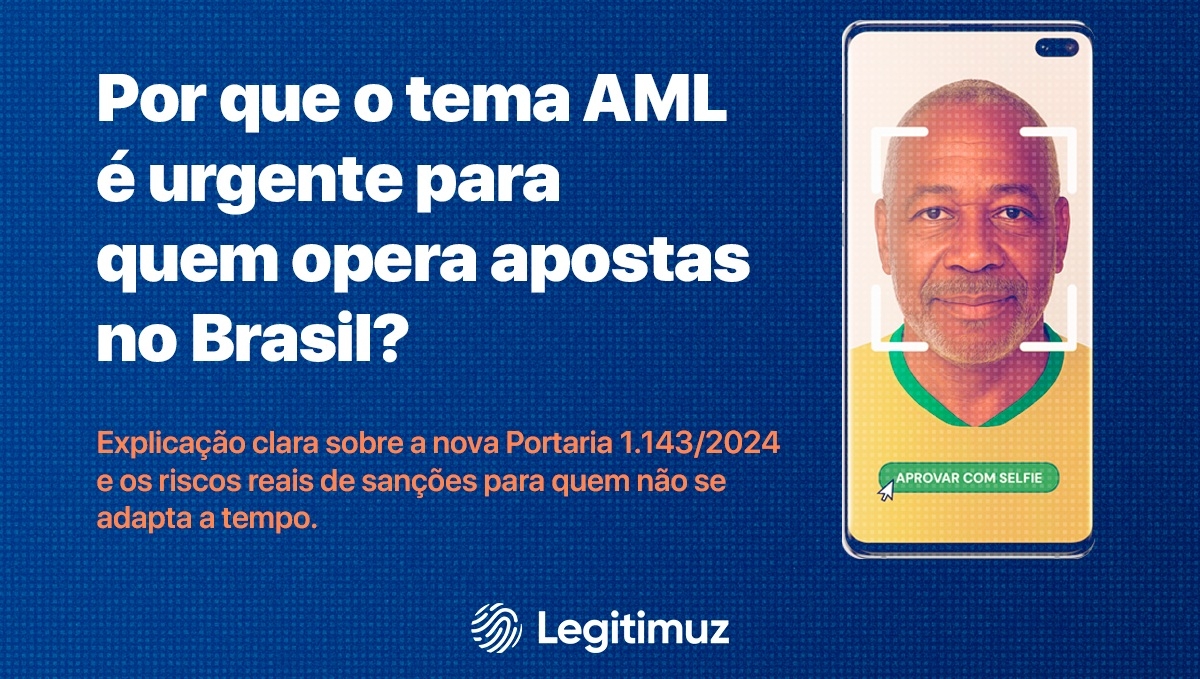
Justo considers Ordinance SPA/MF 1,143/24 an important advancement, as it establishes a specific regulation for the sector, modern and aligned with the best international practices. The expert highlights Article 25, which lists 19 typologies and vulnerabilities that deserve special attention from operators.
“The operator well-acquainted with these points will be ahead in risk mitigation. And as everyone knows: the lower the risk, the higher the revenue.”
Is your operation ready to comply with Ordinance 1,143/24?
If you still have doubts, this is the time to review your AML processes and protect your business. Speak now with a specialist!
Fred Justo
Director of AML at Legitimuz. Former General Coordinator for Anti-Money Laundering at the Secretariat of Prizes and Betting. He participated in the regulation process for bets in Brazil, designed the AML-CFT Ordinance, and coordinated the Federal Government’s Technical Cooperation Agreements with international integrity entities. He was an investigative journalist for nearly 20 years and uncovered match-fixing schemes in Brazilian sports, even infiltrating a criminal gang in 2020. Winner of the AIPS Sport Media Awards, the most prestigious international award in the sports media sector, in the Investigative Reporting category. He is currently an Integrity and AML/CFT consultant and a member of the Fair Play Committee of the Brazilian Olympic Committee.